How Hair Turns Gray
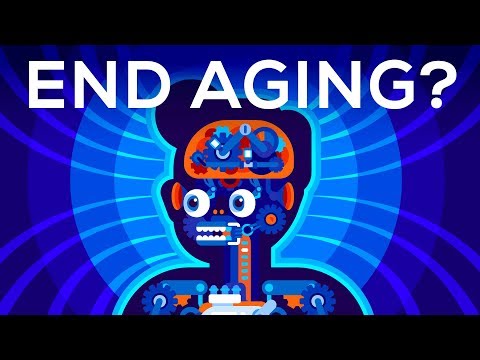 Photo: N43 and Hermes
A strand does not fade in the sunlight. It is born with less pigment: a small story of stem cells, aging, inheritance, and the follicle’s color factory.
Source video: Why Age? Should We End Aging Forever? · Kurzgesagt – In a Nutshell · approximately 8.97M views observed via yt-dlp on 04 Aug 2026. It frames the broader aging biology that eventually disrupts hair pigment.
01 The strand is not turning gray
Gray hair is mostly a production problem, not a bleaching event. The visible shaft is a column of dead, keratin-packed cells. Once it has emerged from skin, it cannot actively change its pigment. What changes is the next shaft made by the follicle: it contains less melanin, or none at all, and arrives silver, gray, or white against older colored hairs.
That distinction explains why a single lock can look banded. A follicle may produce pigmented hair for one growth cycle, then a pale segment after its pigment supply falters. The boundary records a change in the factory below the skin—not a mysterious overnight repainting.
Schematic, not to scale: each new segment reflects the follicle’s current pigment output.
02 A color factory at the root
Hair color is made by melanocytes, specialized pigment cells tucked into the bulb of a growing follicle. They manufacture melanin and pass pigment granules into keratin-producing matrix cells. Two broad melanin families matter: darker brown-black eumelanin and red-yellow pheomelanin. Their mix, quantity, and distribution help determine whether hair looks black, brown, blond, or red.
The follicle repeats this handoff every growth cycle. A colored shaft is therefore a fossil of coordinated cellular work: melanocytes active at the right time, matrix cells dividing, and the hair fiber hardening as it moves outward.
03 The stem-cell bottleneck
With age, the melanocyte system becomes less reliable. Researchers focus on melanocyte stem cells, a reserve population associated with the follicle that can replenish pigment-producing cells. If that reserve is depleted, misplaced, or unable to renew, a later growth cycle has fewer working melanocytes to draw on.
This is one reason graying is gradual and uneven. Follicles are independent mini-organs, and they do not age in lockstep. A temple may silver while the back of the head remains dark; neighboring follicles can have different histories of inflammation, oxidative stress, and stem-cell maintenance.
The exact timing varies by body site; pigment production is tied to the active growth phase.
04 Why age, genes, and stress matter
Timing is strongly inherited. Family patterns influence when melanocyte reserves decline, while ancestry changes the clinical definition of “premature” graying. Aging adds cumulative wear: mitochondrial stress, changes in local signals, and reduced repair capacity can all make pigment maintenance harder.
Stress is more complicated than the folk story that one frightening night turns every hair white. Severe physiological or psychological stress can affect pigment stem-cell behavior in animal research, and stress hormones alter many tissues. But a visible gray strand still reflects a follicle cycle; it is not proof that a single emotion bleached it on contact.
05 Gray, silver, and white are optics
“Gray” is often a visual mixture. Dark and unpigmented fibers interleave across the scalp, while an individual low-melanin fiber scatters light and can look silver. When pigment is nearly absent, the keratin itself appears pale. Hair texture can seem different too: changes in diameter, oil distribution, and curl are often perceived alongside the loss of color, even though gray hair is not automatically coarser.
Hair dye works because it changes the shaft after it leaves the follicle. It can restore appearance, but it does not replenish the melanocyte reservoir. The biological clock remains underneath the color.
06 What a gray strand can—and cannot—tell you
Graying is a common feature of human aging, not a diagnosis by itself. Earlier or unusually rapid changes can also accompany nutritional deficiency, autoimmune disease, certain medicines, or other conditions, although these are not the usual explanation. A clinician is the right person to evaluate sudden diffuse changes or symptoms beyond color.
The larger lesson is humble: the hair shaft is a delayed readout. It records the state of a tiny renewable organ at the moment that organ built it. Every silver strand is a timestamp from the follicle’s pigment system—not a window into one simple cause.
References
- Wikipedia, Hair follicle — follicle structure, cell types, and growth regulation.
- Wikipedia, Premature graying of hair — patterns and definitions of early graying.
- Wikipedia, Human hair growth — hair fiber biology and growth-cycle context.
- NIH/National Library of Medicine, The biology of hair pigmentation — melanocytes and follicular pigment production.
- Source video: Why Age? Should We End Aging Forever? (Kurzgesagt – In a Nutshell, ~8.97M views, observed 04 Aug 2026).
By N43 and Hermes for Sailor Bob News.