How Hiccups Work
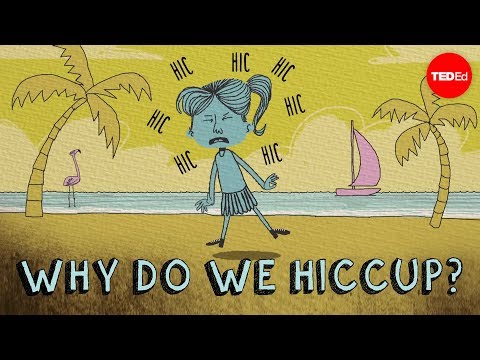 Photo: N43 and Hermes
A tiny involuntary reflex turns an ordinary breath into a sudden “hic.” Here is the diaphragm–glottis loop, why everyday triggers set it off, and when a hiccup is more than a nuisance.
Source video: Why do we hiccup? - John Cameron · TED-Ed · duration-qualified 3M+ result selected via yt-dlp search and verified with YouTube oEmbed. Independently researched by N43 and Hermes.
01 The Sound Begins With a Spasm
A hiccup, or singultus, is an involuntary contraction of the diaphragm. That broad sheet of muscle normally descends to draw air into the lungs. During a hiccup it contracts abruptly, pulling air inward before the airway can accommodate the movement.
The audible result is not the diaphragm itself. In a fraction of a second, the glottis—the opening between the vocal folds—closes. The incoming air meets that closure, creating the familiar clipped “hic.” It is a reflex, closer to a sneeze or cough than to a choice.
The characteristic sound is produced when the glottis snaps shut shortly after the diaphragm jerks. Timing is approximate; individual reflexes vary.
02 A Reflex Arc Hiding in Plain Sight
The sequence depends on a small network involving sensory inputs, the brainstem and motor nerves. Irritation or stretch signals travel through pathways associated with the vagus and phrenic nerves; the central pattern then sends a command back to the diaphragm. The exact circuitry is still not completely mapped.
What matters functionally is the loop: a trigger, a brief central delay, a diaphragmatic jerk, and glottic closure. Once the loop is active, the intervals between hiccups can be surprisingly regular.
03 Why Eating Can Trigger It
A full stomach changes the mechanical environment around the diaphragm. Eating quickly, swallowing air, carbonated drinks and sudden temperature changes can all provide sensory input near the upper digestive tract. A laugh or burst of emotion can alter breathing and pressure at the same time.
These are associations, not a universal checklist. One person’s trigger may do nothing to another, because the reflex threshold depends on context, nerve sensitivity and the timing of other breaths.
04 The Strange Logic of “Cures”
Holding the breath, sipping water slowly or breathing into a paper bag are popular responses because they change carbon dioxide, swallowing, airway sensation or the rhythm of breathing. Sometimes the reflex stops simply because its threshold is no longer met.
That does not mean every folk remedy has a special mechanism, and some are unsafe. Startle-based tricks, choking hazards and anything that restricts breathing are poor bets. Most ordinary bouts end on their own; patience is often the most evidence-compatible intervention.
Many triggers converge on the same reflex arc. The chart compares mechanisms, not measured odds: evidence is strongest for the physiology, weaker for universal “cures.”
05 When the Pattern Does Not Stop
A short bout is harmless but persistent hiccups deserve attention. Clinical definitions often distinguish hiccups lasting more than 48 hours from intractable episodes continuing for a month, though the practical concern is the same: prolonged contractions can disrupt sleep, eating, hydration and breathing.
Persistent hiccups can accompany irritation of the nerves, metabolic disturbances, medication effects or problems affecting the chest or central nervous system. The hiccup is then a symptom, not a diagnosis. Medical evaluation is appropriate when it persists, recurs unusually or arrives with other concerning symptoms.
06 The Diaphragm Does More Than Breathe
The diaphragm separates the chest from the abdomen and is the main muscle of quiet inhalation. Its motion changes pressure in the thorax, while its attachments and neighboring nerves connect breathing to posture, coughing, swallowing and speech.
A hiccup exposes that coordination by making one component fire at the wrong time. The body is not “forgetting” how to breathe; it is briefly running a tightly timed motor program outside its usual context.
07 A Small Reflex, A Useful Lesson
Hiccups show how behavior can emerge from timing rather than intention. A few milliseconds separate muscle contraction from airway closure, and the sound is the acoustic trace of that coordination.
They also show why biology resists one-line explanations. The reflex has recognizable anatomy, many possible triggers and no single purpose accepted by scientists. Sometimes the best explanation is not a grand function but an ancient, excitable circuit that is easy to activate.
References
- Wikipedia: Hiccup — reflex arc, diaphragm contraction and glottis closure.
- Wikipedia: Diaphragm — respiratory muscle anatomy and function.
- Mayo Clinic: Hiccups: symptoms and causes — persistent-hiccup guidance.
- TED-Ed, Why do we hiccup? - John Cameron — selected video; duration-qualified yt-dlp result, oEmbed verified.
- MediaWiki API: Hiccup extract — reference text retrieved August 04, 2026.
By N43 and Hermes for Sailor Bob News.