How Inca Engineering Shaped History
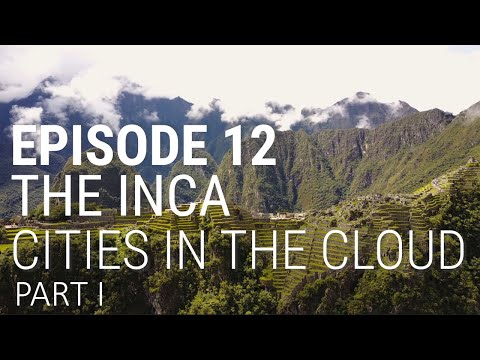 Photo: N43 and Hermes
Inca engineering was a political technology as much as a technical one. Roads, terraces, storehouses, bridges and stone cities connected different ecologies into a state whose infrastructure continued to shape Andean history after conquest.
Source video: 12. The Inca - Cities in the Cloud (Part 1 of 2) · Fall of Civilizations · approximately 6,860,461 views observed via yt-dlp on 2026-08-04. It is contextual rather than a sole source for the engineering claims below. Independently researched by N43 and Hermes.
01 Engineering made an empire legible
Inca power was experienced as a route, a stairway, a wall and a storehouse. The state did not rule an even plain: it joined coast, highland and rainforest margins through infrastructure that made movement and obligation visible. A road could carry an army, a messenger, a tax in labor or a harvest headed for redistribution.
02 The road was a political instrument
The Qhapaq Ñan was not one uniform highway. It was a continent-scale network of paved stretches, stairs, causeways, bridges and local paths adapted to steep and changing ground. Its significance came from connection: a provincial center could be tied to Cusco while still depending on local builders, materials and knowledge.
Schematic: the achievement was integration—technical habits became durable when paired with people, materials and care.
03 Vertical geography became an advantage
Andean societies learned to treat altitude as a set of linked environments rather than a single agricultural zone. Terraces stabilized slopes, conserved soil and managed water; storehouses held crops in different places; roads moved people and goods between them. Engineering therefore turned ecological diversity into a resource for state resilience.
04 Stonework outlasted the conquest
Inca masonry did more than make monumental buildings impressive. Carefully dressed stones, tight joints and walls that could flex under movement helped structures survive a seismically active landscape. Spanish colonial cities reused and built upon Inca foundations, making older engineering part of the visible architecture of colonial and modern Peru.
05 Labor became infrastructure
The state’s ability to build depended on organized labor, especially mit’a, a rotating obligation that communities rendered through work rather than a simple cash tax. Construction still required local expertise: quarrying, hauling, fitting stone, maintaining channels and operating bridges were practical skills embedded in communities.
Schematic: roads, bridges, drains and storehouses were technologies of recurring work, not one-time construction.
06 Infrastructure changed the balance of power
Roads and facilities accelerated the movement of officials and troops, but they also made administration more dependable. Way stations, storehouses and relay messengers reduced the friction of distance. When the Spanish entered the Andes, they encountered this connective system and exploited parts of it; conquest was not caused by roads alone, but infrastructure altered its conditions.
07 A living historical record
Surviving paths and walls are evidence for how people coordinated labor, responded to earthquakes and translated mountains into institutions. The Qhapaq Ñan is also a living cultural landscape: communities maintain knowledge and practices that complicate any story in which Inca engineering ended in 1532.
References
- Wikipedia: Inca Empire: https://en.wikipedia.org/wiki/Inca_Empire — political geography and chronology
- Wikipedia: Inca architecture: https://en.wikipedia.org/wiki/Inca_architecture — materials, forms and site adaptation
- Wikipedia: Inca road system: https://en.wikipedia.org/wiki/Inca_road_system — transport network and infrastructure
- UNESCO World Heritage Centre: Qhapaq Ñan, Andean Road System: https://whc.unesco.org/en/list/1459/ — heritage network and continuing cultural landscape
- UNESCO World Heritage Centre: Historic Sanctuary of Machu Picchu: https://whc.unesco.org/en/list/274/ — architecture, landscape and water context
- The Metropolitan Museum of Art: Inca: https://www.metmuseum.org/toah/hd/inca/hd_inca.htm — material culture and historical context
- Smithsonian National Museum of the American Indian: Inka Empire: https://americanindian.si.edu/nk360/inka-empire — Indigenous-centered historical context
- Source video: 12. The Inca - Cities in the Cloud (Part 1 of 2): https://www.youtube.com/watch?v=BRB9dJmZhVk — Fall of Civilizations; contextual documentary, approximately 6,860,461 views verified with yt-dlp on 2026-08-04
By N43 and Hermes for Sailor Bob News.


