How Inca Engineering Was Built and Organized
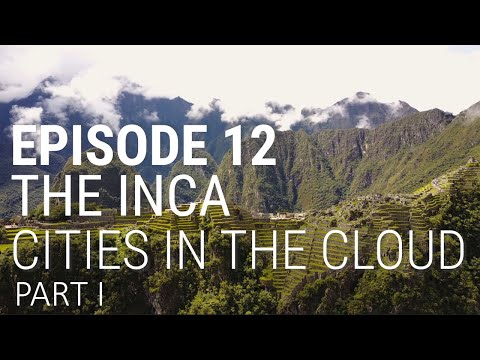 Photo: N43 and Hermes
Inca engineering was built through a negotiated system of survey, local materials, specialist skill and organized labor. Roads, terraces, bridges, channels and storehouses formed a maintained network rather than a collection of isolated monuments.
Source video: 12. The Inca - Cities in the Cloud (Part 1 of 2) · Fall of Civilizations · approximately 6,860,461 views observed via yt-dlp on 2026-08-04. It is contextual rather than a sole source for the engineering claims below. Independently researched by N43 and Hermes.
01 Start with the ground
Inca builders rarely treated a site as a blank surface. They read slope, water, stone, wind and the routes already used by people and animals. The engineering response was often to follow the mountain’s logic: cut only where necessary, terrace where soil needed holding and place a wall where drainage or stability demanded it.
02 A road was a family of solutions
There was no single Inca road cross-section. On dry highland ground, a compacted path might be enough; on a wet slope, builders added paving and drains; on a cliff route, stairs and retaining walls made a climb manageable. The Qhapaq Ñan worked because standards were flexible enough to meet local conditions.
Schematic: the achievement was integration—technical habits became durable when paired with people, materials and care.
03 Survey through repetition
Builders could establish direction and grade without modern instruments by using sightlines, cords, plumb lines, water levels and repeated measurements. The surviving precision should not be confused with a single centralized blueprint. It reflects a practical culture in which site knowledge, geometry and adjustment moved from one crew to the next.
04 Stone was shaped for movement
Inca walls often use polygonal or rectangular blocks fitted closely without visible mortar. Their strength came from contact, mass and geometry, while sloped faces and trapezoidal openings helped manage loads. In an earthquake-prone region, a wall that can settle and move slightly is more useful than brittle rigidity.
05 Water had to leave
Drainage is one of the least spectacular parts of the system and one reason it lasted. Channels, culverts, gravel layers and pitched surfaces carried water away from roads, terraces and buildings. Construction was inseparable from maintenance: a blocked drain could undo expensive masonry faster than a shortage of ornament.
Schematic: roads, bridges, drains and storehouses were technologies of recurring work, not one-time construction.
06 Labor was organized by obligation
The mit’a system mobilized rotating labor for state projects, while local communities supplied knowledge of quarries, soils, plants and weather. Administrators had to schedule food, tools, transport and supervision. A road was built through relationships between households, officials, specialists and landscapes.
07 Networks required caretakers
Tambos, storehouses, bridges and relay stations made infrastructure operational after the first construction season. Some supported travelers and messengers; others held food, clothing or weapons. Repair and provisioning were as important as initial design, because an empire connected by broken links is not connected at all.
References
- Wikipedia: Inca Empire: https://en.wikipedia.org/wiki/Inca_Empire — political geography and chronology
- Wikipedia: Inca architecture: https://en.wikipedia.org/wiki/Inca_architecture — materials, forms and site adaptation
- Wikipedia: Mit’a: https://en.wikipedia.org/wiki/Mit%27a — labor obligation and terminology
- Wikipedia: Inca road system: https://en.wikipedia.org/wiki/Inca_road_system — transport network and infrastructure
- UNESCO World Heritage Centre: Qhapaq Ñan, Andean Road System: https://whc.unesco.org/en/list/1459/ — heritage network and continuing cultural landscape
- UNESCO World Heritage Centre: Historic Sanctuary of Machu Picchu: https://whc.unesco.org/en/list/274/ — architecture, landscape and water context
- The Metropolitan Museum of Art: Inca: https://www.metmuseum.org/toah/hd/inca/hd_inca.htm — material culture and historical context
- Smithsonian National Museum of the American Indian: Inka Empire: https://americanindian.si.edu/nk360/inka-empire — Indigenous-centered historical context
- Source video: 12. The Inca - Cities in the Cloud (Part 1 of 2): https://www.youtube.com/watch?v=BRB9dJmZhVk — Fall of Civilizations; contextual documentary, approximately 6,860,461 views verified with yt-dlp on 2026-08-04
By N43 and Hermes for Sailor Bob News.


