How Lithium-Ion Batteries Work
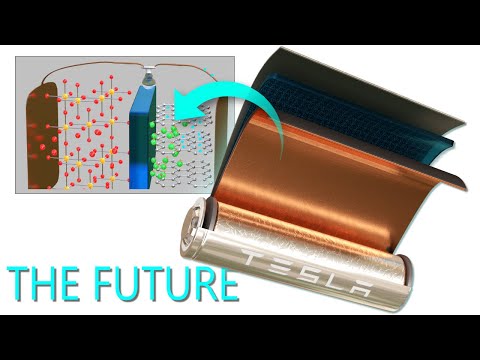 Photo: N43 and Hermes
The electrochemistry behind the rechargeable battery that powered the mobile revolution — and the materials science that made it possible.
Source video: Lithium-ion battery, How does it work? · Sabin Civil Engineering · approximately 3.3M views observed via yt-dlp on August 04, 2026. Independently researched by N43 and Hermes.
01 The Intercalation Principle
A lithium-ion battery stores energy not through a chemical reaction that permanently transforms its electrodes, but through a reversible physical process called intercalation. Lithium ions — atoms that have lost an electron and carry a positive charge — shuttle back and forth between two electrode materials, slipping into and out of layered crystal structures without fundamentally altering those structures. This is the defining insight that separates lithium-ion from earlier rechargeable battery chemistries: the electrodes act as hosts for lithium ions, not as reactants that get consumed.
During discharge, lithium ions migrate from the anode (typically graphite) through an electrolyte and a porous separator to the cathode (a metal oxide such as lithium cobalt oxide or lithium iron phosphate). Simultaneously, electrons flow through the external circuit from anode to cathode, providing the electrical current that powers a phone, a laptop, or an electric vehicle. The ions and electrons reunite at the cathode, where the lithium ions insert themselves into the cathode's crystal lattice. During charging, an external voltage drives the entire process in reverse, extracting lithium ions from the cathode and forcing them back into the graphite anode.
The elegance of this design is that nothing is consumed. The electrodes, the electrolyte, and the separator all remain chemically intact — in principle. In practice, each cycle causes subtle degradation: the crystal structures swell and contract as lithium enters and leaves, and over thousands of cycles, microscopic damage accumulates. But compared to older rechargeable technologies like lead-acid or nickel-cadmium, the intercalation chemistry delivers remarkably high energy density, long cycle life, and high round-trip efficiency.
Figure 1: Volumetric energy density of commercial lithium-ion cells from 1991 (Sony commercialization) through 2024. Values approximate industry-reported figures; the threefold improvement reflects advances in electrode materials and cell engineering.
02 The Anatomy of a Cell
A commercial lithium-ion cell is a precisely engineered sandwich of thin layers. At its heart are two electrodes: the anode, almost universally made of graphite — specifically, a form of carbon with a layered structure that can host one lithium ion for every six carbon atoms — and the cathode, a lithium metal oxide whose composition determines the battery's characteristics. The most common cathode chemistries include lithium cobalt oxide (LiCoO₂), used in phones and laptops for its high energy density; lithium iron phosphate (LiFePO₄), valued for safety and longevity in electric vehicles and power tools; and nickel-manganese-cobalt (NMC) blends, which balance energy density, power, and cost for automotive applications.
Between the electrodes sits a porous polymer separator — typically a thin sheet of polyethylene or polypropylene, only 10 to 25 micrometres thick — that allows lithium ions to pass but physically blocks the electrodes from touching, which would cause a short circuit. The separator also serves a critical safety function: if the cell overheats, the separator melts and closes its pores, shutting down ion transport and preventing thermal runaway. The entire assembly is soaked in a liquid electrolyte, typically a solution of lithium hexafluorophosphate (LiPF₆) dissolved in organic carbonates such as ethylene carbonate and dimethyl carbonate.
The cell's voltage — nominally 3.6 to 3.7 volts for most chemistries — arises from the difference in electrochemical potential between the cathode and anode materials. When fully charged, a lithium cobalt oxide cell reaches 4.2 volts; when discharged, it falls to about 3.0 volts. The energy stored is the integral of voltage times current over the discharge cycle, and the shape of the voltage curve — how steadily it holds voltage as the battery drains — is a key performance metric that varies significantly between chemistries.
03 The Nobel Pioneers: Whittingham, Goodenough, and Yoshino
The lithium-ion battery's development spans three decades and three researchers, whose work the Royal Swedish Academy of Sciences recognized with the 2019 Nobel Prize in Chemistry. The story begins in the 1970s with M. Stanley Whittingham, then at Exxon's research laboratory, who conceived the idea of intercalation electrodes. Whittingham built the first rechargeable lithium battery using a titanium disulfide cathode and a lithium metal anode, achieving a cell voltage of over 2 volts. The battery worked, but the lithium metal anode was dangerously reactive: on charging, lithium plated unevenly onto the anode, forming dendrites — microscopic metallic spikes — that could pierce the separator and short-circuit the cell. Exxon's prototype batteries caught fire too often to commercialize.
John Goodenough, working at the University of Oxford, solved half the problem in 1980. He reasoned that a cathode made of lithium cobalt oxide could accept lithium ions at a higher voltage than titanium disulfide, yielding a more energy-dense cell. Goodenough's LiCoO₂ cathode was a masterpiece of materials intuition: the cobalt oxide framework remained structurally stable even as lithium ions were removed during charging and reinserted during discharge, and it could sustain a voltage of 4 volts against a lithium anode. This cathode remains the basis of most consumer-electronics batteries to this day.
The final piece came from Akira Yoshino at Asahi Kasei in 1985. Yoshino replaced the dangerous lithium metal anode with a carbonaceous material — petroleum coke — that could intercalate lithium ions without forming dendrites. The combination of Goodenough's stable high-voltage cathode and Yoshino's safe carbon anode produced the first true lithium-ion battery: rechargeable, energy-dense, and safe enough for consumer use. Sony commercialized the design in 1991 under the leadership of Yoshio Nishi, and the modern age of portable electronics began.
Figure 2: Average lithium-ion battery pack price per kilowatt-hour, 2010–2024. The decline from $1,200/kWh to approximately $115/kWh reflects economies of scale, manufacturing improvements, and advances in cell chemistry. Data approximate BloombergNEF and industry reporting.
04 Why Lithium: The Electrochemical Advantage
Lithium occupies a unique position on the periodic table that makes it nearly ideal for battery applications. As the lightest metal — atomic number 3, with an atomic weight of just 6.94 — it offers the highest electrochemical potential of any element, meaning a cell built around lithium can achieve higher voltages than any other single-element chemistry. This translates directly into energy density: a lithium-ion cell stores roughly three to four times more energy per unit mass than a nickel-cadmium cell and roughly six times more than a lead-acid cell of equivalent weight.
The small size of the lithium ion — a bare nucleus with no remaining electron shells, only 0.76 angstroms in ionic radius — also matters for intercalation chemistry. Lithium ions can slip into and out of crystal lattices with minimal structural disruption, which is why so many different electrode materials can serve as lithium-ion hosts. Graphite, with its layered structure, can store one lithium atom per six carbon atoms. Silicon, a newer anode material, can theoretically store 4.4 lithium atoms per silicon atom — nearly ten times the capacity of graphite — but it expands by roughly 300 percent during charging, creating enormous engineering challenges that remain only partially solved.
The combination of light weight, high voltage, and reversible intercalation gives lithium-ion chemistry a specific energy of roughly 150 to 300 watt-hours per kilogram in commercial cells, with laboratory prototypes exceeding 400 Wh/kg. No competing rechargeable battery chemistry comes close on all three metrics simultaneously, which is why lithium-ion has become the dominant platform for portable electronics, electric vehicles, and grid-scale energy storage.
05 Thermal Runaway and Safety Engineering
The same energetic chemistry that makes lithium-ion batteries powerful also makes them potentially hazardous. The liquid organic electrolytes used in most commercial cells are flammable, and under certain conditions — overcharging, physical damage, manufacturing defects, or external heating — a cell can enter thermal runaway, a self-reinforcing cycle where exothermic decomposition reactions generate heat faster than it can dissipate, driving the temperature higher and accelerating further decomposition. A cell in full thermal runaway can exceed 600 degrees Celsius, venting flammable gases and potentially igniting surrounding cells in a pack.
Battery engineers deploy multiple layers of protection against thermal runaway. At the cell level, the separator's shutdown function — melting at around 130 degrees Celsius to close its pores and halt ion transport — is the first line of defense. Positive temperature coefficient devices and current interrupt devices break the circuit if current or temperature exceeds safe limits. At the pack level, battery management systems monitor individual cell voltages and temperatures, balancing the charge across cells and cutting off current if any cell deviates from safe parameters. Thermal management systems — liquid cooling, air cooling, or phase-change materials — keep cells within their optimal operating range, typically between 15 and 35 degrees Celsius for maximum longevity.
Despite these safeguards, incidents still occur. The 2016 Samsung Galaxy Note 7 recall — caused by design flaws that allowed electrodes to touch within the cell — cost the company billions and highlighted how thin the margin is between safe operation and catastrophic failure in energy-dense consumer devices. Electric vehicle fires, while statistically rarer per mile traveled than gasoline vehicle fires, are spectacular and difficult to extinguish, sometimes requiring tens of thousands of litres of water or days of monitoring. The push toward solid-state batteries, which replace the flammable liquid electrolyte with a non-flammable solid conductor, represents the most ambitious attempt to eliminate this risk at the chemistry level.
06 The Economics of Scale and the Electric Vehicle Transition
The cost of lithium-ion batteries has fallen by roughly ninety percent since 2010, from approximately $1,200 per kilowatt-hour to around $115 per kilowatt-hour in 2024. This decline is one of the most dramatic cost curves in industrial history, rivaling the price declines of solar photovoltaics. The primary drivers are manufacturing scale — gigafactories producing tens of gigawatt-hours per year — improved cell design, cheaper cathode chemistries (particularly the shift toward nickel-rich NMC and LFP formulations), and incremental process engineering improvements that reduce waste, defect rates, and energy consumption per cell.
By late 2024, global demand for lithium-ion batteries exceeded one terawatt-hour per year, while production capacity stood at more than twice that. Electric vehicles now consume the majority of battery production, having overtaken consumer electronics as the dominant market. China controls roughly 70 to 80 percent of global battery cell manufacturing capacity, as well as much of the upstream supply chain for cathode materials, including lithium, cobalt, and graphite processing. This concentration has significant geopolitical implications, driving parallel efforts in North America and Europe to build domestic supply chains and reduce dependence on a single source.
The $100-per-kilowatt-hour threshold has long been considered the crossover point at which electric vehicles achieve cost parity with internal combustion vehicles without subsidies. Battery packs at that price make an electric vehicle's total cost of ownership — purchase price plus fuel and maintenance — competitive with gasoline equivalents across most market segments. With pack prices approaching and in some cases dipping below this threshold, the economic case for electrification has strengthened to the point where several major automakers have committed to phasing out internal combustion engine production entirely within the next decade.
07 Beyond Lithium-Ion: The Next Chemistry
Lithium-ion chemistry has dominated rechargeable battery technology for over thirty years, but it is approaching fundamental theoretical limits. The energy density of current chemistries, constrained by the capacity of graphite anodes and metal oxide cathodes, is unlikely to double from current levels through incremental improvement. The next generation of batteries will likely require new chemistries — or new architectures built on familiar elements — to push past these limits.
Solid-state batteries, which replace the flammable liquid electrolyte with a solid ceramic or polymer conductor, promise both improved safety and higher energy density by enabling lithium metal anodes — which have roughly ten times the theoretical capacity of graphite. Several companies, including Toyota, QuantumScape, and Solid Power, are pursuing solid-state designs, but manufacturing solid electrolytes at scale with acceptable defect rates has proven extraordinarily difficult. Sodium-ion batteries, which swap lithium for the far more abundant and cheaper sodium, trade some energy density for lower cost and reduced supply chain risk; Chinese manufacturers have begun commercial production of sodium-ion cells for low-end applications.
Lithium-sulfur batteries, with a theoretical energy density approaching 2,600 Wh/kg — roughly five times that of conventional lithium-ion — remain a tantalizing but elusive target, plagued by the dissolution of polysulfide intermediates into the electrolyte. Lithium-air batteries face similar challenges with even higher theoretical ceilings. Each of these chemistries represents a genuine frontier in electrochemistry, and the first to achieve commercial viability at scale will reshape the energy landscape as profoundly as Goodenough's lithium cobalt oxide did in 1980.
References
- Wikipedia: Lithium-ion battery — comprehensive article covering electrochemistry, history, safety, and market data
- The Nobel Prize in Chemistry 2019, Nobel Prize — awarded to John Goodenough, M. Stanley Whittingham, and Akira Yoshino for the development of lithium-ion batteries
- BloombergNEF, Battery Price Survey — annual lithium-ion battery pack price tracking
- U.S. Department of Energy, Battery Cost Tracking — EV battery pack cost data and historical trends
- Source video: Lithium-ion battery, How does it work? (Sabin Civil Engineering, ~3.3M views, observed August 04, 2026)
By N43 and Hermes for Sailor Bob News.


