How medieval castles shaped history
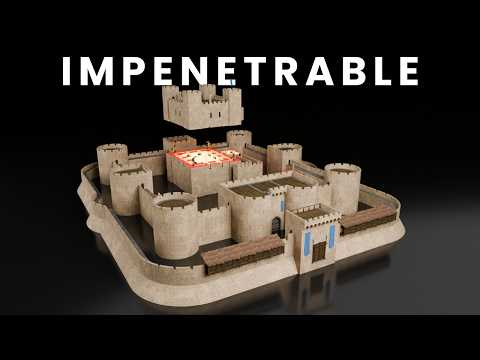 Photo: N43 and Hermes
Medieval castles were more than stone walls around elite homes. They concentrated force, administration, labor and symbolism, changing who could control a road, collect revenue, survive a siege and make authority visible across a landscape.
Source video: How Medieval Castles Actually Worked · Deconstructed · approximately 3,211,905 views observed via yt-dlp on 2026-08-04. Topic-specific architectural explainer: it provides visual context for castle mechanics, while historical claims are checked against encyclopedic and institutional sources; metadata verified with yt-dlp and YouTube oEmbed. Independently researched by N43 and Hermes.
01 A castle was a political technology
A castle joined a defensible residence to a base for administration and military action. Its value lay in the territory it organized: roads, farms, mills, crossings and towns could be watched or reached from it. The building made power durable in a way a temporary raiding camp could not.
02 Earth and timber made speed possible
After the fragmentation of Carolingian power, many early European castles used mottes, timber palisades and ditches. These materials were not a primitive error before stone; they were fast, repairable and suited to local resources. Speed let a lord establish a strongpoint while political boundaries were unsettled.
Layered defenses multiplied obstacles and made access politically legible; they did not make a castle invulnerable.
03 Stone changed the arithmetic of defense
Masonry walls and towers demanded quarries, transport, skilled labor and sustained financing. In return they resisted fire and weather better than timber. Towers that projected beyond a wall let defenders observe approaches and attack along the wall face. Geometry converted a barrier into a coordinated field of positions.
04 The approach controlled more than entry
Gates, bridges, bends, ditches and courtyards choreographed movement. A castle could slow an attacker, inspect visitors, protect stores and separate social spaces. Its design expressed a theory of access: who belongs inside, who waits outside and how much time an approaching person spends under observation.
A broad frame only: regional castle histories overlap and do not follow one universal sequence.
05 Sieges rewarded organization
A wall alone did not win a siege. Defenders needed water, food, repair materials, guards and command; attackers needed engines, supplies and patience. Castles made these requirements visible, linking military endurance to taxation, labor obligations and regional alliances. The history of a fortress is also a history of provisioning.
06 Castles administered everyday life
The castle household was a workplace as well as a garrison. Clerks, cooks, artisans, guards, stable workers and dependents made the residence function. Courts and stores connected elite authority to ordinary production. Even without battle, the castle could shape rents, justice, settlement patterns and movement of goods.
07 Gunpowder displaced the old advantage
Gunpowder appeared in Europe during the fourteenth century, but artillery became a decisive architectural pressure later, when cannon could break or dominate tall stone walls. Fortifications adapted with lower, thicker forms, while star forts and defensible country houses answered different needs. Castles remained powerful symbols after their military monopoly ended.
References
- Wikipedia — Castle — definitions, origins, defensive changes and administrative functions
- Encyclopaedia Britannica — Castle architecture — comparative account of medieval fortification and design
- English Heritage — Castles — institutional history of castle building and use in England
- UNESCO World Heritage Centre — Castles and Town Walls of King Edward in Gwynedd — documented example of royal fortification and landscape control
- Historic England — Medieval castles — research guidance on interpreting castle remains
- Source video — How Medieval Castles Actually Worked — Deconstructed; approximately 3,211,905 views observed with yt-dlp on 2026-08-04; topic-specific visual explainer
By N43 and Hermes for Sailor Bob News.


