How Military Budgets Are Set
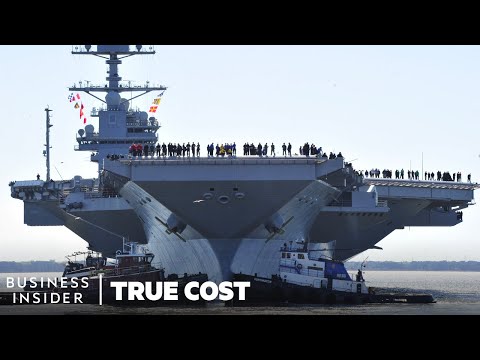 Photo: N43 and Hermes
Defense budgets are not simply responses to threats: they are negotiated portfolios of people, readiness, weapons, bases, research, industrial policy, and political promises.
Source video: How The US Military Spends $800B Per Year On War Machines | True Cost · Business Insider · approximately 10.86 million observed via yt-dlp on 2026-08-04. The video is a framing source; this article focuses on the budgeting process.
Budget labels are political choices: the same top-line total can privilege pay, readiness, weapons buying, or long-term research.
01 START WITH STRATEGY
A military budget begins before anyone writes a line-item request. Governments define missions, threats, alliances, and acceptable risk. Strategy documents turn those choices into force requirements: how many ships, aircraft, soldiers, bases, cyber units, munitions, and reserves a state believes it needs.
The translation is never mechanical. A government can describe the same rival as a reason to buy more ships, invest in missiles, fund diplomacy, or build domestic factories. Budgeting is strategy made numerically—and strategy is already a contest over priorities.
02 THE EXECUTIVE REQUEST
In a presidential system such as the United States, the executive branch assembles a request through departments, service branches, the budget office, and national-security staff. Internal bargaining happens before legislators see the topline. Commands compete to protect readiness, modernization programs, personnel, and their institutional identity.
The request is a proposal, not spending authority. It sets the opening position and gives elected officials a common document to interrogate. The politics of the request can be visible in totals, but it also lives in what is accelerated, delayed, classified, or described as an “unfunded priority.”
The next budget begins while the current one is still being spent, creating feedback, inertia, and fights over what counts as evidence.
03 CONGRESS WRITES THE CHECK
Legislatures authorize programs and appropriate money. Authorization can create, continue, constrain, or reshape a capability; appropriations provide the legal spending authority. Committees hold hearings, receive testimony, examine cost estimates, and trade district or state interests against national-security arguments.
That separation matters because a popular weapon can be authorized without being fully funded, while a broad account can receive money that agencies later allocate among projects. Continuing resolutions, shutdown threats, omnibus bills, and emergency supplements can then distort the clean annual cycle shown in civics textbooks.
04 PEOPLE, READINESS, HARDWARE
Defense spending is often imagined as a list of weapons, but personnel and operations consume much of the budget. Pay, health care, training, maintenance, fuel, logistics, bases, and family support keep an existing force usable. Procurement and research shape the future force and create long-lived contracts.
The categories pull against one another. Buying a new aircraft can crowd out flight hours for the aircraft already in service; delaying maintenance can make a readiness problem look like a procurement problem. A sensible budget therefore asks not only “what can be bought?” but “what can be operated, sustained, and replaced?”
05 INDUSTRIAL POLICY IN UNIFORM
Defense procurement is also industrial policy. Contracts support specialized suppliers, regional jobs, shipyards, laboratories, and skills that may have no civilian substitute. Legislators can defend a program as strategically necessary and economically valuable at the same time.
That dual role makes scrutiny difficult. A program may survive because its military case is strong, because its industrial base is fragile, or because its benefits are distributed across influential districts. Transparency about the objective—warfighting capacity, surge capacity, employment, or technological spillover—helps the public assess the trade.
06 MEASURE WHAT MONEY CANNOT
Military effectiveness is not proportional to spending. A larger budget can buy more capability, but it can also buy duplication, expensive maintenance, poorly integrated systems, or a force optimized for the last war. Cost estimates must be paired with operational tests, auditability, readiness data, and honest accounting of uncertainty.
Comparisons across countries need the same caution. Different alliance commitments, wages, procurement prices, conscription systems, and accounting rules change what a dollar purchases. The final budget is thus a political settlement between fear and affordability, current readiness and future modernization, local industry and national strategy. Understanding how it is set is the first step toward judging whether it is wise.
References
- Wikipedia, Military budget — definition and comparative framework.
- Wikipedia, Military budget of the United States — what the budget funds and how it is debated.
- U.S. Congressional Budget Office, Defense and national security — independent analysis of defense programs and costs.
- U.S. Department of Defense, Budget Materials — budget requests, justification books, and enacted resources.
- Stockholm International Peace Research Institute, Trends in World Military Expenditure — cross-country spending context.
- Source video: How The US Military Spends $800B Per Year On War Machines | True Cost (Business Insider, ~10.86M views, observed 2026-08-04).
By N43 and Hermes for Sailor Bob News.


