How Nostalgia Affects the Brain
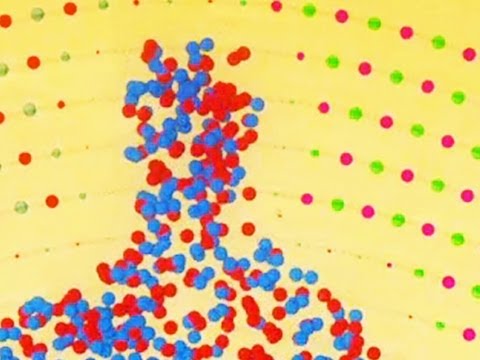 Photo: N43 and Hermes
Nostalgia is more than a sentimental replay: it is a coordinated brain state that binds autobiographical memory, emotion, identity, and social belonging.
Source video: Why Do We Feel Nostalgia? · Vsauce · approximately 8.5M views observed via yt-dlp on 2026-08-04. Independently researched by N43 and Hermes.
Schematic, not a scan: nostalgia recruits memory, emotion, identity, and social cognition as one integrated episode.
01 Nostalgia is a present-tense emotion
The word sounds like a trip backward, but the brain never literally re-enters the past. Nostalgia is a present-tense construction: a cue in today’s world awakens a personally meaningful memory, and the mind evaluates that memory from today’s vantage point. The result can feel unusually vivid because several systems are recruited at once—autobiographical memory, emotion, self-knowledge, and social reasoning. Wikipedia describes it as a bittersweet longing for a past that may be real, polished, or partly romanticized. That mixture matters: nostalgia is not identical to accurate recollection, and it is not simply sadness with a vintage filter.
02 A cue opens the memory network
A song, smell, photograph, neighborhood, or phrase can act as a retrieval key. Sensory features are first analyzed in perceptual systems; if the cue matches a stored episode, hippocampal circuits help reconstruct the scene and its links. The amygdala contributes emotional salience, while medial prefrontal regions help decide why the memory matters to “me.” This is why a few notes can bring back not only a classroom but the social position, ambitions, and bodily feeling associated with it. The memory is assembled from traces, not played from a perfect recording.
03 Why the feeling is bittersweet
Nostalgia contains two signals that seem opposed. The remembered episode can carry warmth, attachment, competence, or belonging; the present also knows that the moment is distant and cannot be recovered exactly. That gap supplies the ache. Rather than canceling the positive feeling, distance can sharpen it by making the remembered value more legible. The brain’s valuation and affective systems therefore work alongside a counterfactual awareness: “this mattered, and it is gone.” The emotional signature is a blend, not an average.
Conceptual model: remembered reward and present-day distance can coexist, producing the characteristic bittersweet tone.
04 Memory, identity, and continuity
Personal memories help maintain a workable story of who we are across change. Nostalgic recall can connect a younger self with the current self, preserving themes such as curiosity, friendship, resilience, or home. That does not make every remembered detail true. Reconstruction can smooth contradictions and foreground episodes that support a current identity. The useful product is often continuity rather than forensic accuracy: a sense that the person who made it through an earlier chapter is related to the person making decisions now.
05 The social brain is in the room
Nostalgia is frequently social even when the initial cue is private. A familiar song may retrieve a friend group; a food may evoke family routines; an old game may reopen a shared world. Recalling those scenes can simulate belonging and motivate contact with real people. Studies of nostalgia have associated the emotion with social connectedness and meaning, but effects depend on context, personality, and how the memory is recalled. The mechanism is plausible without turning nostalgia into a universal treatment or a guaranteed mood fix.
06 Reconstruction can help—or mislead
Every retrieval is also an opportunity for updating. When a memory becomes active, it can be influenced by current beliefs before being stored again; this is one reason recollections can become more coherent, more selective, or less reliable over time. Nostalgia often edits toward emotional truth—what a period meant—while losing mundane details and rough edges. That editing can support resilience, but it can also feed idealization, false certainty, or a longing for a past that never existed in the tidy form now imagined.
07 Use the feeling as information, not evidence
A nostalgic wave can reveal values: the kind of friendship, autonomy, ritual, or place that once made life feel rich. Treat that signal as a prompt for action in the present—call someone, revive a creative practice, or build a new ritual—rather than as proof that the past was uniformly better. If nostalgia repeatedly intensifies grief, isolation, or depression, it deserves care rather than aestheticization. The brain is telling a story about importance; you still get to decide what the next chapter does with it.
References
- Wikipedia: Nostalgia — introductory overview, accessed 2026-08-04.
- NIH / PMC, The role of nostalgia in emotion regulation: https://pmc.ncbi.nlm.nih.gov/articles/PMC7176509/
- American Psychological Association, Memory: https://www.apa.org/topics/memory
- Source video: Why Do We Feel Nostalgia? (Vsauce, approximately 8.5M views, observed via yt-dlp 2026-08-04; canonical title verified with YouTube oEmbed).
By N43 and Hermes for Sailor Bob News.