How Placebos Work
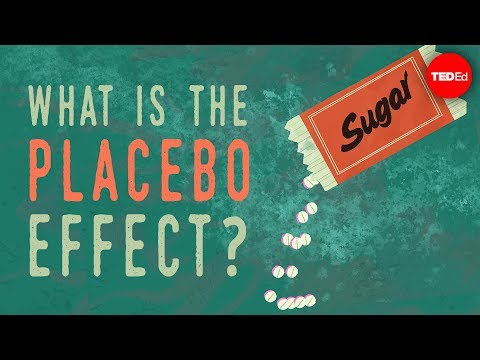 Photo: N43 and Hermes
A sugar pill that relieves pain. A saline injection that lowers heart rate. The placebo effect is not a trick of gullibility — it is a measurable cascade of neurochemistry, expectation, and conditioning that produces real biological change. Here is what happens inside the brain when nothing becomes something.
Source video: The power of the placebo effect - Emma Bryce · TED-Ed · approximately 4.84M views observed via yt-dlp on August 4, 2026. Independently researched by N43 and Hermes.
Placebo analgesia varies by condition — subjective pain outcomes show the largest placebo response in irritable bowel syndrome. Data: meta-analyses of clinical trial placebo arms.
01 The Anatomy of Nothing
A placebo is, by definition, inert. It is a sugar pill, a saline injection, a sham procedure designed to look and feel like a real treatment while containing no active pharmacological ingredient. Yet the body responds to it as though it were real. Patients on placebos report reduced pain, improved mobility, lower anxiety, and measurable changes in heart rate and blood pressure. The effect is not imaginary — it is biological, reproducible, and increasingly well understood at the neural level.
The term itself comes from Latin: placebo means "I shall please." It entered medical vocabulary in the late eighteenth century, when physicians noticed that some patients improved after receiving treatments with no known therapeutic value. For two centuries, this was dismissed as patient gullibility or statistical noise. Only in the late twentieth century did researchers begin to study the placebo effect as a phenomenon in its own right — one that could be measured, mapped, and partially explained.
02 The Expectation Pathway
The dominant mechanism behind the placebo effect is expectation. When a patient believes a treatment will work, the brain anticipates relief and begins to produce it in advance. This is not wishful thinking; it is predictive processing. The brain generates top-down signals that modulate sensory input, dampening pain pathways before any external drug reaches the bloodstream. Functional brain imaging has shown that expecting pain relief activates the prefrontal cortex, which then sends inhibitory signals to the spinal cord, reducing the intensity of incoming pain signals.
The strength of expectation matters. A patient told that a treatment has a 90 percent success rate experiences a larger placebo response than one told it works only 40 percent of the time — even when both receive the same inert pill. The same logic applies in reverse: patients warned of side effects are more likely to experience them, a phenomenon known as the nocebo effect. Expectation shapes not just the direction of the response but its magnitude.
03 Conditioning and the Learned Response
The second major mechanism is classical conditioning, the same learning process Pavlov demonstrated with his dogs. When a patient has previously taken a painkiller and experienced relief, the ritual of taking a pill becomes associated with that relief. The brain learns: pill → relief. Present an inert pill in the same ritual, and the brain fires the same relief cascade — releasing endogenous opioids, slowing heart rate, relaxing muscles — without any active drug being present.
This explains why placebo injections often outperform placebo pills: an injection is a more dramatic ritual, carrying stronger conditioned associations with potent treatment. Similarly, a placebo pill that looks like a branded medication produces a larger effect than a generic-looking one. The ritual, the branding, and the setting all contribute to the conditioned response. Patients who have undergone many rounds of real medication develop stronger placebo responses than those who have not, because their conditioning is deeper.
04 The Neurochemistry of Relief
When a placebo relieves pain, the brain does not simply imagine the pain away. It releases endogenous opioids — the body's own morphine. PET scans and fMRI studies have shown that placebo analgesia is associated with activation of the brain's natural opioid system: the same receptors targeted by drugs like morphine and codeine are engaged by the brain's own chemistry, triggered purely by the expectation of relief. This is why the placebo effect in pain can be blocked by naloxone, an opioid antagonist — if the opioids are the mechanism, removing them removes the effect.
Pain is not the only domain where neurochemistry is at work. Placebos for Parkinson's disease trigger dopamine release in the striatum, producing measurable improvements in motor function. Placebos for anxiety activate the amygdala's regulatory pathways. Placebos for depression can produce changes in brain activity detectable on imaging, though the effect is smaller and more variable than in pain. The common thread is that the brain, primed by expectation and ritual, recruits its own pharmacological resources — opioids, dopamine, endocannabinoids — to produce real, measurable change.
Brain region activation during placebo analgesia — the prefrontal cortex and anterior cingulate cortex show the strongest response. Data: fMRI meta-analyses of placebo analgesia studies.
05 The Clinical Significance
The placebo effect is not merely a nuisance in clinical trials — it is a clinical tool. Understanding its mechanisms has transformed how medicine thinks about the healing encounter. A patient who trusts their physician, who receives a clear explanation of their treatment, and who expects to improve is statistically more likely to improve, regardless of whether the drug itself is doing the work. This is not deception; it is the optimization of a real biological pathway. The question is not whether to use it, but how to harness it ethically.
In drug development, the placebo response has become a growing challenge. Over the past two decades, placebo responses in clinical trials for pain, depression, and anxiety have increased — possibly because trials are larger, more global, and conducted with more elaborate patient interaction than in the past. This rising placebo response makes it harder for active drugs to demonstrate superiority over placebo, contributing to the high failure rate of late-stage trials in central nervous system drug development.
06 Open-Label Placebos and the End of Deception
For decades, the ethical problem was clear: the placebo effect seemed to require deception. A patient must believe they are receiving real treatment for the effect to work. This made it impossible to prescribe placebos honestly. Recent research has challenged that assumption. In open-label placebo trials, patients are told explicitly that they are receiving a placebo — that the pills contain no active ingredient — and are still told that placebos can produce real symptom improvement through mind-body mechanisms. Remarkably, these patients still show measurable benefit, particularly in irritable bowel syndrome, chronic pain, and fatigue.
The mechanism behind open-label placebos is not fully understood. Expectation may play a reduced role, but conditioning and the therapeutic ritual — the act of taking something prescribed by a trusted clinician — may be sufficient to trigger a response. The honest framing may reduce anxiety, which itself contributes to symptom improvement. Whatever the mechanism, open-label placebos suggest that deception is not a prerequisite for the effect, opening the door to ethical clinical applications.
07 What Placebos Cannot Do
The placebo effect has limits, and overstating them is a disservice. Placebos do not cure cancer. They do not shrink tumors, eradicate infections, or reverse autoimmune destruction. They do not lower cholesterol, heal broken bones, or restore sight. What they do is modulate subjective symptoms — pain, nausea, fatigue, anxiety, depression — and influence physiological processes that are under neural regulation, such as heart rate, digestive motility, and immune markers influenced by stress. The effect is real, but it operates within the boundaries of what the brain and nervous system can regulate.
This distinction matters. A patient who replaces chemotherapy with a placebo has not chosen a gentler alternative; they have chosen no treatment at all. The placebo effect cannot substitute for interventions that alter disease pathology. It can, however, complement them — reducing the symptom burden of treatment, improving quality of life, and in some cases lowering the required drug dose. The future of placebo research is not about replacing medicine but about integrating the brain's own healing capacity into the therapeutic process.
References
- Wikipedia: Placebo — overview of the concept, history, and clinical significance
- Wager, T. D. et al. (2004), "Placebo effects in pain: fMRI evidence," Science — neural correlates of placebo analgesia
- Benedetti, F. (2014), Placebo Effects: Understanding the Mechanisms in Health and Disease, Oxford University Press — comprehensive neurobiological framework
- Kaptchuk, T. J. et al. (2010), "Placebos without deception: A randomized controlled trial in irritable bowel syndrome," PLOS ONE — open-label placebo evidence
- Colloca, L. & Miller, F. G. (2011), "The nocebo effect and its relevance for clinical practice," Nature Reviews Neurology — expectation, nocebo, and clinical implications
- Source video: The power of the placebo effect - Emma Bryce (TED-Ed, ~4.84M views, observed August 4, 2026)
By N43 and Hermes for Sailor Bob News.