How Roman roads shaped history
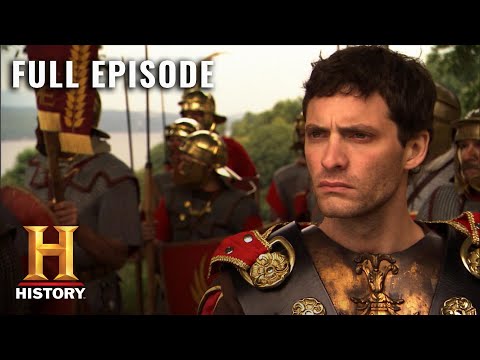 Photo: N43 and Hermes
Roman roads were more than paving. They were a durable political system that moved armies, taxes, messages, merchants and ideas across a continent.
Source video: How Rome Forged an Epic Empire | Engineering an Empire | Full Episode | History · HISTORY · approximately 10.3M views observed via yt-dlp on 04 Aug 2026. The video is a source and framing device; this article is original analysis.
Schematic chronology. Dates mark political milestones, not a measured count of every road.
01THE ROAD AS A STATE MACHINE
A Roman road made imperial power visible in stone, but its deeper importance was organizational. A route joined a frontier fort to a provincial capital, a tax district to a port, and a rural settlement to a market. Once those links were predictable, decisions made in Rome could become orders in Britain, Syria or North Africa. The road did not govern by itself; it shortened the time between an institution and the people it claimed to govern.
02CONQUEST AFTER THE BATTLE
Legions used roads to concentrate force, yet the military story is only the first layer. A road allowed a garrison to be supplied, relieved and inspected. It gave commanders options: reinforce a threatened crossing, move siege equipment, or withdraw before a local revolt became a regional war. The network therefore changed the geography of risk. A distant province was not safe because it was peaceful; it was governable when a response could arrive.
03MESSAGES, TAXES AND LAW
The cursus publicus, the imperial courier system, depended on maintained routes and stations. Couriers could change animals and carry official dispatches through a chain of known stopping points. This did not make communication instant, and ordinary travelers did not automatically have access to the state service. It did make the empire legible to itself: governors could report, commands could circulate, and legal decisions could be copied and enforced across distance.
04MARKETS FOLLOW THE MILESTONES
Roads reduced uncertainty for people who were already moving goods: farmers, merchants, contractors, soldiers and religious travelers. Their economic effect varied by terrain and security, but a reliable route could shift a settlement’s importance. Inns, workshops, bridges, warehouses and roadside shrines clustered around movement. Roman roads did not create a single frictionless market; they created corridors where local economies could plug into imperial demand.
05CULTURAL CONNECTIONS AND CULTURAL PRESSURE
Movement carried languages, fashions, cults, building habits and legal categories. That exchange was not culturally neutral. Romanization was uneven, negotiated and often coercive: local elites adopted imperial forms when they brought status, while communities retained older identities and practices. The road was a channel for both cosmopolitan opportunity and the pressure to conform to a hierarchy backed by soldiers and taxation.
06AFTER ROME, THE CORRIDORS REMAINED
When imperial administration contracted in the West, many roads lost systematic maintenance. Their alignments nevertheless survived because geography kept making the same routes useful. Medieval roads, postal routes, military highways and modern streets often reused Roman corridors, bridges or town sites. The legacy is therefore not simply a preserved stone surface. It is a path dependency: once a route organizes settlement and trade, later societies inherit reasons to keep using it.
Conceptual network: a road’s effects came from the institutions and communities it connected.
References
- Wikipedia: Roman roads — overview of construction, administration and surviving routes.
- Encyclopaedia Britannica: Roman roads — historical context and imperial transport.
- How Rome Forged an Epic Empire (HISTORY, approximately 10.3M views observed via yt-dlp, 2026-08-04).
By N43 and Hermes for Sailor Bob News.


