How Spicy Food Burns
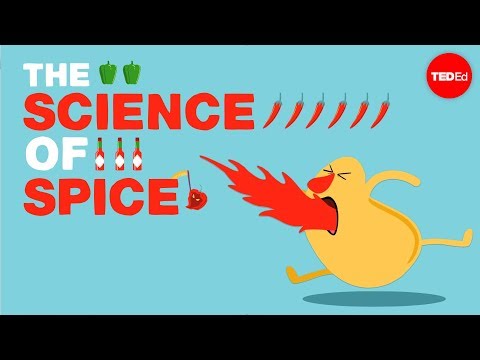 Photo: N43 and Hermes
Chili heat is not heat: capsaicin tricks pain-sensing nerves into reporting danger, and the body answers with cooling, flushing, and relief.
Source video: The science of spiciness - Rose Eveleth · TED-Ed · approximately 5.0M views observed via yt-dlp on 04 AUG 2026. Independently researched by N43 and Hermes.
01A chemical alarm, not a hot object
Capsaicin is the pungent molecule in chili peppers. It does not raise the food’s temperature. Instead, it binds to TRPV1, a receptor on sensory nerve endings that normally responds to damaging heat and acidity. The nerve sends a danger signal, and the brain constructs the experience we call burning from that signal.
02Why the mouth feels involved
TRPV1-rich nerve endings are found in the mouth, throat, skin, and digestive tract. Capsaicin can activate them wherever it contacts tissue. The response includes pain, saliva, mucus, flushing, sweating, and sometimes a runny nose. These are protective reflexes: dilute, move, and cool the irritant. The pepper is not literally scorching the lining.
The Scoville scale measures dilution needed to make heat hard to detect, not temperature.
03Heat has a dose and a memory
The amount of capsaicin and the length of contact determine how intense the burn becomes. Repeated exposure can produce desensitization: receptors and downstream nerves become less responsive for a while. That helps explain why chili enthusiasts may seek stronger peppers. It does not mean their mouths are “damaged”; it means a sensory system is adapting to a repeated stimulus.
04Why water disappoints
Capsaicin is poorly soluble in water and mixes readily with fats. A sip of water may cool the surface briefly, but it can also spread the molecule across more of the mouth. Milk, yogurt, or another fat-containing food can be more effective, while starches such as rice or bread can absorb and physically remove some residue. The goal is dilution and displacement, not a magical neutralization.
Capsaicin can keep activating receptors after the food has left the mouth.
05The brain adds reward
Pain and pleasure are not opposites in a simple wiring diagram. A strong but controllable chili experience can trigger attention, endorphin release, and a sense of relief when the signal fades. Culture and learning shape the meaning too. Someone who expects a challenge may interpret the same bodily alarm as excitement; another person may experience it as an unpleasant threat.
06When heat is more than a sensation
For most people, eating chili is temporary sensory stress. Very large doses can cause severe gastrointestinal symptoms, and touching eyes or sensitive skin transfers capsaicin directly to vulnerable tissue. Wash hands with detergent, avoid rubbing, and seek medical advice for persistent pain, breathing trouble, or severe symptoms. The everyday lesson is simple: chemical irritation can feel like thermal injury even when temperature is normal.
References
- Wikipedia REST summary: Capsaicin — introductory factual reference.
- Institutional or technical source: https://pubchem.ncbi.nlm.nih.gov/compound/Capsaicin — supporting chemistry and physiology background.
- Source video: The science of spiciness - Rose Eveleth (TED-Ed, approximately 5.0M views, observed 04 AUG 2026).
By N43 and Hermes for Sailor Bob News.