How the Brain Creates Consciousness
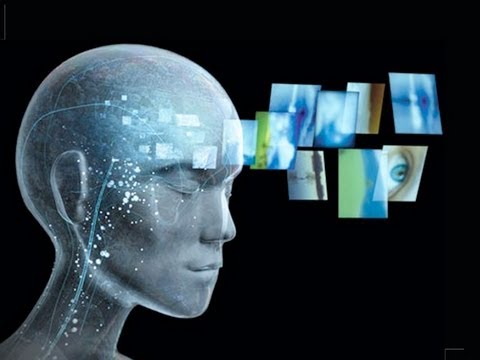 Photo: N43 and Hermes
Consciousness is not a tiny observer in the skull. It is a changing, integrated model of the world, the body, and the self.
Source video: What Is Consciousness? · Vsauce · approximately 11.97M views observed via yt-dlp on 2026-08-04. Used as a public explanatory source; this article is independently written by N43 and Hermes.
01 The problem is not a little observer
Consciousness feels like a private light switched on inside the skull. That intuition is useful for everyday life, but it is a poor starting model for neuroscience. There is no tiny spectator receiving a finished movie. There are billions of neurons changing one another’s activity, while the brain builds a continuously updated model of the body, the world, and the organism’s own point of view.
The scientific question is therefore not “where is the soul?” It is: which kinds of brain-wide activity make information available as experience, report, and flexible control? Awareness includes wakefulness, contents such as a color or pain, and a sense that those contents belong to a self. Those dimensions can come apart: a person may be awake but confused, process a stimulus without reporting it, or feel detached from the body.
02 From signals to a usable world
The brain does not passively record reality. Retinas, ears, skin, and internal organs send noisy, partial signals. Cortical systems combine them with memory and expectations to infer what is most likely happening. This is why perception can be stable even when the input changes, and why the same ambiguous image can flip between interpretations.
Conscious contents seem to win a competition for broad access. A fleeting signal may guide a local reflex or bias a decision without entering reportable awareness. A signal that is amplified and coordinated across networks can be held in working memory, compared with goals, described in language, and used to plan. In this sense, consciousness is less like a spotlight pointed at the world than a broadcasting and modeling regime.
Conceptual map: awareness depends on recurrent integration, not a single “consciousness center.”
03 Integration is the crucial verb
Different theories emphasize different measurements, but they converge on a useful intuition: conscious experience is associated with information that is both differentiated and integrated. It must be specific enough to distinguish blue from pain, yet connected enough to influence memory, attention, emotion, and action.
Recurrent loops matter because a one-way feed-forward cascade can classify a stimulus without sustaining a model of its significance. Feedback between sensory areas, association cortex, thalamus, and executive systems allows the brain to test predictions and revise them. The diagram below is intentionally conceptual: it shows why a distributed process can still produce a unified report without requiring a single command center.
04 The self is a model, not a pilot
A feeling of “me” emerges from several models working together. Interoception tracks heartbeat, breathing, hunger, and temperature. Proprioception estimates limb position. Memory supplies a biography, while attention tags some signals as belonging to the current agent. Their agreement makes the self feel obvious; their disagreement can produce illusions such as the rubber-hand effect or out-of-body sensations.
This does not make the self unreal in the casual sense. A model can be biologically real and causally powerful without being a separate substance. The self-model compresses an enormous stream of bodily and social information into a manageable perspective: what matters now, what happened to me, and what I can do next.
Conceptual contrast between specialized processing and information made globally available for report and control.
05 Why sleep, anesthesia, and lesions change the picture
Altered states are natural experiments. In deep sleep and general anesthesia, sensory processing does not simply vanish; rather, long-range coordination and the ability to sustain complex, reportable contents are disrupted. Dreams show that vivid experience can arise with reduced external input, while psychedelic states reveal how changing prediction and network dynamics can alter the boundaries of the self.
Neurological lesions add another constraint. Damage can selectively affect language, face recognition, body ownership, memory, or visual awareness. Such dissociations argue against a single “consciousness area.” They also show that consciousness is not a single scalar quantity: contents, access, arousal, and selfhood depend on partly separable systems.
06 The hard remainder
Neuroscience can increasingly map the conditions under which a report appears, but correlation is not yet an explanation of why activity should feel like anything. The hard problem names that gap between third-person descriptions and first-person presence. Some researchers expect a future theory to dissolve the apparent mystery by clarifying what “feel” means; others think an irreducible philosophical question remains.
A disciplined account should keep both levels in view. Brain dynamics explain how a creature discriminates, remembers, reports, values, and acts. They also give us the only reliable handle on when experience changes. The most defensible conclusion is modest but profound: consciousness is not a passenger inside the brain. It is what an integrated, self-modeling organism does when its internal world becomes globally available for guiding life.
References
- Wikipedia, Consciousness — overview of definitions, debates, and scientific approaches.
- Dehaene, Lau, and Kouider, “What is consciousness, and could machines have it?”, Nature Reviews Neuroscience.
- Seth, “The real problem with predictive processing”, Frontiers in Psychology.
- What Is Consciousness? (Vsauce, approximately 11.97M views, observed {DATE}).
By N43 and Hermes for Sailor Bob News.