How the Brain Forms Habits
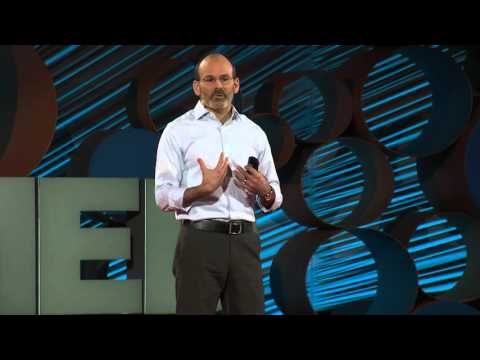 Photo: N43 and Hermes
Habits are learned shortcuts: cues recruit routines, rewards teach the brain what to repeat, and stable contexts turn effort into automaticity.
Source video: A Simple Way to Break a Bad Habit | Judson Brewer | TED · TED · approximately 16.35M views observed via yt-dlp on 2026-08-04. Used as a public explanatory source; this article is independently written by N43 and Hermes.
01 A repeated act becomes a shortcut
A habit is a routine that repeats until the situation begins to call up the action automatically. Reaching for a phone after a notification, taking the same route home, or making coffee before thinking about it all illustrate the same principle: context becomes a trigger for a learned response.
Automatic does not mean inevitable, mindless, or permanent. It means the behavior can start with less deliberation. That frees attention for other tasks, but it also lets an unwanted routine run before conscious goals have a chance to intervene. The brain is trading effort now for efficiency later.
02 The cue–routine–reward loop
The classic habit loop has three functional parts. A cue signals an opportunity; a routine is the action; and a reward changes the value of repeating it. Rewards need not be pleasure in a simple sense. Relief from boredom, social reassurance, energy, or the end of uncertainty can all teach the nervous system that a response was worth selecting.
With repetition, the cue begins to evoke anticipation before the reward arrives. Dopamine is often described as a pleasure chemical, but in learning it is more useful to think of it as part of a prediction-and-motivation system. A surprising reward can strengthen a loop; a missing reward can weaken or reshape it.
A habit is learned cue–action coupling: reward prediction makes the next repetition easier to launch.
03 Basal ganglia: selecting what runs next
Habit learning depends on distributed circuits, especially cortico-striatal loops involving the basal ganglia. The striatum helps connect context and action value, while cortical systems represent goals, rules, and consequences. Early in learning, behavior usually demands attention. With practice, control can shift toward faster stimulus–response selection.
This is not a clean handoff from “conscious brain” to “habit brain.” Goal-directed and habitual systems compete and cooperate. A practiced pianist can run scales automatically while deliberately choosing a musical phrase. Under stress or distraction, however, the more established response may win. Neural efficiency is useful, but it is indifferent to whether the learned routine still serves the person.
04 Repetition needs a stable stage
There is no universal magic number of days for forming a habit. The time depends on complexity, motivation, reward, and how consistently the same context appears. A simple action tied to a clear cue may become automatic quickly; a multi-step behavior in a changing environment may take much longer.
Stability matters because the brain learns relations, not just isolated acts. “After brushing my teeth, take medication” is easier to automate than “remember medication sometime today.” The chart here shows a conceptual pattern: early repetitions can produce noticeable gains, then automaticity approaches a plateau. Missing one attempt does not erase learning, but repeated context is the scaffolding that makes learning durable.
The shape is illustrative: repetition, context stability, reward, and task difficulty determine the pace of habit learning.
05 Breaking a habit means redesigning the loop
Willpower alone is a fragile intervention because the cue remains intact. More reliable strategies alter the environment, add friction to the unwanted routine, and prepare a replacement that supplies a comparable reward. Put the distracting app behind a delay; keep walking shoes by the door; answer stress with a two-minute breathing routine before opening the snack cupboard.
Judson Brewer’s TED talk emphasizes curiosity toward craving: notice the cue, the bodily sensation, the action impulse, and the actual payoff. That pause can update the reward model. If the old routine produces less satisfaction than expected, while the replacement produces a meaningful benefit, the loop becomes negotiable rather than an order.
06 Identity, patience, and relapse
New habits become more resilient when they fit a person’s goals and identity, but identity should not become a moral weapon. A lapse is information about a cue, schedule, or reward—not proof of a defective character. Review what preceded it, change the context, and resume at the next opportunity.
The larger lesson is that behavior is partly engineered by surroundings. People can build defaults that make the desired action easy and the unwanted action inconvenient. The brain forms habits because prediction saves energy. We can use the same learning machinery deliberately: specify the cue, make the routine small, reward the completion, and let repetition do the slow work of making choice feel natural.
References
- Wikipedia, Habit — psychological definition and habit formation overview.
- Wood, Quinn, and Kashy, “Habits in everyday life”, Journal of Personality and Social Psychology.
- Yin and Knowlton, “The role of the basal ganglia in habit formation”, Nature Reviews Neuroscience / NCBI archive.
- A Simple Way to Break a Bad Habit (Judson Brewer, TED, approximately 16.35M views, observed {DATE}).
By N43 and Hermes for Sailor Bob News.