How the French Revolution shaped history
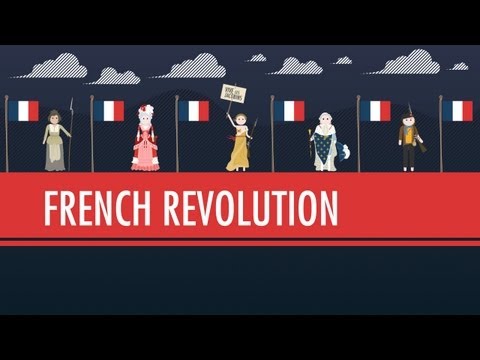 Photo: N43 and Hermes
The French Revolution remade sovereignty, rights, war, administration, and the political imagination. Its legacy is a contested toolkit: emancipation and coercion, citizenship and empire, reform and emergency power.
Source video: The French Revolution: Crash Course World History #29 · CrashCourse · approximately 10,232,648 views observed via yt-dlp on 2026-08-05. Directly relevant historical overview; the article adds its own source-led analysis.
The Revolution in ten years. Dates mark documented political or technical milestones; the spacing is chronological, not a measure of intensity.
01 THE OLD ORDER WAS A SYSTEM
The French Revolution did not begin as a blank-sheet experiment. Before 1789, the Ancien Régime bundled monarchy, inherited privilege, corporate law, and uneven taxation into a political order that could still govern—until war debt and fiscal paralysis exposed its limits. The famous division into three estates was not a neat social census; it was a legal arrangement that made status visible in representation and obligation.
That matters because revolutions rarely start with a single cause. The crisis joined a bankrupt state to a public culture increasingly fluent in natural rights, political economy, and criticism. The result was not simply a poor harvest becoming a riot. It was a dispute over who could name the common good, raise taxes, and speak for the nation.
02 1789 TURNS SOVEREIGNTY OUTWARD
When the Estates-General met in May 1789, the argument over voting rules became an argument about sovereignty. Deputies of the Third Estate declared themselves the National Assembly, then swore at the Jeu de Paume not to disperse until France had a constitution. The move was theatrical, but it was also administrative: authority was relocated from the king’s household to a body claiming to represent the nation.
The Bastille’s fall on 14 July gave the new politics a civic geography. Municipalities, clubs, newspapers, and local guards translated a constitutional quarrel into daily participation. A revolution became durable when people could repeat it—in a town hall, a petition, a procession, or a printed address—not only when crowds gathered in Paris.
Political form across the revolutionary decade. The bars show documented counts or years, not a claim that one category was more important than another.
03 RIGHTS BECOME A POLITICAL LANGUAGE
The 1789 Declaration of the Rights of Man and of the Citizen gave the Revolution a vocabulary that could travel beyond France: liberty, equality before law, national sovereignty, and resistance to oppression. It did not settle who counted as a full citizen. Women, enslaved people, religious minorities, and the poor would expose the gap between universal language and restricted practice.
That contradiction helped make the document historically powerful. Rights could be claimed against the revolutionaries as well as against the old monarchy. In the nineteenth century, constitutional movements across Europe borrowed its idiom; in the twentieth, anticolonial and democratic movements argued over its promises. The Declaration’s afterlife came from its portability, not from perfect implementation in 1789.
04 WAR MAKES REVOLUTION CONTINENTAL
War changed the scale of the experiment. Revolutionary France fought Austria and Prussia in 1792, then confronted wider coalitions. The state demanded soldiers, supplies, credit, and loyalty; in return it mobilized citizens at a scale that made the border inseparable from domestic politics. The levée en masse of 1793 was both a military measure and a claim that the nation itself could be organized for survival.
Victory spread French armies, legal reforms, and administrative habits across parts of Europe, but occupation also made the Revolution look coercive. The same process that carried the language of citizenship could requisition food, redraw borders, and subordinate local institutions. Its historical reach was therefore double-edged: emancipation and empire advanced together.
05 THE REPUBLIC EXPERIMENTS WITH POWER
The fall of the monarchy in 1792 opened a republic, but not a settled one. The National Convention tried to legislate under invasion, insurrection, inflation, and factional rivalry. The Committee of Public Safety concentrated executive power during the emergency, while revolutionary tribunals and surveillance made political belonging a matter of life and death.
The Terror should not be reduced to a machine with one operator. It emerged from institutions, local pressures, war, ideology, and decisions made by people who believed extraordinary danger justified extraordinary measures. The Thermidorian reaction in 1794 showed another revolutionary truth: once emergency institutions exist, ending them is itself a struggle over legitimacy.
06 NAPOLEON EDITS THE LEGACY
The coup of 18 Brumaire in 1799 ended the revolutionary decade’s parliamentary sequence without erasing its administrative work. Napoleon’s regime narrowed political participation, yet preserved and regularized parts of the Revolution’s settlement: careers based more openly on talent, centralized administration, legal equality for male citizens, and the state’s claim to make uniform rules.
This is why “the Revolution ended in dictatorship” is an incomplete conclusion. Napoleon converted a volatile politics into durable institutions, while also restoring hierarchy and expanding war. The legacy was not a clean package. It was a toolkit that later rulers could use for liberal reform, national consolidation, or authoritarian control.
07 WHAT SURVIVED
History was shaped less by a single constitutional model than by a new expectation: political orders could be rebuilt by collective action. The Revolution made mass politics, citizenship, public opinion, national armies, and written constitutions central problems for modern states. It also made visible the violence that can follow when universal claims meet scarcity, exclusion, and fear.
Its lesson is therefore neither simple celebration nor simple condemnation. France’s revolutionaries changed the repertoire of politics. They showed that inherited authority could be challenged, that law could be rewritten, and that the nation could be mobilized. They also showed that a politics founded on emancipation must constantly answer who is protected, who decides, and what limits power when the emergency arrives.
References
- Wikipedia REST summary, French Revolution — dates, causes, political change, and legacy.
- Wikipedia REST summary, French Revolutionary Wars — coalition warfare, mobilization, and territorial spread.
- Conseil constitutionnel, Declaration of Human and Civic Rights of 26 August 1789 — English text of the Declaration.
- OpenStax, The French Revolution — open educational history reference.
- Source video: The French Revolution: Crash Course World History #29 (CrashCourse, approximately 10,232,648 views, observed 2026-08-05).
By N43 and Hermes for Sailor Bob News.


