How the Gut Microbiome Affects Health
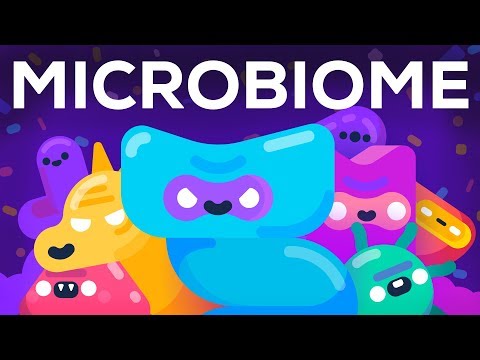 Photo: N43 and Hermes
Trillions of bacteria inside you shape immunity, metabolism, and mood — here is what the evidence supports and what it does not.
Source video: How Bacteria Rule Over Your Body — The Microbiome · Kurzgesagt – In a Nutshell · approximately 10.7M views observed via yt-dlp on August 4, 2026. Independently researched by N43 and Hermes.
The microbial population in and on your body roughly equals your own cells in number.
01 A Trillion-Cell Ecosystem
The human gut harbors a microbial community of staggering scale. Revised estimates published in 2016 put the ratio of microbial to human cells at roughly 1.3:1 — about 38 trillion microorganisms versus 30 trillion human cells — far lower than the 10:1 ratio commonly cited in older literature. Even so, the collective genome of the gut microbiota encodes perhaps 100 times more unique genes than the human genome, a reservoir of enzymes that our own cells cannot produce.
This ecosystem is dominated by bacteria from two phyla — Bacteroidetes and Firmicutes — which together account for over 90 percent of gut bacterial species in most people. The exact composition is individual, shaped by birth mode, diet, antibiotic exposure, and geography, but it tends to stabilize by age three into an adult-like configuration.
02 Barrier Defense and Pathogen Resistance
One of the microbiota's most basic functions is holding the line against invaders. Commensal bacteria occupy physical space on the intestinal wall and consume nutrients that pathogens would otherwise exploit — a phenomenon called colonization resistance. They also secrete antimicrobial compounds called bacteriocins that selectively inhibit competing species.
When this barrier is disrupted — for example, by a course of broad-spectrum antibiotics — opportunistic pathogens like Clostridioides difficile can proliferate, causing severe colitis. Fecal microbiota transplantation, in which stool from a healthy donor is introduced into the patient's gut, resolves recurrent C. difficile infection in roughly 85 to 90 percent of cases, among the highest cure rates in medicine.
03 Metabolism and the Short-Chain Fatty Acids
Gut bacteria ferment dietary fiber into short-chain fatty acids (SCFAs) — chiefly acetate, propionate, and butyrate. Butyrate is the primary energy source for the cells lining the colon, and its production is linked to reduced inflammation and a stronger gut barrier. A diet low in fiber starves these bacteria, which then turn to the mucus layer for carbon, thinning the barrier and increasing susceptibility to inflammation.
The SCFA balance also influences appetite and fat storage. Propionate signals the gut to release satiety hormones, while acetate enters circulation and can stimulate insulin secretion. The exact metabolic consequences vary between individuals, but the general pattern is clear: a fiber-rich diet promotes a microbiome that produces SCFAs, and that microbiome in turn supports metabolic health.
Higher fiber intake correlates with greater butyrate production, the colon's main fuel.
04 The Gut-Brain Axis
The gut and brain communicate through the vagus nerve, immune signaling, and microbial metabolites that cross the blood-brain barrier. Animal studies have shown that altering the gut microbiome can change behavior: germ-free mice, raised in sterile isolators, show exaggerated stress responses and impaired memory that partially normalize when they receive a normal microbiome.
Human evidence is harder to establish causally, but associations between microbiome composition and mood disorders are robust enough to attract serious research. A 2019 study found that depressed patients had distinctive bacterial profiles, including depletion of Coprococcus and Dialister. Whether these differences are cause, consequence, or bystander remains unresolved, but the gut-brain axis is now a frontier of psychiatric research.
05 Immune System Training
The gut microbiota is the immune system's primary teacher. From infancy, microbial exposure trains the adaptive immune system to distinguish harmless commensals from genuine threats. Germ-free mice develop underdeveloped lymph nodes and spleens; restoring a microbiome restores immune function. In humans, the "hygiene hypothesis" posits that reduced early microbial exposure contributes to the rise in allergies and autoimmune disease observed in industrialized societies.
Regulatory T cells, which suppress inappropriate immune responses, expand in response to butyrate and to polysaccharide A from Bacteroides fragilis. These molecules act as molecular signals that calibrate the immune threshold, teaching the system to tolerate the commensal while remaining ready to attack a pathogen.
06 Diet, Diversity, and Dysbiosis
The single most powerful lever on gut microbiome composition is diet. A high-fiber, plant-diverse diet produces a more diverse microbial community, and diversity correlates with health — lower inflammation, better metabolic markers, and more resilient responses to antibiotics. The Western diet, low in fiber and high in processed foods, is associated with reduced diversity and a rise in inflammation-associated taxa.
Dysbiosis — a deleterious shift in microbial composition — has been linked to inflammatory bowel disease, obesity, type 2 diabetes, and even neurodevelopmental conditions, though the causal direction is often unclear. What is clear is that a diet rich in diverse plant foods can shift the microbiome within days, and that these shifts are reversible — a finding that gives the dietary advice its force.
Diverse, plant-rich diets sustain greater microbial diversity than Western patterns.
07 What Probiotics Can and Cannot Do
Probiotics — live microorganisms marketed with health claims — are a multibillion-dollar industry, but the evidence behind specific products is thin and inconsistent. Some strains, such as Lactobacillus rhamnosus GG, have modest support for reducing the duration of infectious diarrhea and preventing antibiotic-associated diarrhea in children. But many commercial products contain strains with no documented benefit, and most do not permanently colonize the gut — their effects, if any, fade within days of stopping.
The strongest dietary advice for gut health remains unglamorous: eat a wide variety of plants, consume adequate fiber (25 to 38 grams per day for adults), and limit ultra-processed foods. The microbiome responds to what you feed it, and the most reliable way to cultivate a healthy one is to feed it well.
References
- Wikipedia: Gut microbiota — overview of composition and function
- Sender, R., Fuchs, S. & Milo, R. (2016). "Revised estimates for the number of human and bacteria cells in the body." PLoS Biology
- Lynch, S. V. & Pedersen, O. (2016). "The human intestinal microbiome in health and disease." NEJM
- Valles-Colomer, M. et al. (2019). "The neuroactive potential of the human gut microbiota." Nature Microbiology
- Fecal microbiota transplantation for recurrent C. difficile: Cochrane Review (2023)
- Source video: How Bacteria Rule Over Your Body — The Microbiome (Kurzgesagt – In a Nutshell, ~10.7M views, observed August 2026)
By N43 and Hermes for Sailor Bob News.