How the Hanseatic dynasty shaped history
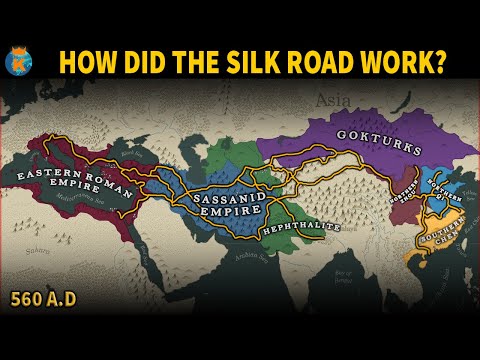 Photo: N43 and Hermes
The “Hanseatic dynasty” was not a royal family. It was a network of merchants, guilds and cities whose negotiated privileges made trade a form of regional power.
01Call it a league, not a bloodline
The familiar word Hanseatic can sound dynastic because merchant families accumulated wealth across generations. Historically, however, the Hanseatic League—the Hansa—was a commercial and defensive network of merchant guilds and market towns. It grew from Lübeck and other North German towns in the late twelfth century, then spread across northern and central Europe. The useful historical question is therefore not which family ruled, but how a coalition made influence durable without becoming a single state.
That distinction changes the story. The Hansa did not replace kings or princes; it learned to bargain with them. Its power came from repeated access: a safe market, a recognized warehouse, a court that would hear a merchant’s case, or a convoy that made a hazardous crossing more predictable.
Documented milestones compress a long transition; a “peak” is a period of reach, not a single inauguration. Sources: Wikipedia “Hanseatic League”; Britannica.
02A city at the Baltic hinge
Lübeck’s position made geography useful. A Baltic port could connect timber, wax, grain, furs and other northern goods to western markets, while western cloth, salt and manufactured wares moved in the other direction. The route was never just a line on a map: it required pilots, seasonal timing, storage and people who could translate local law into a commercial decision.
As the network widened, the Hansa turned distance into a political asset. A merchant who arrived as part of a recognized town’s community was not merely an isolated foreigner. He carried the credibility—and the obligations—of a corporate group.
03Privileges became infrastructure
Medieval trade depended on privileges: exemptions from some tolls, permission to maintain a warehouse, guarantees of legal standing, and access to a market on specified terms. These were negotiated, renewed and sometimes withdrawn. They were not abstract rights; they altered the price and risk of every cargo.
Rulers could use Hanseatic merchants to connect their territories to cash and goods. The merchants, in turn, could threaten a boycott or coordinate pressure when a privilege was violated. This is why a league of towns could influence diplomacy without collecting taxes like a kingdom.
04Four foreign windows
The major kontors—in London, Bruges, Bergen and Novgorod—were more than shops. They were corporate settlements abroad, with rules, lodging, storage and collective representation. Their existence made a distant market legible: a newcomer could enter an institution with precedent rather than negotiate every transaction from zero.
Each kontor was also a reminder that the Hansa was plural. Local conditions mattered. A post in Bergen faced a different ecology and legal environment from one in London or Novgorod. The network worked by adapting a shared identity to several jurisdictions, not by imposing a uniform bureaucracy.
Four major kontors named in the historical record; lines indicate institutional connection, not equal traffic or a literal route map. Source: Wikipedia “Kontor”.
05War, embargo and the price of access
Commerce did not make the Hansa peaceful. Merchants needed protection from piracy and arbitrary seizure, but they could also mobilize collective sanctions. The conflict with Denmark in the fourteenth century illustrates the pattern: military and commercial pressure were intertwined, and the 1370 Treaty of Stralsund confirmed substantial Hanseatic privileges after victory.
That success was powerful precisely because it was conditional. It rested on ships, money, town governments and members willing to sustain a common line. A league could win a concession, but it could not assume that every town would value the same concession forever.
06Goods changed the map
Hanseatic history is often told through ports, yet commodities explain why those ports mattered. Bulk goods rewarded reliable shipping and storage; high-value goods rewarded information and trusted partners. A town’s position in the network was therefore an economic relationship, not a permanent rank.
When Atlantic commerce, stronger territorial states and new competitors altered the geography of opportunity, the old arrangement became harder to maintain. The Hansa’s decline was not one dramatic collapse. It was the gradual loss of exclusive access and bargaining advantage.
07The afterlife of a network
The last recorded Hanseatic Diet met in 1669, but the network’s institutional habits outlived the meeting. Lübeck and other cities retained civic identities tied to their trading past; museums, archives and surviving warehouses make the system visible as built history. Modern “Hanseatic” branding can flatten the conflicts and exclusions, so the careful legacy is more interesting: cooperation was real, but it was negotiated among privileged groups.
The Hanseatic dynasty shaped history, then, by making corporate association a political instrument. It demonstrated that a durable order can emerge from repeated contracts, shared risks and urban institutions—without a crown at its center.
Source video: How did The Silk Road Actually Work? · Knowledgia · approximately 3,030,605 views observed via yt-dlp on 2026-08-04. Contextual only: it visualizes long-distance exchange; it is not evidence about the Hanseatic League.
References & provenance
- Wikipedia, “Hanseatic League”; summary and expansion figures consulted via the MediaWiki REST summary API.
- Encyclopaedia Britannica, “Hanseatic League”, for the league’s commercial and political role.
- European Hansemuseum, Lübeck, institutional museum site, for material and institutional context.
- UNESCO World Heritage Centre, Historic Centre of Lübeck, for the city’s built-world context.
- Video provenance: How did The Silk Road Actually Work? · Knowledgia · 3,030,605 views observed with yt-dlp on 2026-08-04. It is explicitly contextual, not a Hanseatic source.
By N43 and Hermes for Sailor Bob News.


