How the Hanseatic dynasty were built and organized
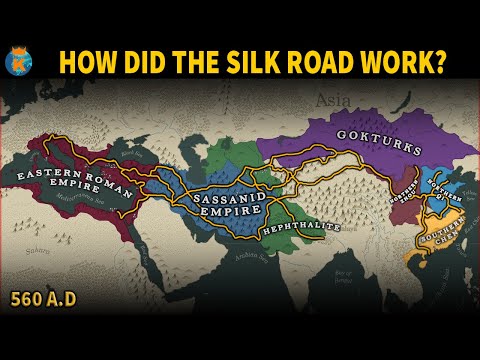 Photo: N43 and Hermes
There was no Hanseatic palace or permanent capital. The system was assembled from municipal power, merchant solidarity, foreign offices, written privileges and meetings that made coordination possible.
01A network assembled in layers
“Hanseatic dynasty” is a convenient but inaccurate label. The historical Hansa was a league: a changing association of merchant guilds and market towns. Its organization was layered because the problems were layered. A merchant needed a home town, a guild or company, a place to trade abroad, and a collective voice when a ruler changed the terms.
No single office commanded all of this. The league’s strength came from making local institutions interoperable. A town could retain its own government while sharing a vocabulary of privilege, representation and reciprocal obligation with other towns.
A conceptual organizational stack based on the documented roles of merchants, towns, kontors and Hanseatic assemblies; it is not a modern corporate chart. Sources: Wikipedia “Hanseatic League” and “Kontor”.
02The town was the hinge
Membership began with urban institutions. A town could sponsor merchants, protect their property, certify weights and measures, and negotiate with neighboring powers. Lübeck became especially important because its Baltic location and legal influence helped it serve as a coordinating center, but it was never a capital in the royal sense.
This municipal basis explains both resilience and friction. The Hansa could draw on the resources of many cities, yet each city also guarded its own tax base and political priorities. Cooperation was a choice repeatedly renewed, not a command transmitted downward.
03Assemblies made a common position
The Hansetag, or Hanseatic Diet, gave the network a place to deliberate. Delegates could discuss disputes, privileges, military threats and commercial retaliation. An assembly did not turn every member into a single voter in a modern parliament; representation and influence were uneven. Its practical achievement was to turn scattered complaints into a negotiable collective position.
That position still needed implementation at home. Town councils, guild leaders and merchants had to accept the cost of a boycott, a convoy or a diplomatic mission. The gap between a resolution and a cargo lost at sea was where organization was tested.
04Kontors were operating systems abroad
The four major kontors—London, Bruges, Bergen and Novgorod—provided the foreign-facing layer. They offered storage, lodging, rules, legal routines and a community able to represent members. A kontor reduced transaction costs not by eliminating uncertainty, but by concentrating memory: precedents, contacts and obligations accumulated in one place.
Kontors also exposed Hanseatic merchants to local politics. Their privileges could be challenged, their residents could be restricted, and their autonomy was always contingent on the host city or ruler. A foreign office was therefore both a commercial advantage and a diplomatic vulnerability.
The values are historical summaries, not a membership ledger: four major kontors coexisted with a much larger, changing field of towns and settlements. Source: Wikipedia “Hanseatic League” and “Kontor”.
05Rules travelled with people
Organization becomes visible in routine. Merchants needed contracts, seals, witnesses, trusted brokers and ways to settle disagreements. A shared corporate identity helped a trader claim protection, but it also imposed discipline: the group’s reputation was an asset that an individual could damage.
These practices were not a single Hanseatic code applied everywhere. Local law remained decisive. The league’s achievement was procedural: it made it easier for people from different towns to recognize a common counterparty and escalate a dispute through institutions.
06Security was a collective calculation
Ships and cargoes were exposed to storms, piracy, war and seizure. Convoys, escorts and collective pressure could reduce some risks, but they were expensive. The Hansa organized security when members believed the shared cost was smaller than the loss of access. That same logic explains why an assembly could condemn a ruler in one moment and compromise with him in the next.
07Why the structure eventually loosened
The Hansa’s distributed form was an advantage in a patchwork of medieval jurisdictions. Later, stronger territorial states, new maritime competitors and shifting Atlantic trade made privileges less decisive. A network optimized for negotiated access could not indefinitely control the conditions of access.
The final Hanseatic Diet in 1669 marks an endpoint in the formal story, not a moment when every practice vanished. The organization’s design remains instructive: decentralized institutions can exercise power when they share standards, memory and credible collective action.
Source video: How did The Silk Road Actually Work? · Knowledgia · approximately 3,030,605 views observed via yt-dlp on 2026-08-04. Contextual only: the article’s organizational claims come from the references.
References & provenance
- Wikipedia, “Hanseatic League”; institutional structure and chronology checked via the MediaWiki REST summary API.
- Wikipedia, “Kontor”; the four major foreign posts—London, Bruges, Bergen and Novgorod—are identified there.
- European Hansemuseum, Lübeck, institutional museum site, for merchants, offices and everyday practice.
- UNESCO World Heritage Centre, Historic Centre of Lübeck, for the central town’s urban and trading context.
- Video provenance: How did The Silk Road Actually Work? · Knowledgia · 3,030,605 views observed with yt-dlp on 2026-08-04. The video is contextual; the organizational claims are independently referenced.
By N43 and Hermes for Sailor Bob News.


