How the Industrial Revolution Shaped History
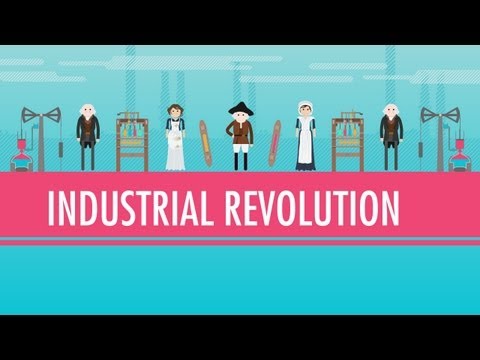 Photo: N43 and Hermes
The Industrial Revolution shaped history by reorganizing energy, work, cities, markets, empire, class politics, public health, and the scale at which societies could produce and consume.
Source video: Coal, Steam, and The Industrial Revolution: Crash Course World History #32 · CrashCourse · approximately 7,593,749 views observed via yt-dlp on 2026-08-04. This is a contextual source for a contextual source for the Industrial Revolution's chronology, energy transition, and social consequences rather than a sole source for the specific claims below. Independently researched by N43 and Hermes.
01INDUSTRIALIZATION WAS A SYSTEM, NOT A SINGLE INVENTION
The Industrial Revolution did not begin when one machine appeared. It emerged from linked changes in energy, finance, transport, skills, land use, markets, and institutions. Spinning machinery mattered because cotton could be supplied, capital could be invested, workers could be directed, and goods could be sold. Steam mattered because coal, iron, engineering, and transport made power available in new places. The historical shift was an ecosystem of mutually reinforcing choices.
02ENERGY CHANGED THE SCALE OF POSSIBILITY
For centuries, production relied on human labor, animals, wind, and water. Industrial Britain layered coal and steam onto those older systems, allowing factories, mines, pumps, ships, and railways to operate with a different rhythm and reach. This was not an instant replacement: waterwheels remained important, and agriculture still fed the economy. But concentrated fossil energy made it possible to move more material, run more machines, and expand output beyond the limits of a local river or season.
Industrialization layered new energy systems onto older labor, water, and agricultural worlds.
03FACTORIES REORGANIZED TIME
The factory was not simply a larger workshop. It gathered machines, workers, supervisors, raw materials, and finished goods under a schedule controlled by owners and managers. Bells, clocks, shifts, fines, and measured tasks made time a discipline as well as a resource. Workers brought skills from domestic and craft production, but they entered a workplace where the pace of a machine could override the pace of a household. Industrial history is therefore also a history of time becoming governable.
04MARKETS EXPANDED THROUGH UNEQUAL CONNECTIONS
Industrial goods reached consumers through canals, roads, ports, railways, credit, advertising, and imperial trade. Cotton textiles linked British mills to American slavery, colonial agriculture, Indian producers, and global consumers. The factory did not float above politics. Its cheap inputs and expanding markets depended on law, property, coercion, and infrastructure. Industrialization created abundance in some goods while distributing its risks and rewards across sharply unequal places.
05CITIES MADE THE TRANSFORMATION VISIBLE
Industrial cities concentrated opportunity and danger. Migration supplied labor; dense neighborhoods supplied proximity; rivers, canals, and rail lines supplied movement. The same concentration that made production efficient could produce overcrowding, polluted water, disease, and precarious housing. Urban problems were not accidental side effects that appeared after the real revolution. They were built into the geography of accelerated production, and they forced new arguments about sanitation, inspection, planning, and public responsibility.
Factories depended on materials, people, markets, and cities—and produced pressures for new laws and institutions.
06CLASS POLITICS GREW FROM THE WORKPLACE
Industrial society did not invent inequality, but it changed how inequality was organized and understood. Owners, investors, managers, skilled workers, casual laborers, women, and children occupied different positions within production. Trade unions, friendly societies, strikes, petitions, socialist movements, and reform campaigns turned workplace experience into collective politics. Class was not merely a label applied by later historians; it was made through relationships over wages, control, risk, dignity, and time.
07THE STATE LEARNED TO MANAGE INDUSTRIAL RISK
As factories and cities expanded, governments faced pressures that older administrative habits could not easily contain. Factory acts, mine regulations, education laws, public-health measures, censuses, and rail standards represented attempts to make a rapidly changing society governable. Reform was partial and contested, often arriving after preventable suffering. Still, the industrial era helped redefine what people expected states to know and do: inspect workplaces, regulate hazards, and treat health as a public concern.
08THE REVOLUTION CHANGED THE PLANETARY CLOCK
Industrialization shaped history beyond nineteenth-century Europe. It intensified extraction, accelerated communication, expanded military capacity, altered food and commodity systems, and created emissions whose consequences reach the present. It also generated technologies, movements, and expectations that spread unevenly through global networks. To call it progress without qualification hides its costs; to call it only exploitation hides the agency of workers and reformers. Its historical power lies in how many systems it forced to move at once.
References
- Wikipedia, Industrial Revolutionchronology, inventions, energy, labor, and global effects.
- Encyclopaedia Britannica, Industrial Revolutioneconomic and social transformation.
- Science and Industry Museum, The Industrial Revolutionmachines, work, and industrial communities.
- British Library, The Industrial Revolutiontechnology, society, and cultural change.
- Source video: Coal, Steam, and The Industrial Revolution: Crash Course World History #32CrashCourse; contextual source, metadata verified via yt-dlp and YouTube oEmbed on 2026-08-04; 7,593,749 observed views.
By N43 and Hermes for Sailor Bob News.


