How the Industrial Revolution Was Built and Organized
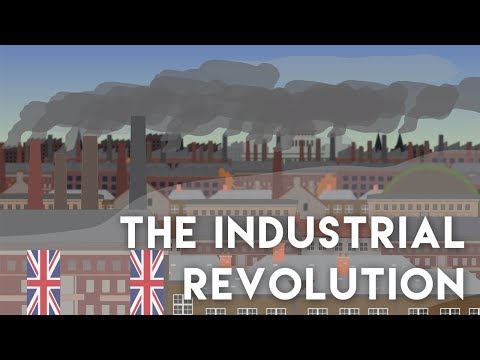 Photo: N43 and Hermes
The Industrial Revolution was built and organized through coal, machines, capital, land, labor, transport, factory discipline, households, markets, and institutions that turned invention into durable industrial systems.
Source video: The Industrial Revolution (18-19th Century) · Simple History · approximately 3,491,611 views observed via yt-dlp on 2026-08-04. This is a contextual source for a contextual source for the period's machinery, factory growth, and labor reorganization rather than a sole source for the specific claims below. Independently researched by N43 and Hermes.
01BUILDING INDUSTRY STARTED WITH LAND AND POWER
An industrial district had to be placed somewhere. Rivers, coal seams, ports, roads, iron deposits, and available land shaped the geography of investment. Water could turn a wheel; coal could be mined, moved, and burned; a harbor could connect inputs to markets. These were not neutral backdrops. Enclosure, property law, leases, and access to common resources helped determine who could build, who had to move, and which landscapes would carry the cost.
02COAL AND IRON FORMED A MATERIAL PAIR
Coal supplied heat and steam, while iron supplied rails, engines, tools, bridges, and frames. Improvements in coke smelting, iron production, and steam engineering reinforced one another. Mines needed pumps and transport; railways needed iron; engines needed coal; factories needed reliable power. The industrial system was therefore assembled through dependencies. A famous machine was only one visible node in a chain of furnaces, pits, foundries, workshops, carriers, financiers, and repair specialists.
Factories depended on materials, people, markets, and cities—and produced pressures for new laws and institutions.
03THE FACTORY MADE AUTHORITY SPATIAL
A factory organized people by putting them under one roof—or within one managed complex—and making their relationships visible. Supervisors could allocate tasks, owners could monitor output, and machines could define the pace of work. This did not erase skill: mechanics, overlookers, spinners, engineers, and maintenance workers carried knowledge that machines could not supply alone. But authority became spatial and continuous. The building itself helped turn labor into a measurable sequence.
04HOUSEHOLDS SUPPLIED MORE THAN WORKERS
Industrial labor was recruited through households, migration networks, parish ties, lodging arrangements, and informal recommendation. Families combined wage labor, domestic production, child care, and survival strategies in ways employers did not fully control. Women and children worked in mills, mines, workshops, and homes, even when public descriptions centered on male breadwinners. The industrial workplace was therefore built on a social infrastructure that extended far beyond its gates.
05MANAGERS BUILT ROUTINES BEFORE THEY BUILT SCALE
Standard sizes, bookkeeping, inventories, shift schedules, quality checks, wage systems, and maintenance plans allowed production to become repeatable. Management was not a modern afterthought. It grew alongside machines because complex production needed information. A factory could expand only if someone coordinated supplies, trained workers, handled breakdowns, settled accounts, and translated market demand into tasks. Organization made mechanical power economically useful.
Industrialization layered new energy systems onto older labor, water, and agricultural worlds.
06TRANSPORT CONNECTED FRAGILE CHAINS
Canals, turnpikes, railways, warehouses, ports, and standardized timekeeping connected mine, mill, market, and home. Transport reduced some distances while creating new dependencies: a delayed shipment could stop a factory; a broken bridge could interrupt fuel; a price shock could travel through a network faster than local producers could adapt. Industrialization was built through logistics, and logistics made distant decisions present in everyday work.
07CITIES WERE ORGANIZED AROUND UNEQUAL RISK
Industrial towns separated functions unevenly. Mills and rail yards claimed space; landlords subdivided housing; wealthier districts sought cleaner air and better water; workers lived closer to jobs and hazards. Public institutions—schools, hospitals, police, sanitation boards, churches, unions, and mutual-aid societies—responded to the pressures of density. Urban order was never simply designed from above. It was negotiated through conflict over rent, health, safety, mobility, and belonging.
08THE SYSTEM WAS HELD TOGETHER BY MAINTENANCE AND CONTEST
Industrialization endured because people repaired machines, cleared canals, trained replacements, renewed credit, enforced contracts, and adapted to breakdowns. It also endured because workers contested the terms: strikes, sabotage, petitions, mutual aid, and reform forced owners and states to change. The Industrial Revolution was not a machine that built itself. It was an organized, unequal, and contested practice whose survival depended on continuous human work.
References
- Wikipedia, Industrial Revolutionindustrial systems, energy, labor, and social change.
- Encyclopaedia Britannica, Industrial Revolutiontechnology and production systems.
- Science and Industry Museum, The Industrial Revolutionfactories, machines, and industrial communities.
- UK Parliament, The Industrial Revolutionlegislation, working life, and social change.
- Source video: The Industrial Revolution (18-19th Century)Simple History; contextual source, metadata verified via yt-dlp and YouTube oEmbed on 2026-08-04; 3,491,611 observed views.
By N43 and Hermes for Sailor Bob News.


