How the Khmer Empire Shaped History
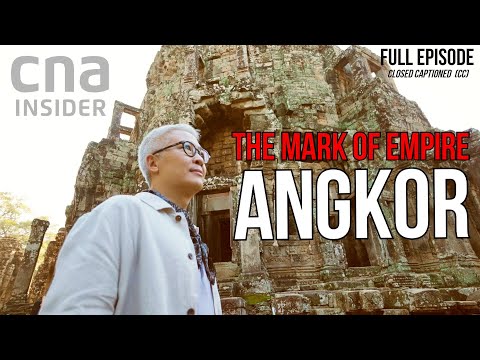 Photo: N43 and Hermes
Angkor was more than a monumental capital. The Khmer Empire joined ritual, water, roads and regional diplomacy into a durable model of power whose traces still shape Cambodia and the history of mainland Southeast Asia.
Source video: Cambodia's Temple Kingdom | The Mark Of Empire | Angkor · CNA Insider · approximately 3,810,216 views observed via yt-dlp on 2026-08-04. contextual documentary: its Angkor temple focus is evidence for the empire's political and cultural reach. Independently researched by N43 and Hermes.
01 An empire built around Angkor
The Khmer Empire, known to its inhabitants as Kambuja, emerged from earlier mainland Southeast Asian polities and is conventionally dated from 802 to 1431. Its center was Angkor, a shifting urban landscape rather than a single palace compound. Temples, reservoirs, roads and settlements made the capital both a ritual image of the cosmos and a practical organizer of people and resources.
02 The king was a builder of relationships
Royal authority was expressed through temples and ceremonies, but it was not only symbolic. A ruler had to bind local elites, religious institutions and productive landscapes into a workable order. The famous devaraja idea is best handled cautiously: it describes a political-religious language of kingship, not a simple claim that every person was directly governed from one center.
The dates mark a conventional historical frame, not an unbroken line of centralized control.
03 Water made the city durable—and vulnerable
Angkor’s barays, canals and embankments helped manage water in a monsoon environment, supporting rice production and urban life. They did not create a perfectly controlled machine. Maintenance, sediment, floods, drought and changing rainfall all mattered. The historical significance lies in the scale of coordination: water engineering turned seasonal uncertainty into a field of administration, labor and legitimacy.
04 A regional power, not an isolated wonder
Khmer influence reached across much of mainland Southeast Asia through changing combinations of conquest, tribute, marriage, trade and cultural prestige. Its architecture and inscriptions show a state participating in a wider world of Indian Ocean and South China Sea connections. “Influence” should not be mistaken for uniform occupation; relationships varied by place and period.
05 Jayavarman VII and the public face of rule
Under Jayavarman VII in the late twelfth and early thirteenth centuries, royal projects included roads, rest houses and hospitals as well as temples. These works projected a Buddhist-inflected ethic of kingship, while also making movement and administration more legible. Their scale reminds us that infrastructure is never neutral: it can provide care and consolidate a political order at the same time.
Angkor's power was material and symbolic at once: temples, water infrastructure and routes made authority visible and useful.
06 Why the center changed
Angkor’s later history cannot be reduced to a single collapse event. Environmental stress, infrastructure demands, political competition, shifts in trade and the growing importance of Theravada Buddhist networks all belong in the explanation. The move away from Angkor was a long rebalancing of power, not the moment a civilization vanished.
07 The history that remains
Khmer history survives in living religious practice, Cambodian identity, conservation debates and the physical landscape of Angkor. The monuments are not frozen evidence of a lost people. They are sites continually interpreted by communities, archaeologists and institutions. That afterlife is part of the empire’s historical impact: the past still organizes the present.
References
- Wikipedia: https://en.wikipedia.org/wiki/Khmer_Empire — Khmer Empire — chronology, geography and political context
- UNESCO World Heritage: https://whc.unesco.org/en/list/668/ — Angkor — the protected archaeological landscape and its historical significance
- Encyclopaedia Britannica: https://www.britannica.com/place/Khmer-empire — Khmer empire — historical overview and regional setting
- Source video: Cambodia's Temple Kingdom | The Mark Of Empire | Angkor (CNA Insider, ~3,810,216 views, observed 2026-08-04; contextual documentary: its Angkor temple focus is evidence for the empire's political and cultural reach).
By N43 and Hermes for Sailor Bob News.


