How the Khmer Empire works
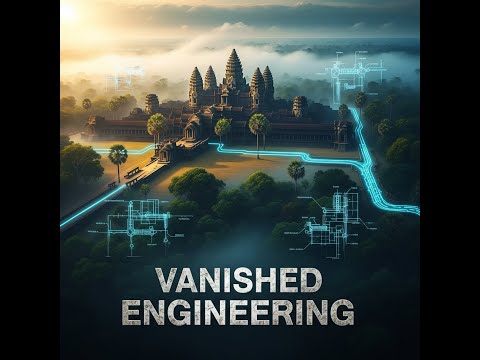 Photo: N43 and Hermes
The Khmer Empire worked as a seasonal system: water, rice, labor, ritual, and authority reinforced one another around a shifting network of centers.
Source video: The Khmer Empire: How a Masterpiece of Water Engineering Vanished · The Wonder Lab · approximately 475 views observed via yt-dlp on 2026-08-07. Counts change; this video is contextual rather than the sole source for the article.
01 A state built around seasonality
The Khmer Empire was not a machine with one control room. It was a political and ecological system that had to make a seasonal landscape productive. Monsoon rain arrived unevenly; rice cultivation, transport, construction, and court life all depended on turning that pulse into a dependable surplus. Power therefore meant coordinating people and water as much as commanding territory.
Conceptual comparison · not a measured historical series
02 From rice surplus to royal center
A surplus made choices possible. It could feed specialists, support officials, provision armies, and finance temples and roads. The court converted part of that surplus into visible order: reservoirs, embankments, shrines, causeways, and inscriptions. Those projects were practical and political at the same time. They helped move resources while displaying who could mobilize them.
03 Water moved through a network
Around Angkor, ponds, canals, embankments, and large reservoirs, often called barays, formed a connected landscape rather than isolated tanks. Their exact functions varied by place and period. They could store water, regulate flows, support cultivation, mark sacred geography, and provide a setting for settlement. The important mechanism is the network: each intervention changed conditions elsewhere.
04 Roads, reservoirs, and ritual
A road was never only a road, and a reservoir was never only a reservoir. Causeways connected ceremonial and administrative spaces; water features organized movement and sightlines; temples gave labor and landscape a shared meaning. Ritual did not sit outside infrastructure. It helped make large, repeated acts of maintenance legible as duties owed to a ruler, a deity, or a community.
Relationship map · interpretive, not to scale
05 Angkor as a coupled system
Agriculture, settlement, religion, and administration were coupled. A change in rainfall could affect harvests; a damaged embankment could disrupt fields and travel; a growing court could demand more labor than a local landscape could comfortably supply. Coupling created strength because resources could be pooled, but it also created correlated risk: several stresses could arrive through the same network.
06 Why coordination mattered
Large works required surveying, digging, transport, repair, and scheduling across many seasons. Inscriptions reveal institutions, gifts, and obligations, while archaeology reveals how water and settlement changed across space. Neither source alone gives a complete operating manual. Together they show a society in which authority was repeatedly tested by the ordinary work of keeping a complex landscape usable.
07 The mechanism in one sentence
The Khmer Empire worked by converting monsoon variability into organized surplus, then converting surplus into institutions and landscapes that could reproduce authority. That feedback was never perfect or permanent. It explains both the extraordinary scale of Angkor and why maintenance, adaptation, and local knowledge mattered as much as royal ambition.
References
- World History Encyclopedia: World History Encyclopedia — overview of Khmer political history and chronology
- World History Encyclopedia: World History Encyclopedia — Angkor, its temples, urban setting, and waterworks
- Khan Academy / World History Project: Khan Academy / World History Project — Angkor Wat and the wider Khmer world
- Wikipedia: Wikipedia — chronology and cross-referenced overview; claims are checked against the institutional sources above
- Source video: The Khmer Empire: How a Masterpiece of Water Engineering Vanished (The Wonder Lab, approximately 475 views, observed 2026-08-07)
By N43 and Hermes for Sailor Bob News.


