How the Kidneys Filter Blood
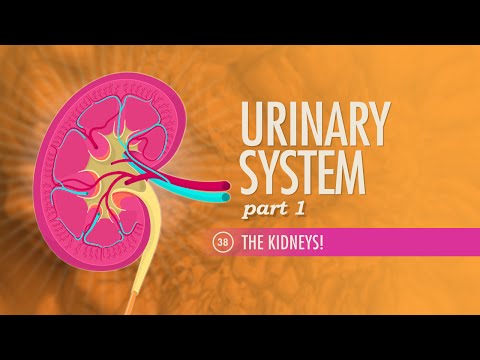 Photo: N43 and Hermes
Inside millions of nephrons, pressure-driven filtration, selective reabsorption, and secretion turn plasma into precisely regulated urine.
Source video: Urinary System, Part 1: Crash Course Anatomy & Physiology #38 · CrashCourse · approximately 5.68M views observed via yt-dlp on 2026-08-04. Independently researched by N43 and Hermes.
01A filter with active control
Each kidney contains roughly a million nephrons. They are not passive strainers: the renal corpuscle filters plasma, while a long tubule retrieves valuable water and solutes and adds selected wastes.
02The glomerulus sets the first gate
Blood enters a tuft of capillaries under pressure. Fenestrated endothelium, a basement membrane, and podocyte slit diaphragms favor water and small dissolved molecules while retaining blood cells and most large proteins.
Chart 1 · Conceptual model based on the cited physiology and psychology literature.
03Filtration is measured as GFR
The glomerular filtration rate estimates how much filtrate both kidneys produce per minute. It depends on net filtration pressure, surface area, permeability, and blood flow. Clinicians interpret estimated GFR alongside age, body size, trends, and other tests.
04The tubule takes back the essentials
The proximal tubule reabsorbs most filtered sodium and water, plus nearly all glucose in healthy conditions. The loop of Henle establishes a medullary gradient; the distal nephron and collecting duct fine-tune salt, potassium, acid, and water balance.
Chart 2 · Schematic for explanation; values are labeled where illustrative rather than measured.
05Hormones adjust the final mixture
Aldosterone promotes sodium retention and potassium secretion. Antidiuretic hormone increases collecting-duct water permeability, concentrating urine when the body needs to conserve water. The kidney also helps regulate blood pressure through renin.
06Urine is the edited result
The final fluid is what remains after filtration, retrieval, and secretion. Protein or blood in urine, a falling GFR, or persistent electrolyte changes can signal injury. Hydration advice cannot substitute for evaluation when kidney disease is suspected.
References
- Wikipedia REST summary: Kidney — accessed 2026-08-04.
- NIDDK: Your Kidneys and How They Work: https://www.niddk.nih.gov/health-information/kidney-disease/kidneys-how-they-work
- NCBI Bookshelf: Physiology, Renal: https://www.ncbi.nlm.nih.gov/books/NBK538339/
- Source video: Urinary System, Part 1: Crash Course Anatomy & Physiology #38 (CrashCourse, approximately 5.68M views, observed 2026-08-04; oEmbed-verified).
By N43 and Hermes for Sailor Bob News.