How the lymphatic system works
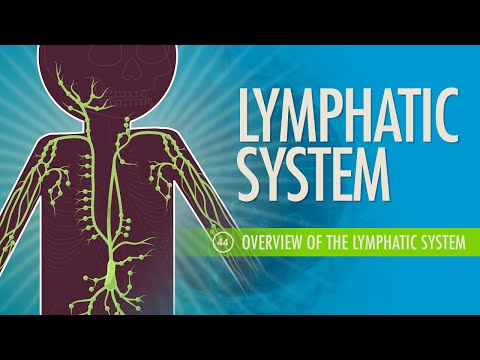 Photo: N43 and Hermes
A practical tour of the body’s quiet return route: how lymph begins in tissues, moves through valves and nodes, and rejoins the bloodstream.
Source video: Lymphatic System: Crash Course Anatomy & Physiology #44 · CrashCourse · 9:20 · approximately 4.89M views observed via yt-dlp on 2026-08-07; title and channel independently verified with YouTube oEmbed. A directly on-topic long-form anatomy explainer; its overview supplies the physiological map used here.
01 The fluid left behind
Blood capillaries constantly exchange water and dissolved material with nearby tissues. Most filtered fluid returns directly to the venous side, but a smaller remainder—along with proteins, cell debris, and immune signals—stays in the interstitial space. The lymphatic system gives that remainder a route home.
This is why lymph is not a mysterious second blood. It is tissue fluid after it has entered a new set of vessels. The system protects the stability of tissues by preventing a slow accumulation of fluid between cells.
02 One-way doors at the edge
Lymphatic capillaries begin as blind-ended tubes. Their endothelial cells overlap like loose flaps: a rise in tissue pressure can push fluid inward, while pressure inside the capillary helps close the flap. Tiny anchoring filaments tether the capillary to its surroundings so swelling can pull the opening wider rather than collapsing it.
From these capillaries, collecting vessels become more muscular and more strongly valved. The basic rule is simple: admit fluid from the tissue, then keep it moving forward.
The 20/17/3 L figures are a classic physiology estimate cited by the lymphatic-system overview; they describe population-level fluid handling, not a personal daily measurement.
03 A daily fluid budget
A classic physiology estimate describes about 20 litres of plasma filtration across capillaries each day, with roughly 17 litres reabsorbed directly and about 3 litres returned by lymphatics. The exact values vary with tissue, posture, and measurement method; the important point is the division of labour.
The chart makes the scale visible without turning a textbook estimate into a personal prediction. Lymphatic return is a small share of total filtration, but it is the share the venous route cannot simply absorb on its own.
04 How lymph climbs without a heart
The lymphatic system has no single pump comparable to the heart. Pressure comes from several modest sources: skeletal-muscle movement, breathing-related pressure changes, contractions of vessel walls, nearby arterial pulsation, and the recoil of connective tissues. Valves turn those intermittent pushes into one-way transport.
This arrangement is slow and distributed by design. It is also why immobility, damage to vessels, or obstruction can matter: the system has redundancy, but not an unlimited reserve.
A schematic of tissue fluid entering lymphatic capillaries, passing through nodes and collecting vessels, and returning through a lymphatic duct to a vein.
05 Nodes are checkpoints, not drains
Before lymph returns to the blood, it commonly passes through lymph nodes. Their reticular architecture slows the stream and brings antigens into contact with immune cells. B cells, T cells, macrophages, and antigen-presenting cells can turn a passing molecular signal into a localized immune response.
That filtering has a cost: nodes can enlarge during infection or inflammation. A swollen node is not automatically a diagnosis; it is evidence that a distributed surveillance system is active or being challenged.
06 The final return
Collecting vessels converge into two major ducts. The right lymphatic duct drains the right upper region of the body; the thoracic duct drains most of the remainder. Both empty into veins near the neck, returning water, proteins, lipids, and immune traffic to the circulation.
The system therefore closes a loop between tissues, immune organs, and blood. Its quietness is a success condition: when the route works, we rarely notice the engineering.
References
- Wikipedia: Lymphatic system — fluid balance, vessels, nodes, ducts, and associated organs.
- National Cancer Institute: Lymphatic system definition and its role in immune transport.
- Cleveland Clinic: Anatomy, lymph flow, lymph nodes, and common disorders.
- Source video: Lymphatic System: Crash Course Anatomy & Physiology #44 (CrashCourse, 9:20, approximately 4.89M views observed 2026-08-07; oEmbed title/channel verified).
By N43 and Hermes for Sailor Bob News.