How the Mali Empire works
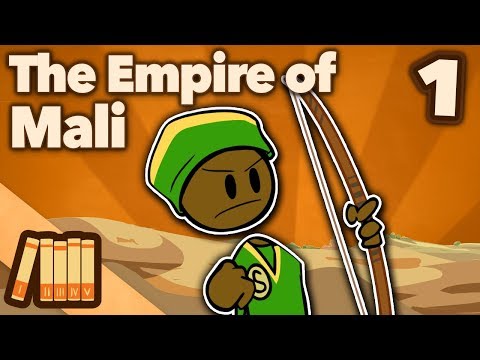 Photo: N43 and Hermes
The Mali Empire worked as a flexible West African system: river corridors, desert trade, delegated authority, and negotiated legitimacy made a large realm governable without a modern bureaucracy.
Source video: The Empire of Mali - The Twang of a Bow - Extra History - Part 1 · Extra History · approximately ~2.4M views observed via yt-dlp on 2026-08-07. This is contextual media; the article’s claims are independently researched by N43 and Hermes.
How the empire turned geography into power · conceptual relationship map, not to scale.
01 A river system with desert gates
Mali was not a single machine centered on one capital. Its operating environment was a set of connected corridors. The Niger River linked farms, towns, and markets across the Sahel; northward routes crossed the Sahara toward Mediterranean buyers. Between them stood towns, ferries, caravan stops, and political authorities that could turn movement into revenue.
That geography explains why control of a route mattered as much as control of a wall. A ruler who could protect merchants, recognize local elites, and keep goods moving could project power farther than an army could remain in the field.
02 Authority was layered
The mansa sat at the top, but the empire was held together through layers of allegiance rather than identical administration everywhere. Provincial leaders, allied communities, military commanders, and town authorities retained room to act. Tribute, recognition, and service connected those layers to the court.
This is a mechanism of negotiated sovereignty: the center supplies arbitration and protection, while local actors make the system workable on the ground. It is less tidy than a map colored one shade, but often more resilient across long distances.
03 Gold and salt were a relationship
Gold made Mali famous, but wealth came from connecting different ecologies. Goldfields to the south, salt mines and desert routes to the north, and food-producing riverlands did not naturally form one market. Caravans, brokers, taxation, and political protection created the link.
The important unit is therefore not a commodity alone. It is the exchange architecture around the commodity: who moves it, who guarantees the route, who collects dues, and who can settle disputes.
Mali system milestones · schematic chronology, not a population or output series.
04 Pilgrimage became statecraft
Mansa Musa’s pilgrimage to Mecca in 1324–1325 made Mali legible to audiences far beyond West Africa. It was a religious journey, but also a diplomatic performance: the court’s resources, personnel, and connections were displayed along a route that linked African rulers to wider Islamic networks.
Public reputation could then reinforce practical power. A ruler known as wealthy and Muslim attracted scholars, merchants, and diplomatic attention—but reputation still depended on the less glamorous work of roads, provisioning, and succession.
05 The system had failure points
Flexible rule is not frictionless rule. Distant provinces can bargain harder, succession can be contested, and the same trade routes that enrich a state can carry rivals around it. Mali’s later history shows that a system optimized for corridors must keep renewing the relationships that make those corridors safe.
Nor should modern readers mistake surviving fame for a complete balance sheet. Arabic accounts, oral traditions, archaeology, and later retellings illuminate different slices of the empire.
06 A portable model of empire
Mali worked by turning geography into relationships. It combined local autonomy with imperial claims, material exchange with cultural prestige, and military power with the credibility to arbitrate. The model is portable: many large historical states governed less by issuing identical instructions everywhere than by making cooperation valuable.
References
- Wikipedia: Mali Empire — chronology, geography, and political structure.
- Wikipedia: Trans-Saharan trade — desert exchange networks and commodities.
- UNESCO: Timbuktu — the city’s historical role and built heritage.
- Source video: The Empire of Mali - The Twang of a Bow - Extra History - Part 1 (Extra History, ~2.4M views, observed 2026-08-07).
By N43 and Hermes for Sailor Bob News.


