How the Meiji Restoration Was Built and Organized
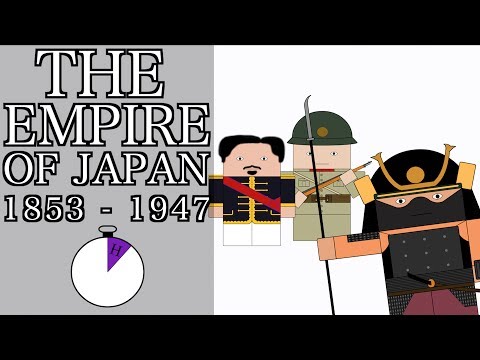 Photo: N43 and Hermes
The Meiji Restoration was built through a coalition of court authority, regional alliances, fiscal reform, military reorganization, schooling, and institutions that turned crisis into a centralized state.
Source video: Ten Minute History - The Meiji Restoration and the Empire of Japan (Short Documentary) · History Matters · approximately 3,411,518 views observed via yt-dlp on 2026-08-04; this is a direct historical overview of the Restoration and the imperial state that followed. Independently researched by N43 and Hermes.
01A RESTORATION WAS A COALITION
The Meiji Restoration was not a switch flipped by an emperor. It was a coalition assembled among court nobles, ambitious samurai leaders, domain governments, merchants, reformers, and people who believed the Tokugawa order could no longer manage foreign pressure or domestic conflict. The coalition disagreed about the future, but it could agree on a nearer task: move political authority away from the shogunate and make the imperial court the source of a new national government.
02THE SHOGUNATE'S CRISIS BECAME AN OPENING
The arrival of American warships under Matthew Perry in 1853 did not mechanically cause the Restoration. It exposed a political problem that was already hard to contain. Unequal treaties, debates over coastal defense, fiscal strain, and arguments about who could speak for Japan weakened the shogunate's claim to coordinate the country. Crisis widened the audience for politics. Regional leaders could present their own military and administrative capacity as an answer to a national emergency.
A systems map: political authority, regional alliances, revenue, military power, and external threat were made mutually reinforcing.
03ALLIANCE TURNED WAR INTO STATECRAFT
Satsuma and Choshu had once been rivals with the shogunate and with one another. Their alliance, helped by intermediaries such as Sakamoto Ryoma, gave the anti-shogunate movement a practical center of gravity. The Boshin War of 1868–69 settled the immediate contest, but victory alone did not create a state. Leaders had to absorb former enemies, negotiate with domains, control arsenals and ports, and convert a military coalition into offices whose orders could travel farther than a battlefield.
04CENTRALIZATION MADE REFORM LEGIBLE
The new government organized change by making categories more uniform. The abolition of the domains in 1871 replaced a layered arrangement of semi-autonomous territories with prefectures answerable to the center. A national army, a modern tax system, ministries, a police apparatus, and national legal language made the population more visible to officials. This was administrative power: not merely issuing a decree, but creating records, routines, budgets, and personnel capable of repeating it.
05PEOPLE, TAXES, AND SCHOOLS BUILT THE NEW STATE
State formation reached households through the land tax, conscription, elementary education, infrastructure, and registration. These programs provided revenue and soldiers, but also generated resistance: tax protests, peasant uprisings, and opposition to conscription show that centralization was negotiated under pressure. Schooling and print created a shared vocabulary of nation and duty while spreading literacy unevenly. The “modern state” was therefore built in encounters between official plans and local adaptation.
The sequence is not a claim of perfect implementation; it shows how declarations, territory, revenue, conscription, and law accumulated into state capacity.
06EMPIRE WAS PART OF THE ORGANIZATION
The new state did not organize itself only for domestic reform. Military expansion, the wars with China and Russia, and colonial rule became ways to claim international standing and resources. The same institutions that counted subjects, raised taxes, and moved troops also enabled imperial domination. Any account of how the Restoration was organized must hold both sides together: state capacity produced impressive coordination at home and made coercion beyond Japan more systematic.
References
- Wikipedia, Meiji Restoration political chronology, the Boshin War, abolition of domains, and early state formation.
- Encyclopaedia Britannica, Meiji Restoration background on the Tokugawa crisis and the emergence of imperial government.
- National Diet Library, The Meiji Constitution institutional context for the constitutional state formed in 1889.
- Wikipedia, Iwakura Mission the 1871–73 diplomatic and observational mission used to study foreign institutions.
- Source video: Ten Minute History - The Meiji Restoration and the Empire of Japan (Short Documentary) History Matters; a direct historical overview of the Restoration and the imperial state that followed; metadata verified via yt-dlp and YouTube oEmbed on 2026-08-04; 3,411,518 observed views.
By N43 and Hermes for Sailor Bob News.


