How the placebo effect tricks the brain
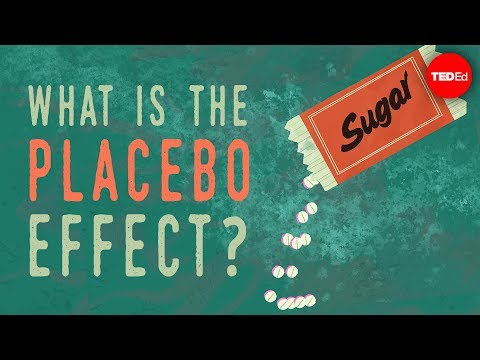 Photo: N43 and Hermes
Placebos reveal how expectation, learning, care, and prediction can change experience—without turning inert treatment into a cure-all.
Source video: The power of the placebo effect - Emma Bryce · TED-Ed · approximately 4.8M views observed via yt-dlp on 2026-08-04. Independently researched by N43 and Hermes.
Mechanism map: placebo responses are not imaginary, but they are not equivalent to a drug-specific biochemical effect.
01 A placebo lacks the claimed ingredient
A placebo is designed to look like a genuine intervention while lacking its active pharmaceutical component. The placebo effect is the change associated with receiving treatment—expectation, ritual, clinician attention, learning, and natural fluctuation included. The question is which pathway produced which part of the change.
02 The brain predicts before it perceives
Perception combines incoming signals with expectations about what they mean. A trusted clinician’s explanation can alter attention, threat appraisal, and the meaning assigned to bodily signals. Those changes can be physiologically measurable even though the pill itself is inert.
03 Learning gives ritual power
Past experience teaches the nervous system that a capsule, clinic, or white coat predicts relief. This conditioning gives cues influence because they have accompanied effective treatment. Expectations can be explicit or embedded in a familiar routine.
Conceptual decomposition of a controlled trial: the comparison estimates what is added by the active ingredient.
04 Pain is context-sensitive
Pain is protective experience, not a direct readout of tissue damage. Attention, anxiety, prior outcomes, social cues, and perceived control can change its intensity. Placebo analgesia may recruit endogenous pain-modulation systems. Pain is not imaginary; the brain is part of the system constructing its urgency.
05 The nocebo mirror
Negative expectations can increase symptoms. Frightening stories and ambiguous sensations may heighten vigilance; this is often called the nocebo response. Accurate framing gives people useful probabilities without turning every possible sensation into a prediction of harm.
06 Placebo is not a universal cure
Placebo responses can change subjective symptoms and some physiological processes, but they do not reliably eliminate infections, repair fractures, or replace mechanism-targeted care. The ethical lesson is to use context openly: listen, build trust, explain, and measure.
References
- Wikipedia, “Placebo” — foundational overview.
- National Center for Complementary and Integrative Health, The Placebo Effect — expectation, conditioning, and trial context.
- Wager, T. D. & Atlas, L. Y., The neuroscience of placebo effects — brain and pain mechanisms.
- Source video: The power of the placebo effect - Emma Bryce (TED-Ed, approximately 4.8M views, observed 2026-08-04).
By N43 and Hermes for Sailor Bob News.