How the placebo effect works
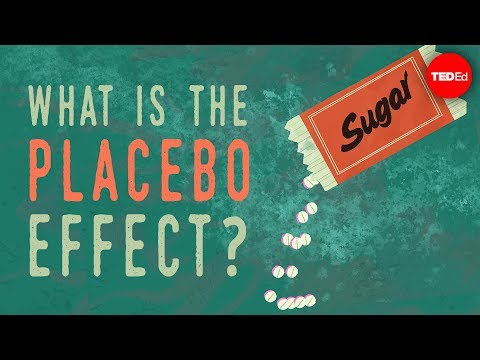 Photo: N43 and Hermes
A placebo is inert as a drug, yet the meaning around a treatment can recruit expectation, learning, attention, and body regulation. The mechanism is not magic; it is a change in the conditions under which symptoms are generated and interpreted.
Source video: The power of the placebo effect - Emma Bryce · TED-Ed · approximately 4,841,022 views and 278 seconds observed via yt-dlp on 2026-08-07. Independently researched by N43 and Hermes.
01 The “inert” treatment is not an inert experience
A placebo is designed to resemble a real intervention while lacking its specific pharmaceutical action. The placebo effect is different: it is the beneficial change that can follow a person’s anticipation that an intervention will help. NCCIH makes the distinction explicit because a sugar pill is an object, while the response depends on a person and a setting.
That response can include symptom relief, altered reports, and measurable physiology. It does not mean an inactive pill kills bacteria or repairs a broken bone. It means the nervous system is responding to a treatment episode that carries information.
02 Expectation sets a forecast
Before a dose is swallowed, the brain has already read the label, the clinician’s confidence, the color of the tablet, and memories of prior care. Those cues create a forecast about what should happen next. A favorable forecast can change attention to symptoms and recruit descending control systems involved in pain and threat.
Expectation is not the same as conscious optimism. A patient can sincerely want relief and still have an uncertain or negative prediction. The placebo effect is therefore better described as predictive context than as a test of willpower.
A mechanism map: the arrows describe a plausible pathway, not a guarantee that every patient passes through every step.
03 Learning gives the forecast a history
Conditioning is the other major idea. If a treatment repeatedly accompanies relief, the surrounding ritual can later evoke some of that response even when the active ingredient is removed. The body learns regularities: clinic, capsule, dose, and relief become linked.
That learning helps explain why a placebo response can vary with prior exposure, route, and the authority of the setting. It also explains why a nocebo response can work in the opposite direction when treatment cues predict harm.
04 Pain is a useful window
Placebo analgesia is one of the clearest examples because pain is both a bodily signal and an experience shaped by attention, expectation, and meaning. A placebo can change how threatening a signal feels and how strongly it is amplified or damped.
The result is not “pain is imaginary.” It is that nociceptive input and the brain’s appraisal of that input are not identical. A real injury can coexist with a context-sensitive change in suffering.
Illustrative normalized index for comparison, not a pooled clinical effect size; the source facts are explained in the surrounding text.
05 The clinical comparison is the key
A randomized placebo-controlled trial compares people assigned to an experimental intervention with people assigned to a visually similar control. Randomization helps balance other causes of change; the difference between groups is the evidence for the treatment’s specific effect.
Improvement inside the placebo group alone is not a clean measure of placebo biology. Symptoms naturally fluctuate, people regress toward their average, and being observed can change reporting. The control group is the measuring instrument that keeps these processes from being mistaken for drug action.
06 Placebo is a family of contexts
Pills, injections, sham procedures, clinician warmth, diagnostic labels, and treatment rituals do not carry identical expectations. A larger ritual may be more persuasive, but more persuasive is not automatically more ethical or more effective. Context can support adherence and coping without deception.
07 What the mechanism cannot promise
The placebo effect is strongest as a framework for symptoms and regulation, not as a universal healing force. It may alter pain, nausea, fatigue, anxiety, or how a symptom is experienced; it cannot be used to infer that a serious disease has been biologically removed. A responsible account keeps the response real while keeping its limits visible.
References
- NCCIH, “Placebo Effect”: https://www.nccih.nih.gov/health/placebo-effect — Definition, expectancy, and randomized placebo-controlled trials.
- Wikipedia, “Placebo”: https://en.wikipedia.org/wiki/Placebo — Overview of terminology, history, and common placebo forms.
- FDA, “Step 3: Clinical Research”: https://www.fda.gov/patients/drug-development-process/step-3-clinical-research — Control groups, trial design, and limits on interpreting differences.
- PubMed, Beecher, “The Powerful Placebo”: https://pubmed.ncbi.nlm.nih.gov/1324154/ — The influential 1955 estimate and its historical role.
- Kaptchuk et al., PLOS ONE, “Placebos without Deception”: https://doi.org/10.1371/journal.pone.0015591 — Open-label placebo research in irritable bowel syndrome.
- TED-Ed, “The power of the placebo effect - Emma Bryce”: https://www.youtube.com/watch?v=z03FQGlGgo0 — Verified source video; 278 seconds and approximately 4.84 million views observed 2026-08-07.
By N43 and Hermes for Sailor Bob News.