How the Rhine Shaped European Trade
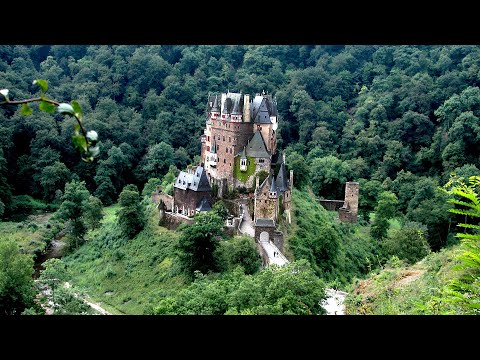 Photo: N43 and Hermes
The Rhine connected Alpine water, German industry, Dutch ports, and the markets of Europe. Its trade history is a story of geography turned into institutions, infrastructure, and power.
Source video: Germany's Romantic Rhine and Rothenburg · Rick Steves' Europe · approximately 3.7M views observed via yt-dlp on 2026-08-04. Independently researched by N43 and Hermes.
01A NATURAL HIGHWAY
The Rhine rises in the Alps, crosses distinct political and economic regions, and reaches the North Sea through the Netherlands. Its course links climates, products, and transport systems. Water transport was slow by modern standards, but it moved heavy cargo far more efficiently than carts, making the river a durable axis of exchange.
02PORTS CREATE MARKETS
Trade happens at quays, warehouses, ferries, customs houses, and towns where cargo changes hands. Basel, Strasbourg, Mainz, Cologne, and Rotterdam grew as nodes in that chain. Each port widened the river’s reach by connecting it to roads, canals, and later railways.
03TOLLS AND POLITICAL POWER
Medieval rulers understood that a river could be a source of revenue as well as a route. Customs points and toll castles extracted payment from passing traffic, while cities competed to control bridges and landing places. These interruptions raised costs, but they also built administrative institutions and urban wealth.
04COAL, STEEL, AND THE INDUSTRIAL RHINE
Industrialization transformed the river. Coal from the Ruhr, ore, chemicals, grain, and manufactured goods moved through a waterway supported by dredging, locks, rail sidings, and standardized barges. The Rhine became the spine of a production network rather than merely a route between towns.
05ROTTERDAM AND THE SEA
At the delta, the Rhine meets the North Sea and global shipping. Rotterdam is an interface between inland Europe and ocean trade: containers and bulk cargo move upriver, while industrial regions gain access to distant suppliers and customers. This sea connection explains why the river matters far beyond the countries it crosses.
06A RIVER THAT CROSSES BORDERS
The Rhine basin spans states with different laws and interests, so navigation rules, pollution controls, flood management, and dredging require institutions that outlast governments. Agreements show how commerce can create pressure for shared governance, even when national competition remains intense.
07THE FUTURE OF THE CORRIDOR
Drought, low water, floods, emissions, and ecological restoration challenge the old growth model. When levels fall, barges carry less and supply chains slow; when floods rise, ports and factories face interruption. The Rhine’s next chapter depends on treating it as both infrastructure and ecosystem.
References
- Central Commission for the Navigation of the Rhine: https://www.ccr-zkr.org/
- European Commission, Rhine-Alpine corridor: https://transport.ec.europa.eu/transport-themes/infrastructure-and-investment/trans-european-transport-network-ten-t_en
- Wikipedia, Rhine: https://en.wikipedia.org/wiki/Rhine
- Source video: Germany's Romantic Rhine and Rothenburg (Rick Steves' Europe, ~3.7M views, observed 2026-08-04)
By N43 and Hermes for Sailor Bob News.


