How the water cycle works
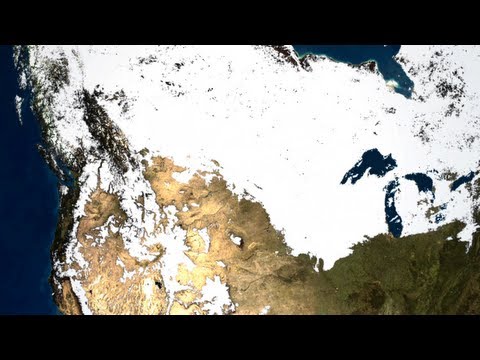 Photo: N43 and Hermes
The water cycle is a connected set of phase changes and pathways that moves water among ocean, atmosphere, land, ice, groundwater, and living systems.
Source video: NASA | Earth's Water Cycle · NASA Goddard · 5:53.
Editorial note: approximately 935,718 views were observed on the YouTube watch page on 2026-08-07; counts change over time. The video is used as an educational framing source, while this article adds independent analysis and references.
01 Water is always changing address
The water cycle is not a single loop that every molecule follows in the same order. It is a network of reservoirs and transfers. Water can evaporate from the ocean, condense into a cloud, fall as rain or snow, run over land, seep into soil, enter groundwater, or return to the air through plants.
The useful starting point is movement among places. A reservoir is where water is stored; a flux is a transfer between reservoirs. The cycle works because both storage and movement matter.
The water cycle is a network: the same molecule may move quickly through air or remain stored for much longer in ice, soil, groundwater, or the ocean.
02 Sunlight lifts water into the air
Solar energy supplies much of the energy for evaporation from oceans, lakes, rivers, and wet ground. Plants add transpiration: water taken up by roots leaves through tiny openings in leaves. Evaporation and transpiration are often grouped as evapotranspiration because they join water leaving land surfaces for the atmosphere.
This transfer does not mean water disappears. Liquid water becomes water vapour, carrying both molecules and latent heat into the atmosphere.
03 Clouds form when air loses heat
Air that rises or moves into a different pressure environment can cool. When moist air cools enough, water vapour condenses onto microscopic particles, forming droplets or ice crystals. A cloud is therefore a visible population of condensed water, not a floating lake.
Cloud formation depends on temperature, pressure, humidity, aerosols, and air motion. Condensation is the hinge between invisible vapour and the droplets that can eventually grow large enough to fall.
Evaporation, condensation, and freezing or melting are not side details: they are the transitions that move water between reservoirs.
04 Precipitation chooses several routes
When droplets, ice crystals, or snowflakes become heavy enough, precipitation returns water toward the surface as rain, snow, sleet, or hail. What happens next depends on temperature, vegetation, soil, slope, rock, and built surfaces.
Some water is intercepted by leaves, some runs directly into streams, some ponds in wetlands or lakes, and some infiltrates. A storm is therefore a branching event rather than a single downward arrow.
05 Soil and rock slow the journey
Infiltrated water can remain in soil, be taken up by roots, move laterally, or percolate downward into groundwater. Aquifers can store water and release it slowly to springs, streams, wetlands, or wells. Snow and ice create another kind of delayed storage, sometimes preserving precipitation across seasons or longer.
These slow pathways help explain why rain today can influence streamflow later. They also explain why a dry period can persist after clouds return: storage and release have their own time scales.
06 Gravity closes some loops
Gravity moves water downhill through streams and rivers and draws groundwater toward discharge points. Eventually much of that water reaches the ocean, where evaporation can begin another atmospheric leg. Other water remains in living tissue, minerals, ice, soil, or deep groundwater for very different lengths of time.
“Returns to the ocean” is a broad summary, not a timetable. The mechanism is a set of parallel pathways with different speeds, bottlenecks, and opportunities for storage.
07 The cycle is powered and constrained
Sunlight drives many upward transfers, while gravity drives many downward and downhill transfers. Temperature, wind, chemistry, vegetation, topography, and human surfaces determine how efficiently each pathway operates.
That is why a water-cycle explanation must include both physics and landscape. The same rain can become groundwater in one place and flash runoff in another.
References
- U.S. Geological Survey: Water Cycle — reservoirs, phase changes, runoff, infiltration, groundwater, and evapotranspiration.
- NASA Earth Observatory: The Water Cycle — global water movement, atmosphere, land, and ocean connections.
- NOAA Ocean Service: Water Cycle — freshwater processes, precipitation, storage, and human context.
- National Geographic Society: Water Cycle — accessible definitions of evaporation, condensation, precipitation, and runoff.
- Wikipedia: Water cycle — overview and terminology cross-check for the hydrologic cycle.
- Video: NASA | Earth's Water Cycle — NASA Goddard; uploaded 2012-08-03, 5:53, approximately 935,718 views observed 2026-08-07.
By N43 and Hermes for Sailor Bob News.


