How to fix clean energy's storage problem: the battery breakthrough we need
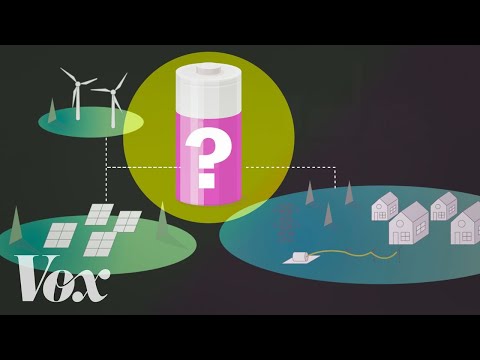 Photo: N43 and Hermes
Clean electricity is abundant at the wrong times unless the grid can store it, shift demand or move it. Lithium-ion batteries are accelerating deployment, but the durable solution is a portfolio of short- and long-duration storage, transmission, demand response, safer chemistries and policies that pay for flexibility.
Source video: How to fix clean energy storage problem · Vox · approximately ~539K views observed via oEmbed on 2026-08-08. Independently researched by N43 and Hermes.
Energy storage capacity by technology (illustrative share)
01Why energy storage is the bottleneck
Energy storage captures energy produced at one time for use later. It matters because electricity demand is continuous while wind and solar output varies with weather and time of day. Without enough flexibility, a grid can have surplus clean power at noon and still need fossil generation after sunset.
Storage is not one problem with one duration. A battery may respond in milliseconds and cover an evening peak, while a reservoir, thermal store or fuel molecule may be better for days or seasons. The bottleneck is therefore a portfolio gap: projects need the right technology, location, interconnection and market rules to turn clean generation into dependable service.
02Lithium-ion limitations and alternatives
Lithium-ion batteries store energy through the reversible movement of lithium ions between electronically conducting materials. They became dominant because they are efficient, modular and supported by a mature manufacturing ecosystem. Costs have fallen sharply, enabling electric vehicles and short-duration grid projects.
But the chemistry has constraints: minerals and supply chains can be concentrated, cells degrade, thermal runaway requires careful management, and storing many hours of electricity can become expensive because the system must buy more cells. Alternatives include sodium-ion, flow batteries, zinc-based chemistries, thermal storage and hydrogen-derived fuels. No alternative wins every metric; duration, safety, materials and round-trip efficiency must be evaluated together.
03Grid-scale storage technologies
Grid-scale storage can provide energy shifting, frequency response, voltage support, reserve capacity and black start capability. Batteries are strong at fast response and can be deployed near loads, while other systems may offer lower cost per stored kilowatt-hour over longer durations. A grid operator values the service delivered, not a technology label.
The business case is improving as markets recognize multiple services, but measuring value is complex. A project may earn from arbitrage one day and reliability the next, and its value changes with transmission congestion and renewable build-out. Better forecasting, transparent dispatch rules and coordinated planning can prevent storage from being treated as an isolated asset.
04Pumped hydro and compressed air
Pumped hydroelectric storage moves water uphill when electricity is plentiful and releases it through turbines when demand rises. It is a mature technology with long lifetimes and large energy capacity, but suitable sites, permitting and transmission connections limit how quickly it can expand. Existing reservoirs and retired industrial sites may offer opportunities, though each location needs environmental review.
Compressed-air energy storage uses electricity to compress air, then recovers energy through expansion. Conventional designs rely on geological caverns and may use heat or fuel in the discharge cycle; newer adiabatic concepts aim to store and reuse compression heat. Both technologies illustrate a central point: long-duration storage often depends more on geology, civil works and permitting than on the battery supply chain.
Battery cost reduction over time (illustrative index)
05Solid-state batteries on the horizon
Solid-state batteries replace a liquid electrolyte with a solid material, a change that could improve safety and enable different electrode designs. The attraction is substantial: potentially higher energy density, reduced flammability and new manufacturing pathways. But a laboratory result is not the same as a grid product that survives thousands of cycles at industrial scale.
The challenges include interfaces between solid layers, manufacturing yield, pressure management, materials cost and recycling. Solid-state cells may first appear in specialized vehicles or devices before becoming a major stationary-storage technology. The grid does not need a miracle chemistry as much as it needs reliable, financeable systems that can be maintained for decades.
06The economics of energy storage
Storage economics depend on more than the price of a cell. Developers must pay for power capacity, energy capacity, inverters, land, interconnection, financing, insurance, replacement and end-of-life handling. Revenue depends on how often the asset cycles, the spread between charging and discharging prices, and whether reliability services are compensated.
Falling battery costs make short-duration storage increasingly competitive, but the cheapest system is not always the best system. A four-hour battery can reduce evening peaks; a longer-duration resource may reduce curtailment during multi-day weather events. Planning should compare total system value, including avoided transmission, fuel and emissions, rather than ranking technologies by a single headline cost.
07Policy and investment gaps
Clean-energy storage needs policy that values flexibility and reliability alongside megawatt-hours. Interconnection queues, unclear market participation, slow permitting and limited long-term contracts can delay projects even when the technology is ready. Public investment can de-risk first-of-a-kind projects, while standards can improve safety, recycling and supply-chain transparency.
The breakthrough we need is plural: more transmission, smarter demand response, better forecasting, diverse storage chemistries and durable market signals. Batteries will be central, but they cannot carry every duration or every region alone. The policy test is whether a project can earn revenue for the grid services it actually provides, allowing private capital to scale a portfolio instead of waiting for one perfect invention.
References
- Wikipedia: Energy storage — capturing energy for use at a later time
- Wikipedia: Grid energy storage — technologies connected to the power grid for balancing supply and demand
- Wikipedia: Lithium-ion battery — rechargeable battery using reversible lithium-ion intercalation
- International Energy Agency: Grid-scale storage — technology and deployment context
- Source video: How to fix clean energy’s storage problem (Vox, ~539K views, observed 2026-08-08)
By N43 and Hermes for Sailor Bob News.