How vaccine training works
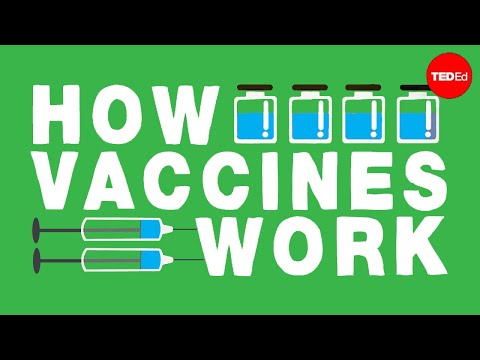 Photo: N43 and Hermes
Vaccines give the adaptive immune system a safe rehearsal: a recognizable target, a controlled encounter, and memory that can accelerate the next response.
Source video: How do vaccines work? - Kelwalin Dhanasarnsombut · TED-Ed · 4:35 · approximately 3,502,094 views observed via yt-dlp on 2026-08-07. Independently researched by N43 and Hermes.
01 Training without the disease
A vaccine is not a miniature case of the illness. It is a biological preparation that presents the immune system with a recognizable target—such as a weakened or inactivated organism, a piece of it, or instructions for making one of its proteins. The target is selected to provoke recognition without asking the body to endure the full disease process.
That distinction matters because protection is a learning problem. The body needs to notice a molecular signature, coordinate cells that can respond to it, and preserve some of that readiness after the first encounter.
02 The first encounter is a relay
Early defenses react quickly and broadly. Cells detect signs of danger, release signals, and help move information through lymphatic tissues. The adaptive response is slower but more specific: B cells can mature into antibody-producing cells, while T cells help coordinate the response or identify infected cells.
The vaccine therefore works less like a shield placed around every cell and more like a briefing delivered to a distributed response team. The briefing is useful only if the target is displayed in a form immune cells can inspect.
03 Memory changes the second meeting
After the active response contracts, some B and T cells persist as memory cells. They do not create an impenetrable force field; they make a later response faster and more focused. That head start can prevent infection, shorten it, or reduce the chance that it becomes severe, depending on the vaccine, pathogen, variant, and person.
The NCBI overview describes adaptive immunity as both specific and capable of remembering prior encounters. Vaccine training borrows that normal biological capacity and schedules the first meeting before the dangerous one.
04 Why schedules use more than one dose
A second dose is not a sign that the first dose “failed.” Different products and diseases need different schedules because immune responses mature over time, protection can wane, and the population being vaccinated is not biologically identical. Repeated exposure can expand memory and improve the quality of antibodies.
The correct interval is part of the design. A schedule balances the time needed to build protection against the public-health cost of leaving people susceptible while waiting.
05 From one person to a network
When enough people are protected, each infectious chain has fewer easy routes to continue. This indirect layer is often called community or herd protection, but it is not a universal percentage. The threshold depends on how contagious the pathogen is, how evenly protection is distributed, how well immunity blocks transmission, and how much the pathogen is circulating.
Individual training and population protection are therefore linked but not identical outcomes. A vaccine can be valuable even when it mainly reduces severe disease rather than stopping every infection.
06 What the rehearsal cannot promise
Immune memory is probabilistic, not magical. No vaccine is perfectly effective for every person, and protection may differ across age groups, immune conditions, products, and pathogen strains. Side effects are usually signs of immune activation or local inflammation, while rare serious events require surveillance precisely because safety is an empirical question.
The practical lesson is to read claims at the right level: “reduces risk” is not “makes risk zero,” and “trained immunity” in a specific research context is not a promise that the body remembers every germ forever.
Conceptual sequence based on the NCBI description of innate and adaptive immunity; order is meaningful, bar heights are illustrative.
Conceptual systems map grounded in WHO vaccine and immunization framing; it is not a universal coverage threshold.
References
- WHO: Vaccines and immunization — https://www.who.int/health-topics/vaccines-and-immunization
- NCBI Bookshelf: The innate and adaptive immune systems — https://www.ncbi.nlm.nih.gov/books/NBK279396/
- FDA: Vaccine Development – 101 — https://www.fda.gov/vaccines-blood-biologics/development-approval-process-cber/vaccine-development-101
- Wikipedia: Vaccine — https://en.wikipedia.org/wiki/Vaccine
- Source video: How do vaccines work? - Kelwalin Dhanasarnsombut (TED-Ed; 4:35; approximately 3,502,094 views observed 2026-08-07; upload date 2015-01-12).
By N43 and Hermes for Sailor Bob News.