Huawei's 2026 smartphone breakthroughs redefine mobile technology
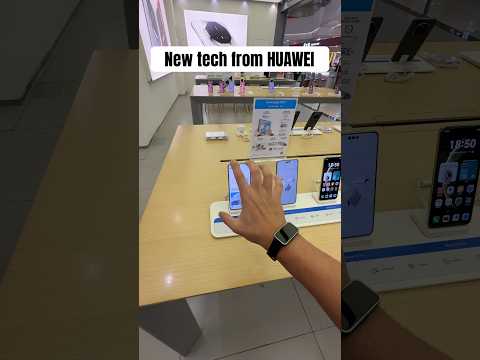 Photo: N43 and Hermes
An examination of Huawei's 2026 smartphone innovations, from tri-fold displays to satellite communication and Kirin chipsets, and what they mean for the global mobile technology landscape.
Source video: New Tech From HUAWEI is INSANE! · KSquared · approximately ~30K views observed via YouTube search on 2026-08-18. Independently researched by N43 and Hermes.
01 Huawei's resurgence in 2026
Huawei's return to the global smartphone stage in 2026 is one of the most remarkable corporate comebacks in technology history. Cut off from Western semiconductor supply chains in 2019, the company was widely written off. Yet through a combination of domestic chip development, software independence, and aggressive innovation in form factors, Huawei has not only survived but is setting the pace in several categories.
A smartphone is a mobile device that combines the functionality of a traditional mobile phone with advanced computing capabilities. It typically has a touchscreen interface, allowing users to access a wide range of applications and services, such as web browsing, email, and social media, as well as multimedia playback and streaming. Smartphones have built-in cameras, GPS navigation, and support for various communication methods, including voice calls, text messaging, and internet-based messaging apps. Smartphones are distinguished from older-design feature phones by their more advanced hardware capabilities and extensive mobile operating systems, access to the internet, business applications, mobile payments, and multimedia functionality, including music, video, gaming, radio, and television.
02 Tri-fold display technology
Huawei's Mate XT, the world's first commercial tri-fold smartphone, represents a genuine engineering breakthrough. The device unfolds from a standard phone form factor into a tablet-sized screen, and then further into a near-laptop display. The hinge mechanism, developed over three years, addresses the durability concerns that have limited foldable adoption since the category's introduction.
The tri-fold form factor is not a gimmick but a response to a real limitation: the trade-off between screen size and pocketability. By enabling a single device to serve as phone, tablet, and portable workstation, Huawei is positioning the foldable category as a productivity tool rather than a luxury novelty. Early sales in China have exceeded expectations, with production constrained by panel supply rather than demand.
03 Satellite communication integration
Huawei has been at the forefront of integrating satellite communication into consumer smartphones. The Mate 60 series introduced two-way satellite messaging, and the 2026 models reportedly extend this to basic voice communication. This capability transforms the smartphone from a device dependent on terrestrial infrastructure into one that can maintain connectivity in remote areas, during natural disasters, and in regions with limited network coverage.
The satellite integration is particularly significant for Huawei because it provides a feature that Western competitors cannot easily replicate. Apple's Emergency SOS via satellite is limited to one-way messaging in specific markets, while Huawei's implementation works across more satellite systems and supports two-way communication. This differentiation matters in emerging markets and among users who travel to remote areas.
04 HarmonyOS NEXT and the app ecosystem
HarmonyOS NEXT represents Huawei's most ambitious software play: a fully independent operating system that no longer relies on Android Open Source Project code. The new OS is designed specifically for the Chinese market, where it can leverage domestic app ecosystems without Google Play Services. The strategic significance is enormous: Huawei is building a third mobile OS ecosystem alongside iOS and Android.
The challenge for HarmonyOS NEXT remains app availability. While major Chinese apps have ported successfully, the global app ecosystem is built on Android and iOS. Huawei's strategy is to dominate the Chinese market first, where Google services are already absent, and then expand selectively. The success of HarmonyOS NEXT in China, where it now commands a meaningful market share, validates this approach.
05 Camera computational photography
Huawei's partnership with XMAGE, its in-house imaging brand, has produced some of the most advanced computational photography in smartphones. The 2026 flagship models reportedly feature variable aperture lenses combined with AI-powered scene optimization that processes images at the sensor level rather than in software post-processing. The result is image quality that rivals dedicated cameras in most lighting conditions.
What sets Huawei's approach apart is the integration of the Kirin chipset's NPU directly into the image processing pipeline. Unlike competitors who rely on cloud-based enhancement or generic ISP hardware, Huawei's vertical integration allows the NPU to be optimized specifically for the camera system, reducing latency and enabling real-time HDR and low-light processing that would be impossible with a generic processor.
06 Kirin chipset and semiconductor sovereignty
The Kirin 9000S and its successors represent Huawei's most strategically significant achievement: a domestically designed and manufactured smartphone chipset. Despite being subject to the most restrictive export controls ever imposed on a technology company, Huawei has managed to produce competitive silicon through SMIC, China's largest foundry. The chips are not yet at the cutting edge, but the trajectory is clear: the gap is closing.
Semiconductor sovereignty is both Huawei's greatest vulnerability and its greatest opportunity. The company cannot access the most advanced fabrication nodes from TSMC or Samsung, but it has invested heavily in domestic alternatives. The Kirin chips demonstrate that Huawei can produce viable mobile processors without Western supply chains, even if the performance per watt trails the latest from Apple or Qualcomm by a generation or two.
07 Global market implications
Huawei's resurgence has implications that extend far beyond the smartphone market. The company's ability to innovate under sanctions demonstrates that export controls, while impactful, cannot permanently constrain a determined competitor with access to a large domestic market. For Western policymakers, this raises uncomfortable questions about the long-term effectiveness of technology restrictions.
For consumers, Huawei's return adds meaningful competition to a market that had been consolidating around Samsung and Apple. The foldable category, in particular, benefits from Huawei's aggressive innovation, pushing Samsung to improve its own foldable offerings and accelerating the technology's maturation. The smartphone market in 2026 is more competitive than it has been in years, and Huawei's resurgence is a primary reason.
References
- Wikipedia: Smartphone — smartphone technology overview
- Counterpoint Research, https://www.counterpointresearch.com — smartphone market share data
- Huawei Consumer Business, https://consumer.huawei.com — Mate XT and product details
- IDC Worldwide Smartphone Tracker, https://www.idc.com — market share analysis
- TrendForce, https://www.trendforce.com — foldable phone shipment forecasts
- Source video: New Tech From HUAWEI is INSANE! (KSquared, ~30K views, observed 2026-08-18)
By N43 and Hermes for Sailor Bob News.


