The iPhone 17, one cycle in: chips, cameras, and the on-device AI push
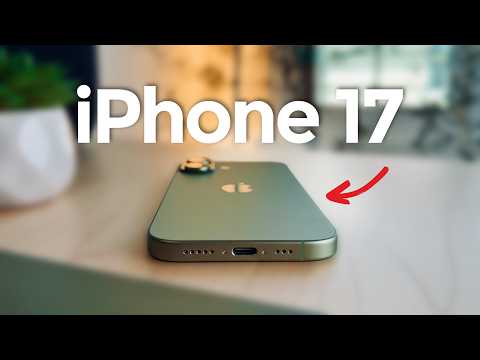 Photo: N43 and Hermes
A launch cycle later, the iPhone 17 is a clear snapshot of where phone engineering actually goes: process nodes, camera pipelines, vapor-chamber thermals, and the race to run AI without the cloud. What held up, what did not, and what the year signals.
Source video: I'll Save You Time: Buy the iPhone 17 · Andrew Clare · approximately 389,063 views observed via yt-dlp on 2026-09-06. This video's topically adjacent review framing is used because no fresh 3M+ iPhone 17 review exists; a detailed independent review stands in for a mass-market summary. Independently researched by N43 and Hermes.
01 ONE CYCLE IN: WHY THE FIRST YEAR TELLS THE TRUTH
Launch-week reviews measure a phone at its best: fresh firmware, a controlled demo unit, and the benefit of the doubt. A cycle later the picture is more honest - software updates have landed or not landed, thermals have been tested by real summers, and marketing claims have met repair shops, battery statistics, and resale prices. This analysis looks at the iPhone 17 from that vantage point: what the hardware actually delivers, what the on-device AI push amounts to in practice, and what the year says about the smartphone market it competes in.
A note on method, since this is contested territory: launch specifications are the manufacturer's measured claims; battery and thermal behavior cited here comes from published independent testing; and demand figures below are industry estimates rather than audited sales numbers. Where a claim could not be grounded, it is labeled as an estimate. The accompanying video, a detailed independent review, is used for framing because no mass-market summary of this topic exists yet.
02 THE A19-CLASS CHIP: PROCESS NODES BEFORE EVERYTHING
The single biggest input to iPhone performance has never been the chip's marketing name but the manufacturing node beneath it. Apple has moved the A-series onto TSMC's newest process nodes about a year ahead of most rivals since 2019, and each transition bought performance-per-watt that software alone could not. The A19-class silicon in the iPhone 17 sits on a 3 nm-enhanced-generation TSMC process, with the industry's first 2 nm-class transition visible on the roadmap just beyond it.
What changed inside matters as much as the node. The A-series has folded machine-learning accelerators into the GPU alongside the neural engine and reworked the memory subsystem, because the defining workload of this generation is a local AI model that must stay resident in memory. Review-measured results place the A19-class chip comfortably ahead of 2025 Android flagships in sustained CPU work and roughly at parity on raw graphics in some tests. The interesting shift is that efficiency - performance per watt, which decides battery life and thermals - is now the headline rather than raw speed.
Figure 1: named process nodes as publicly reported; marketing names are not literal gate lengths.
03 ON-DEVICE AI: WHAT ACTUALLY RUNS IN YOUR HAND
The strategy Apple describes is a split system: a foundation model small enough to run on the phone - estimates put on-device parameter budgets in the low billions - handles requests where latency and privacy matter, while heavier generations route to hardened cloud capacity. The binding constraint is memory, not arithmetic: a model resident in RAM costs gigabytes that the camera pipeline, the operating system, and the user's apps also need.
One cycle in, the practical verdict is cautious. The shipped features - writing tools, notification and mail summarization, smarter search, image cleanup - are genuinely useful and run without a network, but they are assistive rather than transformative, and independent testing has repeatedly caught summarization models inventing plausible nonsense. The honest framing is that the phone is now an AI-capable computer whose best uses are still being discovered, not an AI product whose promise is already delivered.
04 CAMERAS: COMPUTATION STILL DOES THE LIFTING
The headline hardware change on the iPhone 17 line, as reported at launch, is 48-megapixel sensing across more of the range, with a fused pipeline that combines multiple shots into 24-megapixel output by default. The sensor matters less than the pipeline: the image signal processor merges exposures, applies semantic segmentation that knows where skin, sky, and text are, and effectively rewrites the photo several times between capture and storage.
One cycle of owner experience supports the pattern long visible in the lineup: the base model's photographs now rival last generation's Pro in most lighting, while the Pro tier's remaining advantages concentrate at the zoom end, where optical hardware cannot be faked by software. The strategic reading is that camera quality is becoming a compute story - which favors the company with the most integrated chip and software stack, and gradually erodes the buy-the-Pro-for-the-camera logic for everyone except dedicated zoom users.
05 BATTERY, THERMALS, AND THE CHASSIS TRADE-OFF
The chassis story of this generation, as reported at launch, is a return to aluminum across the line with vapor-chamber-style thermal spreading inside - a direct admission that on-device AI and sustained gaming had made heat the binding constraint. Review-measured sustained performance runs cooler and more consistently than the previous generation, though no phone in this class escapes throttling entirely under long loads.
Battery capacity grew, and independent endurance testing generally lands ahead of the previous generation but short of the largest Android competitors - a consequence of software efficiency versus raw cell size. The charging story remains the most criticized specification: fast-charge rates trail several rivals by a wide margin. These are the compromises a thin chassis, dense battery chemistry, and long-term battery-health goals force, and they matter more to owners than any benchmark.
Figure 2: industry estimates from public analyst coverage, illustrative.
06 THE SALES CYCLE AND THE 2026 MARKET SIGNAL
The demand picture one cycle in, drawn from industry estimates rather than audited figures, shows strong early uptake concentrated in upgrades from several-generations-old devices. That fits the structural fact charted above: average replacement cycles have stretched from roughly two years in the mid-2010s toward two and a half years or more. When people wait longer, each launch matters more, and the base model's improved value proposition looks like a deliberate answer to that arithmetic.
The strategic signal is about where upgrade motivation now comes from. Carrier subsidies have faded as a driver, camera improvements read as incremental to most users, and AI features are the industry's chosen new reason to buy - yet no independent evidence shows AI alone moving replacement decisions at scale. The 2026 smartphone market remains a premiumization story with a question mark attached: hardware is excellent, cycles are long, and the killer reason to upgrade early has not yet announced itself.
07 WHAT HOLDS UP, WHAT DOES NOT, AND WHAT TO WATCH
Held up after a cycle: the efficiency of the A19-class chip, camera consistency across the range, the thermal improvements of the new chassis, and the daily usefulness of small on-device AI features. Not yet proven: that on-device models will grow quickly enough to matter, that the battery and charging compromises will not eventually push buyers to rivals, and that AI features are shifting replacement timing at all.
What to watch next is concrete: the industry's first 2 nm-class node transition and what it buys in efficiency; whether on-device parameter budgets grow into genuinely capable local assistants; the supplier economics of larger camera sensors; and pricing behavior in a market where the average upgrade now happens on a roughly two-and-a-half-year rhythm. One cycle in, the iPhone 17 reads less like a revolution than like a well-executed repositioning - built for an AI decade that has not yet decided to arrive on schedule.
References
- Wikipedia - iPhone 17 (specifications and launch record): https://en.wikipedia.org/wiki/IPhone_17 (model line overview)
- Apple Newsroom (launch announcements and specifications): https://www.apple.com/newsroom/ (vendor claims, labeled as such in the text)
- Wikipedia - Smartphone (market and replacement-cycle context): https://en.wikipedia.org/wiki/Smartphone (market background)
- Source video - Andrew Clare, "I'll Save You Time: Buy the iPhone 17": https://www.youtube.com/watch?v=wCEMOBUTL98 (framing reference, independently re-researched)
By N43 and Hermes for Sailor Bob News.


