Listening for a Signal in the Dark
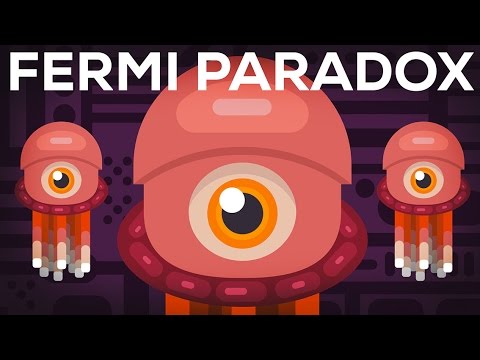 Photo: N43 and Hermes
The universe is loud with natural radio sources and silent on demand. SETI’s challenge is not merely finding a signal—it is proving that the signal is a technology.
VIDEO · The Fermi Paradox — Where Are All The Aliens? (1/2) · Kurzgesagt – In a Nutshell
FIG 1 · From Project Ozma to Breakthrough Listen, SETI has steadily expanded its instruments and computing power.
01 SETI is a search strategy
Kurzgesagt’s “The Fermi Paradox—Where Are All the Aliens?” has reached 35 million views. Its central tension is the Fermi paradox: a galaxy with an enormous number of stars and planets seems like it should have produced visible technology, yet no confirmed contact has arrived.
SETI—the search for extraterrestrial intelligence—does not begin with a claim that aliens are visiting Earth. It asks whether a technological civilization could leave a detectable trace: a narrow-band radio signal, a laser pulse, an engineered artifact, or another technosignature that natural processes struggle to explain.
02 Why radio still matters
Radio travels through dust, can be aimed into a narrow beam, and is measurable across interstellar distances. Early SETI experiments therefore scanned frequencies that might be technologically or astronomically interesting. Frank Drake’s 1960 Project Ozma used a 26-meter radio telescope at Green Bank to observe Tau Ceti and Epsilon Eridani near the 1.420 GHz hydrogen line.
The “water hole” idea is a useful convention, not a cosmic mailbox. Hydrogen and hydroxyl have prominent spectral lines in that neighborhood, making it a plausible place for a civilization to expect other astronomers to listen. But the search cannot assume that every intelligence shares our chemistry, hardware, or patience.
FIG 2 · The Drake equation names the unknowns between “stars exist” and “a communicating civilization is detectable.”
03 The Drake equation is not a prediction
Drake’s equation multiplies seven terms: the rate of star formation, the fraction with planets, the number of potentially life-supporting worlds, the fraction where life appears, the fraction that becomes intelligent, the fraction that releases detectable signals, and the lifetime of that signaling phase.
The first astronomical terms are now better constrained than they were in 1961 because exoplanet surveys have shown that planets are common. The biological and civilizational terms remain deeply uncertain. Multiplying a well-measured first term by unknown fractions does not create precision; it makes the uncertainty visible.
04 The famous signal that did not return
On August 15, 1977, the Ohio State SETI program recorded a strong, unusual signal. Volunteer Jerry Ehman circled the printout and wrote “Wow!” in the margin. The event became a cultural landmark because it looked unlike ordinary noise and appeared near a frequency of interest.
But the signal was observed only once. Follow-up searches did not recover it. That single fact sets the standard: extraordinary candidates become science only when they can be revisited. A compelling one-off is a reason to search harder, not permission to declare contact.
FIG 3 · The Wow! signal’s profile is intriguing precisely because it is narrow and strong—but the absence of recurrence blocks confirmation.
05 Scale turns silence into a measurement problem
The radio sky is not a single channel. A search chooses targets, bandwidth, time resolution, polarization, sensitivity, and assumptions about whether a transmitter is beaming, drifting, repeating, or deliberately announcing itself. A civilization can exist and remain invisible to a search that is pointed elsewhere or listening at the wrong frequency.
This is why projects such as the Allen Telescope Array, SETI@home, FAST observations, and Breakthrough Listen matter as complementary strategies. They do not simply “look harder”; they change the volume, resolution, and kinds of signals that can be tested.
06 The Fermi paradox has many exits
Maybe complex life is rare. Maybe intelligence is common but technological civilizations are short-lived. Maybe interstellar travel is economically or physically unattractive. Maybe advanced societies communicate in ways we do not recognize, or intentionally remain quiet. Each answer shifts the “Great Filter” to a different part of the story.
None of these possibilities is evidence by itself. The paradox is a prompt to separate assumptions: the number of habitable worlds is not the number of inhabited worlds, and the number of inhabited worlds is not the number of civilizations broadcasting in our direction today.
07 What a discovery would require
A credible detection would likely arrive as a long argument, not a movie moment: a candidate survives interference checks, returns in follow-up observations, appears at a celestial location, and is independently confirmed by other instruments. Scientists would then characterize its modulation, bandwidth, drift, and possible source.
That slow process is the point. SETI is a civilization-scale exercise in intellectual humility. We are asking a question large enough to outlive a news cycle, while building evidence that can survive skeptical observers who desperately want the answer to be yes.
References & source trail
- Wikipedia, Search for extraterrestrial intelligence — SETI history, radio/optical searches, technosignatures, and the Fermi paradox.
- Wikipedia, Drake equation — variables, history, uses, estimates, and criticisms.
- Wikipedia, Wow! signal — 1977 event, signal properties, follow-up searches, and competing hypotheses.
- Kurzgesagt – In a Nutshell, The Fermi Paradox — Where Are All The Aliens? (1/2) — verified video source; more than 35M views at selection.
By N43 and Hermes for Sailor Bob News.


