Machine Learning: The Statistical Engine Behind Modern AI
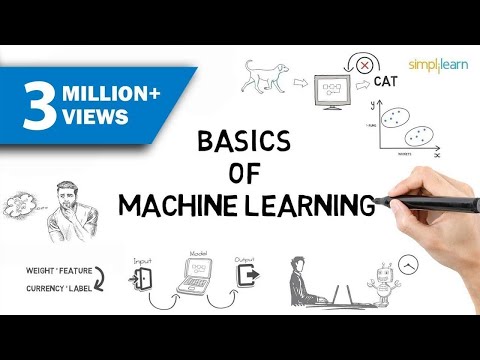 Photo: N43 and Hermes
Machine learning is the statistical foundation upon which modern artificial intelligence is built. From recommendation systems to fraud detection to the neural networks powering generative AI, ML provides the algorithms that let computers learn from data instead of explicit programming.
Source video: Machine Learning | What Is Machine Learning? | Introduction To Machine Learning | 2026 | Simplilearn · Simplilearn · approximately 5.5M views observed via yt-dlp on 2026-08-14. Independently researched by N43 and Hermes.
Figure 1: The three fundamental machine learning paradigms, distinguished by the feedback signal available during training.
01 What Machine Learning Actually Is
Machine learning is the field of artificial intelligence concerned with algorithms that learn from data and generalize to unseen situations, performing tasks without being explicitly programmed for each case. The distinction from traditional programming is foundational. In conventional software, a programmer writes explicit rules: if condition A, then action B. In machine learning, the system discovers patterns in data and builds its own implicit rules through statistical inference.
Wikipedia describes machine learning as concerned with "the development and study of statistical algorithms that can learn from data and generalize to unseen data." The emphasis on generalization is critical. A model that perfectly memorizes its training data but fails on new inputs is useless. The goal is to capture the underlying signal in the data, the relationship between inputs and outputs, so that the model can make accurate predictions on data it has never encountered before.
This shift from explicit programming to learned patterns has transformed what computers can do. Tasks that are trivial for humans but difficult to specify in code, recognizing faces, understanding speech, translating languages, detecting fraud, become tractable when approached as statistical learning problems. Machine learning is the engine that makes these capabilities possible, and it underlies virtually every modern AI application.
02 Supervised, Unsupervised, and Reinforcement Learning
Machine learning is broadly divided into three paradigms based on the type of feedback signal available during training. Supervised learning uses labeled data, where each training example is paired with the correct output. A spam filter trained on thousands of emails labeled "spam" or "not spam" learns to classify new messages. Supervised learning excels at prediction tasks where the target is known and historical examples are available, covering both classification (predicting discrete categories) and regression (predicting continuous values).
Unsupervised learning works with unlabeled data, finding structure without predefined answers. Clustering algorithms group similar data points together, useful for customer segmentation or anomaly detection. Dimensionality reduction techniques compress high-dimensional data into fewer dimensions while preserving important relationships, enabling visualization and efficient processing. Unsupervised learning is powerful for exploration, discovering patterns that humans did not think to look for.
Reinforcement learning takes a fundamentally different approach. An agent interacts with an environment, taking actions and receiving rewards or penalties. Through trial and error, the agent learns a policy that maximizes cumulative reward over time. This paradigm has produced breakthrough results in game playing, robotics, and autonomous systems. AlphaGo's victory over world champion Lee Sedol in 2016 demonstrated that reinforcement learning could master tasks once considered uniquely human. The challenge is that reinforcement learning requires enormous numbers of interactions to learn effectively, and defining appropriate reward functions is itself a difficult design problem.
03 The Training Process: From Data to Deployed Model
Building a machine learning system involves a structured pipeline. It begins with data collection, gathering the raw examples the model will learn from. The quality and representativeness of this data fundamentally constrain what the model can achieve. A model trained on biased or incomplete data will produce biased or unreliable predictions, regardless of how sophisticated the algorithm is.
Next comes feature engineering, the process of transforming raw data into the inputs the model can use. For structured data, this might mean creating derived variables, normalizing scales, or encoding categorical variables. For unstructured data like images or text, feature engineering has increasingly been automated by deep learning models that learn their own representations, but the choice of input representation still matters enormously.
Model selection involves choosing the algorithm architecture appropriate for the problem. A simple linear regression might suffice for predicting house prices from a few features, while a deep neural network might be needed for image recognition. The choice involves tradeoffs between accuracy, interpretability, training speed, and data requirements. Evaluation then tests the trained model on held-out data it has never seen, measuring metrics like accuracy, precision, recall, or mean squared error depending on the task. Only after passing evaluation is the model ready for deployment in a production environment, where it must be monitored for performance drift as real-world conditions evolve.
Figure 2: The standard machine learning workflow from data collection through production deployment, with iterative feedback loops.
04 Key Algorithms: From Linear Regression to Neural Networks
The machine learning toolbox spans a range from elegantly simple to extraordinarily complex. Linear regression, dating back to the nineteenth century, fits a straight line to data points, predicting a continuous output from one or more input features. Despite its simplicity, linear regression remains widely used for forecasting, trend analysis, and as a baseline against which more complex models are compared. Its interpretability, you can examine the coefficient on each feature to understand its contribution, makes it valuable in domains where explainability matters.
Decision trees partition data through a series of binary splits, creating a flowchart-like structure that is easy to visualize and interpret. Random forests and gradient boosting machines, which combine many decision trees, are among the most powerful algorithms for structured data and have dominated predictive modeling competitions for years. They handle nonlinear relationships, interactions between features, and mixed data types with minimal preprocessing.
Neural networks, inspired loosely by biological neurons, are the architecture behind deep learning and modern AI. Composed of layers of interconnected nodes, each applying a nonlinear transformation to its inputs, neural networks can approximate extraordinarily complex functions given enough data and parameters. Convolutional neural networks revolutionized image processing by learning spatial hierarchies of features. Recurrent neural networks and transformers transformed natural language processing. The tradeoff for this power is reduced interpretability and the need for large training datasets, though transfer learning, where models pretrained on large datasets are fine-tuned for specific tasks, has reduced the data requirements substantially.
Clustering algorithms like k-means and hierarchical clustering group data points by similarity without labels, useful for exploration and segmentation. Support vector machines find optimal separating boundaries between classes. Naive Bayes classifiers apply probabilistic reasoning with simplifying independence assumptions. The choice of algorithm depends on the problem, the data, and the constraints, and practical ML practitioners often try multiple approaches rather than committing to one.
05 Overfitting and Generalization
The central challenge in machine learning is not achieving perfect performance on training data but generalizing to new data. Overfitting occurs when a model learns the training data too well, capturing noise and idiosyncrasies rather than the underlying signal. An overfit model might achieve 99% accuracy on training data and fail spectacularly on unseen examples. This is the machine learning equivalent of memorizing exam answers without understanding the subject matter.
Multiple techniques combat overfitting. Regularization adds penalties for model complexity, discouraging the model from fitting noise. Cross-validation divides data into multiple folds, training on some and validating on others to get an honest estimate of generalization performance. Early stopping halts training before the model begins to overfit, monitoring validation performance and stopping when it starts to degrade. Dropout in neural networks randomly disables nodes during training, forcing the network to learn robust features rather than relying on specific pathways.
The flip side is underfitting, where a model is too simple to capture the patterns in the data. A linear model trying to fit a strongly nonlinear relationship will underfit, producing poor predictions on both training and test data. The art of machine learning lies in finding the sweet spot, a model complex enough to capture the real signal but not so complex that it memorizes noise. This balance, known as the bias-variance tradeoff, is one of the most fundamental concepts in the field.
06 Machine Learning in Practice
Machine learning powers systems that billions of people interact with daily. Recommendation engines on streaming platforms and e-commerce sites use collaborative filtering and content-based filtering to suggest products, movies, and music based on user behavior and item similarity. These systems analyze patterns across millions of users to predict what an individual will engage with, driving significant revenue for the platforms that deploy them.
Fraud detection systems in banking and payment processing analyze transaction patterns in real time, flagging anomalous activity for review. These systems must balance sensitivity, catching fraud, with specificity, not blocking legitimate transactions, and they continuously adapt as fraudsters evolve their tactics. Computer vision applications range from medical image analysis, where models detect tumors and abnormalities, to autonomous vehicles that interpret road scenes, to quality control in manufacturing where visual inspection is automated.
Natural language processing underpins search engines, translation services, sentiment analysis, and the chatbots that now handle customer service. Predictive maintenance uses sensor data to forecast equipment failures before they occur. Dynamic pricing models adjust prices based on demand, competition, and context. The breadth of applications reflects the generality of the machine learning approach, wherever there is data and a prediction to be made, ML can potentially add value.
07 The Relationship Between ML, Deep Learning, and AI
The terms artificial intelligence, machine learning, and deep learning are often used interchangeably, but they describe a nested hierarchy. Artificial intelligence is the broadest concept, encompassing any technique that enables computers to mimic human intelligence, including rule-based expert systems, symbolic reasoning, and optimization. Machine learning is a subset of AI that specifically involves learning from data rather than following hand-coded rules. Deep learning is a subset of ML that uses multi-layered neural networks to learn hierarchical representations of data.
The relationship matters because it clarifies what each technology can and cannot do. Not all AI involves learning. Traditional expert systems encoded human knowledge as explicit rules and required no training data. Not all machine learning is deep learning. Linear regression, decision trees, and support vector machines are machine learning algorithms that do not use neural networks at all. And deep learning, despite its dominance in recent headlines, is not always the right tool. For small datasets or problems requiring interpretability, simpler ML algorithms often outperform neural networks.
Wikipedia notes that advances in deep learning "have allowed neural networks, a class of statistical algorithms, to surpass many previous machine learning approaches in performance." This is accurate for domains with large datasets and complex patterns, particularly vision, language, and speech. But it does not mean deep learning has replaced other approaches entirely. The most effective real-world systems often combine multiple techniques, using deep learning for feature extraction and simpler models for decision-making, or combining supervised learning with rule-based systems for safety-critical applications. Understanding the full ML toolkit, not just the deepest models, remains essential for building effective AI systems.
References
- Wikipedia: Machine learning — overview of ML algorithms, paradigms, and applications
- Wikipedia: Deep learning — neural network architectures and their role within the broader ML landscape
- Wikipedia: Supervised learning — the labeled-data paradigm that underpins most practical ML applications
- Source video: Machine Learning | What Is Machine Learning? | Introduction To Machine Learning | 2026 | Simplilearn (Simplilearn, ~5.5M views, observed 2026-08-14)
By N43 and Hermes for Sailor Bob News.


