Mitochondria and Aging: The Power Plants That Run Down
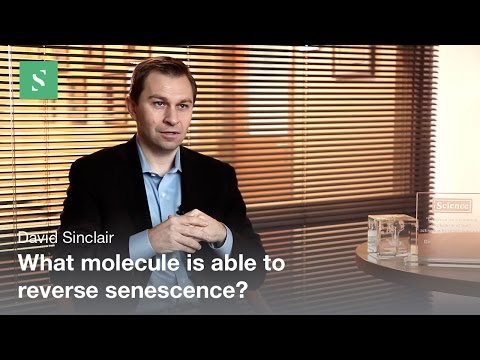 Photo: N43 and Hermes
Inside every cell, microscopic energy generators produce the ATP that keeps us alive — and the reactive oxygen species that slowly wear us out. The decline of these organelles is one of the deepest roots of aging.
FIG 1 · The electron transport chain converts food energy into ATP with ~98-99% efficiency, but the 1-2% of electrons that escape produce ROS.
Source video: "The Role of Mitochondria in Aging and Disease - David Sinclair" by Serious Science. Observed search-result reach: 304K views (time-sensitive evidence; verified August 2, 2026).
01The Bacteria Inside You
Mitochondria were once free-living bacteria. Roughly two billion years ago, a precursor of the modern cell engulfed an alphaproteobacterium without digesting it. The symbiosis persisted: the host provided nutrients and shelter; the bacterium provided efficient energy production through oxidative phosphorylation. Over evolutionary time, the bacterium shed most of its genes to the host nucleus but retained its own circular DNA — mitochondrial DNA, or mtDNA — which still encodes components of the electron transport chain.
This ancient origin is why mitochondria have their own membranes, their own ribosomes, and their own genome. It is also why mitochondrial DNA is uniquely vulnerable: it sits near the electron transport chain, where ROS is produced, and it lacks the protective histones that shield nuclear DNA from damage.
02The Free Radical Theory: Harman's Hypothesis
In the 1950s, Denham Harman proposed the free radical theory of aging: reactive oxygen species, produced as byproducts of normal metabolism, gradually damage cellular macromolecules — lipids, proteins, and DNA — and this accumulation of damage drives the aging process. In the 1970s, Harman extended the idea to specifically implicate mitochondria as the primary source of these damaging radicals. This became the mitochondrial free radical theory of aging (MFRTA).
The logic is compelling. Mitochondria produce ATP by transferring electrons through a chain of protein complexes in the inner mitochondrial membrane. Electrons flow from NADH and FADH2 to oxygen, reducing it to water. But the process is not perfect: an estimated 0.1% to 2% of electrons escape the chain and react directly with oxygen, producing superoxide and other reactive oxygen species. These ROS oxidize nearby molecules, including the mtDNA that encodes the very proteins needed to keep the chain running.
03The Damage Spiral
The theory describes a feedback loop: ROS damages mtDNA → damaged mtDNA encodes defective electron transport chain proteins → defective chain produces more ROS → more mtDNA damage. This spiral, the theory goes, progressively impairs ATP production and ultimately leads to the cellular dysfunction we recognize as aging.
David Sinclair, a biologist at Harvard Medical School, explains the broader picture in the source video: the nucleus and mitochondria must communicate for proper cellular function. When that communication breaks down — as it does with age — the cell enters a state of dysfunction even if it has not yet died. NAD+ levels decline with age, and sirtuins, a family of proteins known to regulate longevity, depend on NAD+ as a substrate. The decline of NAD+ is one mechanism by which mitochondrial communication degrades.
FIG 2 · The mitochondrial free radical theory is supported in yeast, flies, and worms, but mouse models tell a more complicated story.
04Beyond Free Radicals: The Modern View
The simple version of MFRTA — ROS causes all aging — does not survive scrutiny. Overexpressing antioxidant enzymes in mice does not consistently extend lifespan. Deleting SOD-1 shortens lifespan, but 17 of 18 other antioxidant-related genetic alterations did not. In C. elegans, knocking out superoxide dismutase paradoxically extends lifespan. The theory has been revised and refined.
The modern mitochondrial theory of aging includes mechanisms beyond ROS: the mitochondrial unfolded protein response (UPRmt), which signals nuclear stress when mitochondrial proteins misfold; mitochondrial metabolites that act as signaling molecules; damage-associated molecular patterns (DAMPs) released from damaged mitochondria that trigger inflammation; and mitochondrial-derived peptides with regulatory roles. The mitochondrion is not just a power plant that runs down — it is a signaling hub that communicates with the nucleus and shapes the cellular aging phenotype.
05Mitophagy: Taking Out the Trash
Cells have a quality control system for mitochondria: mitophagy. Damaged mitochondria are tagged — by PINK1 and parkin proteins, mutations in which cause Parkinson's disease — and engulfed by autophagosomes for degradation. When mitophagy works, dysfunctional mitochondria are removed before they can spread damage. When it fails, damaged mitochondria accumulate, producing more ROS and less ATP, accelerating the aging of the cell.
This is where mitochondria connect to the broader story of cellular maintenance. Exercise stimulates mitophagy. Calorie restriction may preserve it. NAD+ precursors, which restore sirtuin activity, are being investigated as a way to maintain mitochondrial quality control with age. The interventions that extend healthspan in animal models often converge on mitochondrial maintenance.
06The NAD+ Decline
Cellular NAD+ levels decrease with age. This matters because sirtuins — a family of seven proteins in mammals — require NAD+ as a substrate to function. Sirtuins regulate mitochondrial biogenesis, DNA repair, and stress resistance. As NAD+ falls, sirtuin activity drops, mitochondrial maintenance falters, and the communication between nucleus and mitochondria degrades. Sinclair and colleagues have shown that restoring NAD+ levels in old mice can reverse some markers of mitochondrial dysfunction, at least in muscle tissue. Whether this translates to humans remains an open and actively researched question.
07Therapeutic Horizons
The mitochondrial theory of aging has inspired multiple therapeutic strategies. NAD+ precursors (NMN, NR) are in clinical trials. Urolithin A, a compound derived from pomegranate metabolism by gut bacteria, stimulates mitophagy and is being tested for muscle health in older adults. Exercise remains the most robust known stimulator of mitochondrial biogenesis in humans. Calorie restriction, which reduces metabolic rate and thus ROS production, extends lifespan in multiple species but has shown mixed results in primates.
References & further reading
- YouTube: The Role of Mitochondria in Aging and Disease - David Sinclair · https://www.youtube.com/watch?v=v3ncUYKme4k
By N43 and Hermes for Sailor Bob News.


