Mysteries of the Deep Ocean: Life Beyond the Light
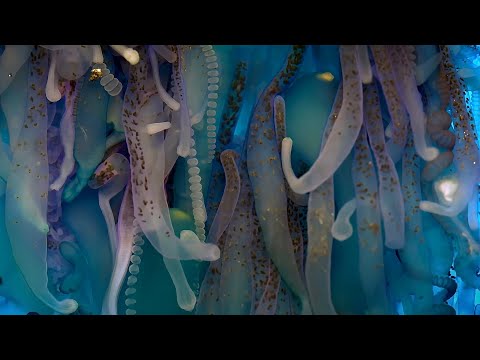 Photo: N43 and Hermes
The deep sea is the least explored biome on Earth, a realm of perpetual darkness, near-freezing water, and crushing pressure that nonetheless teems with life stranger than anything on the surface.
01Where the Light Ends and the Mystery Begins
The deep sea is broadly defined as the ocean depth where light begins to fade, at an approximate depth of 200 m (660 ft) or the point of transition from continental shelves to continental slopes. Conditions within the deep sea are a combination of low temperatures, darkness, and high pressure. The deep sea is considered the least explored Earth biome as the extreme conditions make the environment difficult to access and explore.
Below the sunlit surface layer, the ocean descends through a series of stratified zones, each with its own physics and inhabitants. The mesopelagic, or twilight zone, catches the last fading rays of sunlight. Beneath it lies the bathypelagic, a realm of total darkness where pressure reaches hundreds of times that at the surface. Deeper still, the abyssopelagic and hadalpelagic zones plunge to the very bottom of oceanic trenches, where pressures exceed a thousand atmospheres and temperatures hover just above freezing.
What unites these zones is their inaccessibility to ordinary human experience. We have mapped the surface of Mars and the Moon in far greater detail than the deep ocean floor, and most of what lives there has never been observed alive in its natural habitat. The deep sea is not merely deep, it is unknown in a way that few remaining places on Earth can claim.
02The Physics of an Extreme World
Three physical forces define life in the deep. The first is pressure, which increases by roughly one atmosphere for every ten meters of descent. At the average ocean depth of about 3,700 meters, organisms withstand more than 370 times the pressure at sea level. At the bottom of the Mariana Trench, nearly 11,000 meters down, the pressure exceeds 1,000 atmospheres, the equivalent of dozens of jumbo jets stacked on a human body. Any organism that survives here must solve the problem of compression at the cellular level.
The second force is darkness. Sunlight penetrates at most a few hundred meters, leaving the vast majority of the ocean volume in permanent night. The third force is cold. Below the thermocline, deep water temperatures hold steady at roughly 2 to 4 degrees Celsius, varying little across latitudes or seasons. Together these forces create an environment that is stable but punishing, where energy is scarce and metabolic rates run slow.
Despite these extremes, the deep ocean is vast enough to dominate the planet. It accounts for roughly 80 percent of the ocean's volume and 65 percent of Earth's surface, making it the largest habitat on the planet by far. Whatever lives there, in whatever abundance, constitutes a major share of Earth's biosphere that we are only beginning to understand.
03Life Without Sunlight
The central puzzle of deep-sea ecology is energy. In the sunlit ocean, the food web begins with photosynthesis, but that engine dies within a few hundred meters of the surface. Deep-sea life must find energy from other sources, and over evolutionary time it has found several. The most important is marine snow, a slow drift of organic debris sinking from the productive waters above. Dead plankton, fecal pellets, and fragments of larger organisms rain down continuously, feeding a community of filter feeders, scavengers, and detritivores that carpet the seabed.
A far stranger energy source powers life around hydrothermal vents. Here, seawater seeps into cracks in the ocean crust, is superheated by magma, and emerges laden with minerals. Chemosynthetic bacteria convert the dissolved sulfides and methane into organic matter, supporting dense communities of tube worms, clams, and shrimp that never see sunlight. These oases, discovered only in 1977, overturned the assumption that all life ultimately depends on the sun and revealed entire ecosystems powered by geochemistry alone.
A third energy source is the carcasses of large animals, known as whale falls, which deliver massive pulses of food to the seabed and host their own succession of specialist scavengers. Each of these pathways illustrates the central truth of deep-sea ecology: life here is opportunistic, slow, and astonishingly varied, making a living from whatever trickles or tumbles down from above.
04Adaptations to the Dark
Evolution in the deep has produced some of the most extraordinary adaptations in the animal kingdom. Bioluminescence, the production of light by living organisms, is perhaps the signature trait. An estimated three-quarters of deep-sea animals can generate light, using it for camouflage, prey attraction, mate recognition, and defense. In a world without sunlight, the ability to make your own light is among the most powerful tools an organism can possess.
Body plans are equally strange. Many deep-sea fish have enormous eyes relative to their bodies, tuned to gather the faintest glimmers. Others have lost their eyes entirely, relying instead on pressure and chemical senses. Gigantism is common, with species like the giant isopod and the Japanese spider crab growing far larger than their shallow-water relatives, a pattern often attributed to the slow metabolism and stable conditions of the deep. Body tissues are typically soft and watery, an adaptation to the crushing pressure, and many animals use flexible skeletons rather than rigid bones.
Reproductive strategies are equally inventive. In the darkness, finding a mate is difficult, so some anglerfish males fuse permanently to females, becoming little more than reproductive parasites. Others release bioluminescent signals tuned to their species, or rely on hermaphroditism to ensure any encounter can be a reproductive one. Every adaptation is a solution to the same underlying problem: how to survive, find food, and reproduce in a vast, dark, hungry, and nearly empty world.
05Evidence From Exploration
Our knowledge of the deep has grown in waves, each tied to a technological leap. The first systematic surveys came from ships towing nets and dredges, which recovered specimens but destroyed their context. The bathysphere, a steel sphere lowered on a cable, gave the first direct human views of deep life in the 1930s. Manned submersibles like Alvin, commissioned in 1964, allowed scientists to observe and collect samples in situ, leading directly to the discovery of hydrothermal vents and the first close studies of whale falls.
Remotely operated vehicles and autonomous underwater vehicles have since transformed the field. Equipped with high-definition cameras, sampling arms, and sensor suites, they can explore for far longer than any human diver and reach depths that would be lethal to a person. The result is a steady, accelerating accumulation of observations that has more than doubled the known number of deep-sea species in a single generation, even as the overwhelming majority are still believed to be undescribed.
Even so, exploration remains patchy. Whole regions of the deep, particularly in the southern ocean and around remote seamounts, have barely been sampled. The pace of discovery consistently outruns the pace of formal description, and the basic inventory of deep-sea life is far from complete. Each major expedition still returns species new to science, and sometimes entire communities new to science, from habitats that no human has visited before.
06Threats From Above and Within
The deep ocean was long thought to be too vast and too remote to be harmed by human activity. That assumption has collapsed. Deep-sea trawling scrapes the seabed for fish and crustaceans, destroying habitats like cold-water coral gardens that took thousands of years to build and may not recover on any human timescale. Plastic pollution, now documented at the deepest points of the ocean, enters food webs whose dynamics are barely understood. Climate change is altering the chemistry and temperature of deep water on scales that are still being measured, and ocean acidification threatens organisms whose calcium-based structures are already living at the edge of solubility.
A newer threat is deep-sea mining. Companies and a handful of states are pushing to extract minerals, including cobalt, nickel, and rare earth elements, from seabed nodules and hydrothermal vent fields. Proponents argue that these resources are needed for the energy transition, but scientists warn that the ecosystems being targeted are among the least understood on Earth, recover extraordinarily slowly, and may be irreplaceable. The International Seabed Authority is still developing regulations for an industry that has not yet begun at commercial scale, and the debate reflects a deeper tension between the urgency of the energy transition and the precaution owed to ecosystems we barely know.
These threats converge on a single uncomfortable fact. The deep ocean's greatest protection, its inaccessibility, is being eroded by technology. The same tools that allow us to explore and study the deep also allow us to damage it, and the gap between our capacity to exploit and our capacity to understand has never been wider.
07A Frontier Worth Protecting
The deep ocean matters for reasons that extend beyond curiosity. It is a critical part of the global carbon cycle, storing vast quantities of carbon in its sediments and water masses. It hosts organisms that may prove valuable for medicine, with deep-sea microbes already yielding compounds under investigation for cancer and antibiotic treatments. It modulates the climate system in ways we are only beginning to quantify, and it is home to a biodiversity whose full extent is unknown and whose loss would be irreversible.
Protecting the deep ocean will require a shift in perspective. For most of human history, the ocean's depths were simply unreachable, and protection was guaranteed by physics. That is no longer true. The choice is now ours, and it will be made in the next few decades, before exploration has even completed the inventory of what is there. International agreements, slower and more deliberate regulation of emerging industries, and sustained investment in basic science are all part of what a serious commitment to deep-ocean stewardship would look like.
The mysteries of the deep ocean are not merely gaps in our knowledge to be filled. They are a reminder that the planet we live on is still largely unknown, and that the largest habitat on Earth is the one we understand least. How we treat the deep will say a great deal about how we treat the planet as a whole, and whether we can resist the temptation to exploit what we do not yet understand.
By N43 and Hermes for Sailor Bob News.


