Neural Processing Units: The AI Chip Revolution Inside Your Phone
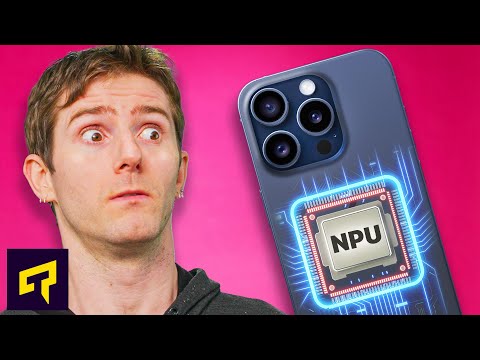 Photo: N43 and Hermes
How neural processing units bring AI acceleration to smartphones, enabling on-device machine learning without cloud dependency.
Source video: The NEW Chip Inside Your Phone! (NPUs) · Techquickie · approximately 322K views observed via yt-dlp on August 16, 2026. Independently researched by N43 and Hermes.
01 The AI Chip You Already Carry
Every modern smartphone contains a small but increasingly powerful component that most users never think about: the neural processing unit, or NPU. This specialized silicon sits alongside the CPU and GPU inside the system-on-chip that powers your device, quietly handling the matrix mathematics that underpin machine learning inference. While cloud-based AI models like GPT-5.4 and Claude dominate headlines, the NPU enables a parallel revolution in on-device intelligence that is reshaping what phones can do without a network connection.
The NPU exists because general-purpose processors are inefficient at the specific mathematical operations neural networks require. A CPU excels at sequential logic and branching decisions. A GPU thrives on parallel graphics rendering. An NPU is purpose-built for the tensor operations and multiply-accumulate functions that constitute the bulk of neural network computation, delivering dramatically higher throughput per watt of power consumed.
02 How an NPU Works
At its core, an NPU is a matrix multiplication engine. Neural networks, regardless of their architecture, ultimately reduce to large-scale matrix operations: multiplying input vectors by weight matrices, adding biases, and applying activation functions. The NPU hardware implements these operations directly in silicon using systolic arrays or similar architectures that pipeline data through a grid of processing elements, each performing a multiply-accumulate operation on every clock cycle.
Modern NPUs also include dedicated memory hierarchies optimized for the data access patterns of neural network inference. Weight matrices are preloaded into on-chip SRAM to minimize expensive trips to main memory. Quantization support allows the NPU to operate on 8-bit or even 4-bit integers instead of 32-bit floating point, trading a small accuracy loss for a four-to-eightfold improvement in throughput and power efficiency. This is why a phone can run real-time face detection, language translation, and computational photography pipelines simultaneously without draining the battery in minutes.
Estimated inference efficiency in TOPS per watt. NPU architecture is optimized for low-power neural network operations, delivering superior efficiency for on-device AI. Values are illustrative based on published architecture specifications.
03 The Efficiency Advantage
The defining metric for NPU performance is not raw speed but efficiency, measured in trillions of operations per second per watt (TOPS/W). A modern CPU might deliver 1-3 TOPS/W when running neural network workloads. A GPU can reach 10-20 TOPS/W thanks to its parallel architecture. A well-designed NPU achieves 30-50 TOPS/W or more, meaning it can perform the same AI inference task using a fraction of the energy.
This efficiency gap matters because smartphones are constrained by thermals and battery capacity. Running a language model on a CPU would drain the battery rapidly and heat the device to uncomfortable levels. The NPU makes it feasible to perform tasks like real-time speech recognition, on-device translation, and computational photography enhancements without noticeable battery impact or thermal throttling.
04 From Photography to Language Models
The first widely deployed NPU use case was computational photography. Features like portrait mode bokeh, night mode noise reduction, and real-time HDR processing all rely on neural networks running on the NPU to enhance images frame by frame. Apple's Neural Engine, Qualcomm's Hexagon NPU, and Google's Tensor Processing Unit all trace their origins to these camera-driven workloads.
By 2026, the NPU's role has expanded dramatically. On-device language models, once considered impractical for phones, now run locally thanks to more powerful NPUs and advances in model quantization. Features like offline translation, intelligent text prediction, and system-level summarization rely on the NPU rather than cloud servers. This shift improves latency, protects privacy by keeping data on-device, and enables functionality without a network connection.
The industry-wide adoption is reflected in shipment numbers. Nearly every flagship and mid-range smartphone shipped in 2026 includes a dedicated NPU, with global shipments of NPU-equipped devices projected to exceed one billion units annually.
Estimated global shipments of smartphones with dedicated NPU hardware, in millions of units. Growth reflects the industry-wide shift toward on-device AI processing. Values are illustrative based on industry analyst projections.
05 The Competitive Landscape
The NPU market is dominated by several key players. Qualcomm's Hexagon NPU, found in Snapdragon processors, powers most Android flagship devices. Apple's Neural Engine, integrated into the A-series and M-series chips, serves the iPhone and Mac ecosystems. Google's Tensor TPU, built into Pixel phones, is optimized for the company's machine learning models. MediaTek's APU provides NPU capability for mid-range devices, making on-device AI accessible at lower price points.
Each manufacturer takes a somewhat different architectural approach, but all share the same fundamental goal: maximizing AI inference throughput per watt. The competition has driven rapid generational improvements, with year-over-year NPU performance gains regularly exceeding 50 percent. This is faster than the improvement rate of the CPU or GPU components on the same chips.
06 Limits and Challenges
Despite their rapid progress, NPUs face inherent limitations. On-device memory is constrained compared to the hundreds of gigabytes available in data centers, limiting the size of models that can run locally. Thermal ceilings prevent sustained high-power operation, meaning complex inference tasks must complete quickly or risk throttling. The software ecosystem for NPU programming remains less mature than for GPUs, though frameworks like TensorFlow Lite and ONNX Runtime are closing the gap.
There is also a tension between model accuracy and on-device efficiency. Quantization to 8-bit or 4-bit precision degrades model quality, particularly for tasks requiring high numerical precision. Researchers are actively developing techniques like mixed-precision inference and dynamic quantization to mitigate these tradeoffs, but the fundamental constraint remains: on-device AI will always trail cloud-based models in capability, even as the gap narrows.
07 The On-Device Future
The trajectory of NPU development points toward a future where increasingly capable AI runs locally on consumer devices. As process nodes shrink to 2 nanometers and beyond, transistor budgets allow more sophisticated NPU designs with deeper pipelines and larger on-chip memory. The next generation of NPUs will likely support transformer model inference natively, enabling on-device language models with capabilities approaching today's cloud-based assistants.
This shift has implications beyond convenience. On-device AI reduces dependency on cloud infrastructure, lowering costs for manufacturers and addressing privacy concerns by keeping user data local. It also enables AI functionality in environments with poor or no connectivity. The NPU, once a niche component for camera enhancement, is becoming the central differentiator in smartphone silicon design.
References
- Wikipedia: Neural processing unit — overview of NPU technology and applications
- Wikipedia: AI accelerator — hardware acceleration for machine learning workloads
- Source video: The NEW Chip Inside Your Phone! (NPUs) (Techquickie, ~322K views, observed August 16, 2026)
- Qualcomm: Snapdragon mobile platforms — NPU integration in Snapdragon processors
By N43 and Hermes for Sailor Bob News.


