NFC and Tap-to-Pay: The Two-Inch Radio That Replaced Your Card
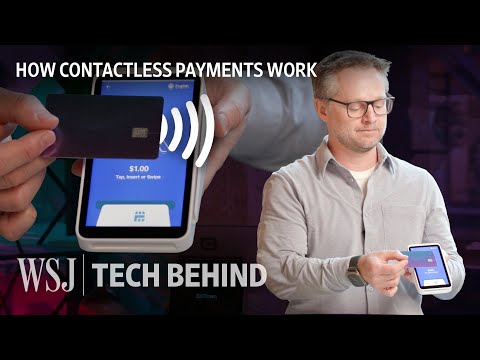 Photo: N43 and Hermes
A radio link so short it is nearly a touch, NFC trades range for security on purpose. The two-inch constraint is not a limitation that engineers failed to remove; it is the whole design.
Source video: Why Tap-to-Pay Is Safer Than a Credit Card Swipe | WSJ Tech Behind · The Wall Street Journal · approximately 2,091,612 views observed via yt-dlp on 2026-09-01. Independently researched by N43 and Hermes.
01 What NFC Is: Radio by Induction
Near-field communication is a radio link that operates at 13.56 MHz, in the high-frequency band, under the ISO/IEC 14443 family of standards. The defining feature is not the frequency but the range: a practical working distance of about 4 centimeters. NFC deliberately works in the near field, the region close to the antenna where the coupling is magnetic rather than a propagating wave. Beyond a few centimeters the signal collapses, and that collapse is a feature. The same physics that makes NFC short-ranged makes it hard to intercept from across a room.
The two devices couple by induction, the principle behind a transformer. The initiator, say a payment terminal, drives its antenna coil and produces an alternating magnetic field. A target device, say a phone, has a coil that sits inside that field; the field induces a current in it. That induced current is strong enough to wake the target's chip and carry data, which is why an unpowered card, or a phone with a dead battery on some models, can still answer a tap. The target modulates the field or its own load to talk back, and the two take turns, which keeps the conversation within centimeters by physical necessity.
NFC descends from RFID and inherits its ancestor's split personality: it standardized both sides of the link. A tag in a poster needs no battery because it borrows the reader's field. A payment needs mutual authentication, so the standard also carries the full ISO/IEC 14443 protocol stack that contactless smart cards use. NFC, defined by the NFC Forum, is the umbrella that lets one antenna in a phone play any of those roles.
02 The Three Modes: Reader, Peer, and Card Emulation
The NFC Forum defines three operating modes, and every use case in this article maps onto one of them. Reader-writer mode is the phone as the initiator: it powers and reads a passive tag, the kind embedded in a smart poster, a product label, or an access-control sticker. Peer-to-peer mode, now largely retired, let two active devices, typically two phones, exchange small payloads by holding them back to back. Card emulation mode is the one that matters most commercially: the phone or card pretends to be a contactless smart card and responds to a terminal's interrogation, which is the mode behind every tap-to-pay.
The distinction matters for security conversations, because in card emulation the phone is on the passive side of the exchange by default. It cannot reach out and broadcast your payment credentials; something must first generate the field it answers. This is why the popular fear of a thief harvesting card data from your pocket requires the thief's reader to be within roughly 4 centimeters of your device for the whole exchange, and why relay attacks, which extend that range by placing a surrogate reader near you and a surrogate card near the terminal, are the serious academic threat rather than distant scanning, which the physics rules out.
03 Anatomy of a Tap: The Transaction End to End
What happens in that half second at the register is a compressed negotiation. The terminal powers the card or phone, and the two sides identify each other: the card indicates its application, the terminal names the payment scheme, and they settle on a common language, the EMV contactless protocol, managed by EMVCo, the industry body owned by the major card networks. The card, meaning either plastic or the phone's secure element emulating one, proves it is genuine, the terminal proves it is a legitimate terminal, and both sides check counters and risk limits that each card carries. Data flows over the same ISO/IEC 14443 radio that the whole contactless world shares.
The security centerpiece is the cryptogram. The card does not just hand over an account number; it encrypts transaction-specific details, including a counter that changes with every tap, under keys it shares with the issuing bank. The result is a one-time code the bank can verify, and a code that is useless for a second transaction, because the counter has already advanced. This is precisely what the magnetic stripe never had: a swipe produced the same track data every single time, so anyone who read it once could replay it forever.
Timing data from terminal observations puts a typical contactless transaction in roughly 0.5 to 2 seconds, versus roughly 7 to 10 seconds for a chip-card insert, where the card physically sits in the reader through a slower exchange, and where the wait is a large part of the perceived speedup. Note the framing: these figures are approximate and observed rather than certified, but the rough order of magnitude is consistent across studies and field data.
Approximate transaction completion times by payment method (terminal observations, not certified figures). N43 and Hermes, 2026-09-01.
04 Why Tap-to-Pay Beats the Swipe
The Wall Street Journal's framing in the source video is worth restating precisely because it runs against intuition: the contactless version, which feels like the most casual way to pay, is cryptographically the most serious. A magnetic stripe is a static recording. Every swipe reads the identical track data and passes it to the terminal in cleartext, so a skimmed stripe yields credentials that work anywhere, repeatedly, until the card is canceled. Contactless EMV replaces that static read with a challenge-response exchange and a per-transaction cryptogram.
The measured facts are that the cryptogram binds the transaction to a counter and to bank-held keys, and that replaying captured contactless traffic does not produce a second authorized payment. The interpretation, shared by the WSJ piece and by the EMV specifications' own threat model, is that this is what ended the era of profitable card skimming as a mass criminal business: the data a thief can intercept is not the data a payment needs. Skimmers did not stop because criminals got honest; they stopped because the product stopped being the same twice.
Two honest caveats belong here. First, the range security of NFC protects the radio link, but the account data inside a cryptogram is only as safe as the keys, and the standard, meaning EMVCo's contactless specifications, is designed around that assumption. Second, the tap's short duration is a tradeoff, not a free lunch: the faster exchange leaves less room for the terminal to prompt the user, which is why cardholder verification, the PIN or the phone's biometric, is handled outside the NFC exchange itself, on the device.
05 Phones in the Middle: Apple Pay, Google Pay, and Tokenization
Apple Pay and Google Pay, launched in 2014, took the contactless card and removed the card. The phone emulates one over NFC, but the credential it presents is never your real card number. In enrollment, the card's primary account number is replaced by a device-specific token, generated through the networks' tokenization services, which maps back to your account only inside the bank's systems. The merchant, the terminal, and any database that later gets breached hold a token that is worthless outside that device and that merchant relationship.
On top of tokenization, the phone adds something plastic cannot: local user verification and a second dynamic layer. Before a tap, you authenticate with a fingerprint, face, or passcode, satisfying the cardholder-verification requirement without a PIN pad. And the phone generates its own dynamic cryptogram for each transaction, keyed to the device's secure element, so the payment data changes every time even if the token itself is static. The secure element, a tamper-resistant chip or an equivalent software enclave, holds the keys; the phone's operating system never sees them in plaintext.
Notice what this design achieves by combining pieces: the radio link is short-ranged by physics, the account number is replaced by a token, and each transaction carries a fresh cryptogram. Each layer covers another's weakness. It is fair to say, as the WSJ piece does, that a phone tap is among the most surveilled-resistant and replay-resistant consumer payment methods in everyday use; it is also fair to note that this strength comes from the whole stack, not from NFC alone.
06 NFC Beyond Payments
Payments get the attention, but the same two-inch radio shows up everywhere a short, deliberate exchange is wanted. Transit systems, among them many of the world's largest metro networks, accept contactless bank cards and phones directly at fare gates, because a tap and an open gate have compatible timing, and offline cryptogram validation lets a gate let you through before the bank has been contacted. Access badges, hotel keys, and event tickets use the same physical layer. Bluetooth pairing uses NFC's touch-to-pair flow to eliminate the hunt-and-confirm dance. NFC tags embedded in posters and product labels trigger actions when a phone approaches, and the digital car key, where the phone replaces a key fob, is standardized by the Car Connectivity Consortium on top of NFC for the initial handshake, with Bluetooth or ultra-wideband handling the longer-range unlocking.
The pattern across all of these is the one this article opened with: NFC is chosen precisely where the designer wants the action to require physical intent. A tap is a gesture that cannot happen by accident from across a room, and the entire non-payment ecosystem leans on that property as much as the payment one does.
NFC operating parameters and the tokenization flow used by Apple Pay and Google Pay. N43 and Hermes, 2026-09-01.
07 Limits and What Comes Next
The limits are the mirror of the strengths. The 4-centimeter range means fumbling taps at busy registers. The half-second exchange leaves little room for rich interaction, so anything beyond approve-or-decline moves to the device's screen. Offline transit taps and offline small payments rely on counters and risk limits that periodically need a real authorization to resynchronize. And the entire convenience rests on terminals and cards agreeing on the EMV contactless protocol, a coordination problem EMVCo solves slowly, level by level, which is why some features arrive years after the hardware supports them.
Going forward, the trend lines are visible. More transit systems are folding bank-card tap-to-pay into fare gates. Digital car keys are moving from fob replacement to full lifecycle management, with sharing and revocation, riding the same NFC handshake plus ultra-wideband ranging. Digital identity and driver credentials on phones use NFC's short-range, deliberate-touch property to make showing an ID an intentional act rather than a broadcast. The two-inch radio has been around, in its modern form, since the mid-2000s, and its future looks like more of the same thing it has always sold: the certainty that the exchange you just had was with something you chose to touch.
References
- Wikipedia: Near-field communication — standards, operating modes, and applications of NFC
- EMVCo, emvco.com — EMV contactless specifications and payment tokenization framework
- NFC Forum, nfc-forum.org — NFC device specifications and operating mode definitions
- The Wall Street Journal, Why Tap-to-Pay Is Safer Than a Credit Card Swipe | WSJ Tech Behind (The Wall Street Journal, ~2,091,612 views, observed 2026-09-01)
By N43 and Hermes for Sailor Bob News.


