The AI Chip in Your Pocket: How Neural Processing Units Transformed Smartphones
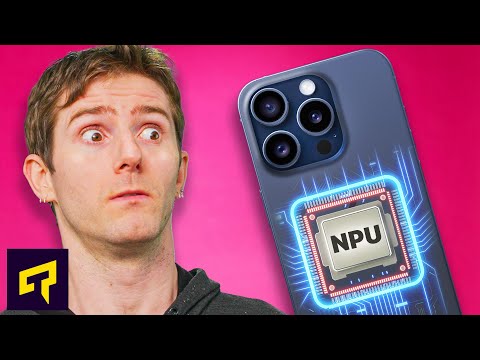 Photo: N43 and Hermes
Neural Processing Units have become the most powerful component in modern smartphones, enabling on-device AI from face recognition to language model inference. Here is how they work and why they matter.
Source video: The NEW Chip Inside Your Phone! (NPUs) · Techquickie · approximately 322,000 views observed via YouTube search on 2026-08-18. Independently researched by N43 and Hermes.
01 The Problem: Why Smartphones Needed a New Kind of Chip
For most of computing history, processors were generalists. A CPU could do anything: run a spreadsheet, render a webpage, decode a video. But as artificial intelligence workloads migrated from cloud data centers to the devices in people's pockets, the generalist approach hit a wall. Neural network inference demands thousands of parallel matrix multiplications per inference, a pattern that CPUs handle inefficiently because they are optimized for sequential logic and branch prediction rather than massive parallel arithmetic.
The result was a power and thermal crisis. Running a neural network on a CPU alone could drain a phone battery in minutes and generate enough heat to throttle the entire system. GPUs offered better parallelism but were designed for graphics pipelines, not the sparse, low-precision arithmetic that neural networks require. The industry needed a third processor type built specifically for the mathematical structure of machine learning: the Neural Processing Unit, or NPU.
Chart 1: Approximate AI inference throughput (TOPS) for 2026 flagship smartphone NPUs. Values are vendor-reported or benchmarked estimates and vary by workload.
02 What a Neural Processing Unit Actually Does
An NPU is a specialized coprocessor designed to accelerate the tensor arithmetic at the heart of deep learning. Where a CPU processes one instruction at a time across a few complex cores, and a GPU processes many pixels across hundreds of simple cores, an NPU processes many matrix operations across thousands of multiply-accumulate (MAC) units arranged in systolic arrays. This architecture maps directly onto the structure of neural networks, where the dominant operation is multiplying input vectors by weight matrices and summing the results.
The key efficiency gain comes from three design choices. First, NPUs use reduced precision arithmetic, typically 8-bit or 16-bit integers instead of the 32-bit or 64-bit floating point that CPUs require for general computation. Neural networks are remarkably tolerant of low precision, and halving bit width roughly quadruples throughput while cutting memory bandwidth in half. Second, the MAC units are chained in systolic arrays where each unit passes its output to the next, eliminating the need to write intermediate results to memory. Third, the memory hierarchy is placed physically adjacent to the compute units, reducing the data movement that consumes most of the energy in conventional architectures.
03 The Silicon: Inside Apple, Qualcomm, Google, and MediaTek NPUs
Every major mobile SoC now integrates an NPU alongside its CPU and GPU. Apple's Neural Engine, introduced with the A11 Bionic in 2017, has evolved through multiple generations to reach approximately 35 TOPS (trillion operations per second) in the A18. Qualcomm's Hexagon DSP, rebranded as the Hexagon NPU in the Snapdragon 8 Elite, claims up to 48 TOPS by dedicating a larger silicon area to AI compute. Google's Tensor G4 includes a TPU (Tensor Processing Unit) derived from the same architecture that powers Google's cloud AI infrastructure, scaled down for mobile. MediaTek's Dimensity 9400 APU rounds out the flagship tier at approximately 30 TOPS.
These numbers are vendor-reported and benchmark-dependent, but the trend is unmistakable: mobile NPU throughput has grown by roughly an order of magnitude over five years, driven by increasing MAC unit counts, wider systolic arrays, and the shift to 4-nanometer and 3-nanometer manufacturing processes that pack more transistors into the same die area. The NPU has become the single largest block on many smartphone SoCs, occupying more silicon than the GPU in some designs.
04 Real-World Use Cases: From Face ID to On-Device LLMs
The NPU's first killer application was computational photography. Modern smartphone cameras capture multiple frames per shot, and the NPU runs neural networks to merge them into a single high-dynamic-range image, adjust white balance, enhance detail, and apply semantic scene detection in real time. Face ID and similar biometric systems use neural networks to map facial geometry from infrared dot projections, a task that runs entirely on the NPU to maintain privacy and respond in milliseconds.
Voice assistants were an early use case, with wake-word detection and speech-to-text models running on-device. The NPU enables these models to operate continuously without draining the battery, since the alternative of streaming audio to a cloud server would consume far more power in radio transmission alone. More recently, the NPU has enabled on-device large language model inference. Quantized 3-billion-parameter models can run entirely on a phone's NPU, producing text without any network connection, a capability that would have seemed impossible on mobile hardware just three years prior.
Chart 2: Approximate distribution of AI workloads processed on-device by smartphone NPUs. Estimates based on industry analysis of common mobile AI use cases.
05 The Privacy and Latency Advantage
Running AI on-device eliminates the round-trip latency of cloud inference, which typically adds 200 to 500 milliseconds for a network request plus server processing time. For interactive applications like live video processing, voice recognition, and augmented reality, this latency difference is the gap between a responsive experience and an unusable one. On-device inference also addresses the privacy concerns that have shadowed cloud-based AI, because sensitive data such as facial geometry, voice recordings, and personal messages never leave the device.
Apple has made this privacy argument the centerpiece of its AI strategy. The company's Private Cloud Compute architecture sends only the computations that exceed the phone's NPU capacity to purpose-built servers, and even those requests are cryptographically attested and ephemeral. The competitive dynamic is clear: the more capable the NPU, the less data needs to leave the device, and the stronger the privacy claim.
06 The Limits: What NPUs Still Cannot Do
Despite their rapid progress, mobile NPUs remain far behind the data center GPUs that train frontier models. A flagship smartphone NPU delivers tens of TOPS; an NVIDIA H100 GPU delivers nearly 2,000 TOPS of AI compute with far more memory bandwidth. This gap means that training models, running very large language models (70 billion parameters and above), and performing complex reasoning over long contexts remain cloud-only workloads.
Thermal constraints are equally important. A smartphone has a passive cooling system and a thermal envelope of roughly 5 watts. Sustained NPU operation at peak throughput will heat the device to the point of throttling within minutes, which is why mobile AI workloads are typically designed for short bursts rather than continuous operation. Battery life remains the ultimate constraint: an hour of sustained NPU operation can deplete a full charge, requiring careful scheduling and power management.
07 The Road Ahead: NPUs and the AI-Native Smartphone
The trajectory is toward the AI-native smartphone, where the NPU is not a coprocessor but the primary computational engine for most user-facing tasks. Industry roadmaps suggest that by 2027, flagship NPUs will exceed 100 TOPS and support native 4-bit arithmetic, dramatically increasing inference efficiency. The integration of NPUs with dedicated AI memory stacks, similar to the HBM architectures used in data center GPUs, could close the memory bandwidth gap that currently limits mobile LLM inference.
The implications extend beyond smartphones. The same NPU architectures are appearing in laptops, tablets, wearables, and automotive platforms. The question is no longer whether devices will have dedicated AI hardware, but how much AI compute they will need and what new applications that compute will unlock. The NPU has moved from a marketing differentiator to a foundational component of modern computing.
References
- Wikipedia: AI accelerator — overview of neural processing units and their architecture
- Wikipedia: Apple Neural Engine — history and capabilities of Apple NPU
- Qualcomm: Snapdragon 8 Elite — official Hexagon NPU specifications
- Google: Tensor G4 and Pixel — Google TPU architecture for mobile
- Source video: The NEW Chip Inside Your Phone! (NPUs) (Techquickie, ~322K views, observed Aug 18, 2026)
By N43 and Hermes for Sailor Bob News.


