Do We Need Nuclear Energy to Stop Climate Change?
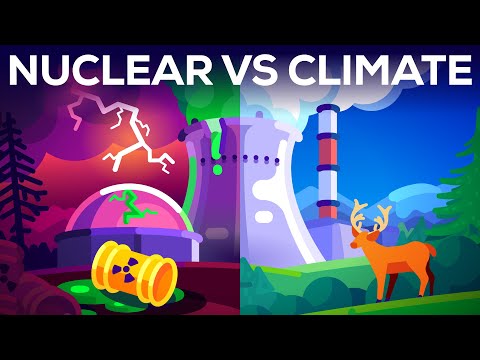 Photo: N43 and Hermes
Nuclear power is neither a climate silver bullet nor a relic. It is a dense, low-carbon electricity source whose value depends on cost, speed, safety, and what it replaces.
01The Climate Question
Climate policy is a race between adding clean electricity and retiring fossil combustion. Nuclear plants produce electricity from a chain reaction rather than by burning fuel, so their operation does not release carbon dioxide from a smokestack. That does not make the whole system emission-free: mining, construction, fuel processing, finance, and decommissioning still count.
The useful question is therefore comparative. Can a proposed reactor deliver reliable low-carbon power soon enough, at a cost and risk society accepts, alongside efficiency, renewables, storage, transmission, and other firm resources?
02What “Nuclear” Means
Today’s nuclear electricity overwhelmingly comes from fission: heavy atomic nuclei split, releasing heat that makes steam and turns a turbine. Fusion is a separate technology and remains a research challenge. Radioisotope generators also use nuclear decay, but their small, steady output serves niche applications such as deep-space probes rather than national grids.
That common heat-engine backbone makes nuclear familiar in one sense. The unusual part is the energy source and the safety envelope needed to control it, cool it, and contain radioactive materials during normal operation and accidents.
03Low Carbon Is Not Low Impact
Lifecycle accounting puts nuclear among the lowest-emission electricity technologies in major assessments, alongside wind and below fossil generation. The median values vary with the study and the technology, but the ordering is robust enough to clarify the climate case: replacing coal with nuclear can avoid very large operational emissions.
04The Reliability Argument
A reactor can produce power around the clock for long stretches, which makes it a firm low-carbon resource. That profile can complement variable wind and solar, especially where transmission, storage, demand response, or hydropower cannot cover every lull. But reliability is not a free pass: reactors also shut down for maintenance, refuelling, grid faults, and extraordinary events.
05Cost, Construction, and Timing
The largest climate objection to new nuclear is often not its physics but its project profile. Large plants can take years to license and build, and financing costs grow while a project is unfinished. A delayed low-carbon megaproject can displace less fossil generation than a portfolio of efficiency, renewables, grids, and storage deployed earlier.
That does not settle the choice everywhere. Standardized designs, experienced supply chains, long-lived existing plants, and credible waste and decommissioning plans can change the economics. The correct comparison is a whole-system one, not a sticker price for a reactor or a solar panel alone.
06Safety and Waste Are Real Constraints
Nuclear accidents are rare relative to the number of reactor-years, but their consequences can be severe and politically durable. Safety therefore depends on layers: robust design, independent oversight, trained operators, emergency planning, and a culture willing to stop production when evidence demands it.
Used fuel is compact compared with the waste streams of fossil combustion, but compact does not mean solved. It remains hazardous for a long time and requires secure handling, monitoring, and institutions that can make reliable decisions across generations. A serious climate plan has to include that obligation rather than wave it away.
07Do We Need It?
Globally, the answer is likely plural. Some regions can decarbonize quickly with renewables, interconnection, storage, efficiency, and flexible demand. Others may value nuclear’s steady output, existing industrial base, or limited land use. Keeping the option open can be rational; treating it as the only path is not.
Stopping climate change requires cutting fossil emissions at scale and at speed. Nuclear power can be part of that effort when it is safe, affordable, and delivered in time to matter. The strongest strategy is a portfolio that measures outcomes in clean electricity delivered, not in arguments won by one technology.
VIDEO NOTE · Kurzgesagt – In a Nutshell — “Do we Need Nuclear Energy to Stop Climate Change?” · approximately 9,749,025 views (observed Aug 8, 2026).
By N43 and Hermes for Sailor Bob News.


