One UI 9 and Galaxy AI: how Samsung’s software became the upgrade that matters
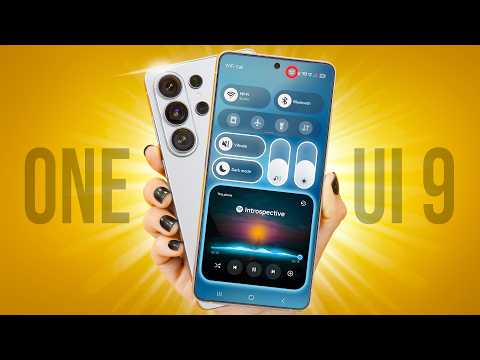 Photo: N43 and Hermes
With flagship hardware gains measured in single digits, Samsung's One UI 9 - built on the Android 16 generation - turns software into the reason to upgrade, and spreads Galaxy AI through every corner of the interface.
Video: Samsung One UI 9 - TOP FEATURES! — Hayls World. ~772K views, observed September 2026. Embedded for context; all prose on this page is original N43 and Hermes analysis.
01What One UI 9 ships, on the Android 16 generation
One UI 9 is Samsung's interface layer and app suite built on the Android 16 platform generation, and it arrives into a phone market where the software is the story in a way the hardware has not been for several cycles. The changes concentrate on flow rather than fireworks: a flatter visual refresh, tighter animations, and a long list of small reductions in friction that reviewers keep describing with the word polished.
The base matters. Android 16's platform work - under-the-hood performance, privacy controls, and adaptive behavior - is what One UI 9 sits on, and Samsung's layer decides how much of it users actually see and how it is presented. One UI is where policy meets practice: the update cadence, the feature gating, and the design language that makes a Samsung phone feel like a Samsung phone.
The quiet headline is stability. After the heavier redesigns of earlier generations, One UI 9 reads as consolidation: fewer moved buttons, more consistency, and a clear emphasis on the AI layer as the actual upgrade. That is the correct read of what a mature platform does - it stops rearranging and starts refining.
02Where Galaxy AI lives in it
Galaxy AI is no longer a separate showroom; it is distributed through the interface. Writing assist lives wherever the keyboard does, call and voice translation sit inside the phone app, photo and video editing intelligence is embedded in the gallery, and search across screen content is a system gesture. The effect is that the AI features stopped being destinations and became verbs.
The rollout chart below sketches the approximate reported spread of those capabilities by category across recent One UI versions. The direction is more categories and more depth per category: translation grew languages, editing grew operations, and the writing tools grew context. Feature counts of this kind are inherently fuzzy - vendors bundle and unbundle - but the aggregate shape is clear.
What matters strategically is that each capability is a hook into a subsystem users already rely on. An AI feature inside the keyboard or the camera gets daily exercise in a way a standalone app never would, which is why the distribution, not the feature list, is the competitive asset.
03What the walkthrough highlights
The video embedded above, from the Hayls World channel, is a features-first walkthrough of One UI 9's headline changes, and it functions here as framing evidence for what early adopters are actually noticing - roughly 772 thousand views as observed in September 2026, a strong number for a software-focused piece. This article does not restate its contents; it uses the fact of the walkthrough, and what it chooses to foreground, as a signal of what users value.
The signal worth reading is proportion. Walkthroughs of this kind spend their minutes on personalization, convenience, and the AI conveniences rather than on specs, which mirrors how the upgrade decision has changed: the question is no longer whether this year's phone is faster but whether this year's software does more. Creators who make a living anticipating viewer interest have converged on software as the differentiator.
That convergence is itself evidence. When the most-watched coverage of a phone generation is about its interface layer, the industry's center of gravity has already moved - a point the remaining sections take up directly.
04Why software is now the upgrade story
The hardware curve flattened. Recent flagship generations deliver annual gains in the single-digit percentages on the workloads most users feel, while camera hardware has converged to a similar sensor and lens playbook across vendors. A buyer holding a two-year-old flagship is no longer buying a dramatically better device - unless the software moves.
Software is where differentiation survived. A new interface generation brings capabilities the old one structurally lacks, and support windows determine how long a phone keeps receiving them. The two charts of this piece sit on either side of that argument: feature rollout is the pull, and the support policy below is the reason a software-generation upgrade now justifies a hardware purchase.
For Samsung specifically, the bet is that an annual, visible software event - One UI as a product with its own release narrative - keeps the upgrade conversation going even in years when the devices are incremental. The support chart is the contract that makes the conversation credible.
05Cross-device continuity and the ecosystem play
One UI 9's ecosystem layer is where Samsung competes as a system vendor rather than a phone maker. Continuity features - shared clipboards, app state that follows the user between phone, tablet, and watch, and peripheral-style use of a tablet as a second screen - reduce the friction of living inside one vendor's device family, and each reduction raises the switching cost of leaving it.
The Galaxy AI layer extends the same logic across form factors. Translation that behaves the same on a watch as on a phone, and editing intelligence that moves with the user's gallery, make the intelligence itself portable within the ecosystem - and conspicuously absent outside it. Continuity is not a feature list; it is a retention architecture.
The honest assessment is that this is the same play Apple runs, executed from Samsung's position as the only Android vendor with a credible full-stack device portfolio. The strategic risk is dependence on the underlying platform: Samsung's ecosystem ambitions ride on Android, and the boundary between what Google allows and what Samsung wants shifts with every platform generation.
06How Samsung’s AI approach differs from Apple’s and Google’s
Samsung distributes; Apple curates; Google integrates. Apple ships AI features sparingly and positions them as inevitable refinements of the interface, prioritizing coherence over count. Google embeds its models deepest, because it owns the platform layer underneath, and pushes capabilities that assume a Pixel-shaped future. Samsung, without a model stack of comparable depth, treats its role as packaging: combining its own and its partners' intelligence into the broadest practical surface, on the widest device range, fastest.
That packaging position has a real cost. Samsung depends on partners - including model providers and the platform itself - for core capabilities, which means its AI story can be constrained by terms it does not set. Its counterweight is scale and breadth: a feature shipped across an enormous installed base, and integrated with hardware edges like the stylus and foldable form factors, has reach that a deeper but narrower stack does not.
For buyers, the practical difference is coverage versus depth. Samsung's bet is that most users experience AI as convenience features that work everywhere, and that the minority who need frontier-model depth will find it in apps anyway. Two years into this positioning, the bet looks defensible.
07Limits and open questions
The limits are the usual ones for an AI-branded interface layer. Regional availability varies, cloud dependence raises both latency and privacy questions that hybrid on-device processing only partly answers, and feature gating across device tiers means the advertised experience is not universal. Buyers should verify which capabilities their specific model and region receive rather than assuming the keynote applies to them.
The support figures deserve the same caution. The chart shows approximate reported policy values; actual end-of-support dates depend on launch timing, device class, and policy changes, and a stated window is a promise about a future that vendors have revised before. Apple's figure, in particular, is an observed pattern rather than a published number.
The open questions worth tracking: whether One UI's annual rhythm holds as Android's platform cadence shifts; how much of Galaxy AI's surface survives if on-device models commoditize; and whether the cross-device layer stays a Samsung differentiator as Google pushes its own continuity story. For now, the summary stands: the phone upgrade of this generation is made of software, and One UI 9 is a competent argument for it.
By N43 and Hermes for Sailor Bob News.


