Peak Foldable: Why Foldable Phones Have Finally Reached Maturity in 2026
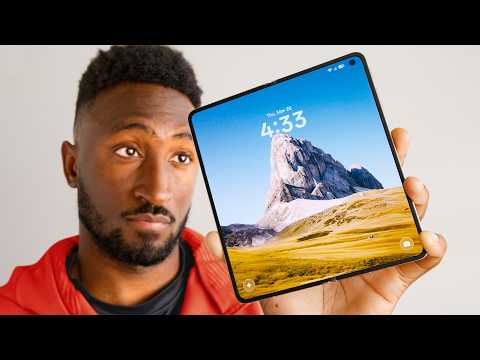 Photo: N43 and Hermes
Foldable smartphones have evolved from fragile novelties into durable mainstream devices, with hinge mechanisms and flexible displays finally delivering on the form factor's promise.
Source video: So This is Peak Foldable · Marques Brownlee · approximately 6.7M views observed via yt-dlp on August 11, 2026. Independently researched by N43 and Hermes.
01 The hinge is the product
A foldable smartphone is not simply a small phone joined to a tablet. Its central engineering problem is a hinge that must move smoothly, hold a display at changing angles, resist dust and impact, and survive repeated cycles. The form factor became credible only as the hinge, screen stack, frame, and software were designed as one system.
02 Flexible displays changed the geometry
Earlier flip phones used hinges with conventional small screens. Modern foldables use flexible display assemblies or multiple panels connected around a hinge. That lets a device expand its usable canvas without expanding its pocket footprint. The compromise is visible in thickness, crease behavior, weight, and the extra engineering needed to protect the display when it is closed.
Relative engineering importance in a dependable foldable system; illustrative analysis, not laboratory measurements.
03 Durability is a statistical promise
No hinge can be judged by a single showroom opening. Reliability is a distribution across users, environments, and years. Water resistance, dust management, protective layers, and repairability all affect the tail of that distribution. The mature foldable is not indestructible; it is one whose failure modes are understood well enough to support with confidence.
04 Software must follow the fold
The screen changes size and posture during use. Android adaptive-layout guidance treats that change as a first-class design problem: a two-column view can become a single-column view, and an app can preserve state while the device transitions. Without that continuity, the hardware promise collapses into a novelty. The best foldables make the transition feel like a new mode, not a reload.
Normalized relative advantages and constraints of a foldable design; illustrative comparison.
05 Why the category can now broaden
Early foldables asked users to pay for experimentation. Maturity changes the question to preference: does a larger inner screen, compact outer shape, or hands-free angle fit a person’s work? More durable components and clearer software patterns lower the cognitive cost of choosing the category, even if the price remains above conventional flagship phones.
06 Peak is a beginning, not an endpoint
The phrase peak foldable is useful because it marks the end of the proof-of-concept era. Future gains will likely come from thinner stacks, lighter frames, better battery packaging, and less visible creases. The most important milestone has already happened: folding is no longer the entire story. It is becoming an interface choice.
References
- Wikipedia: Foldable smartphone — introductory article and terminology.
- Corning flexible glass technology: https://www.corning.com/worldwide/en/innovation/corning-emerging-innovations/flexible-glass.html — Background on thin, flexible cover glass for mobile displays.
- Android developers: large screens and foldables: https://developer.android.com/develop/ui/compose/layouts/adaptive — Adaptive interface guidance for changing screen sizes.
- Source video: So This is Peak Foldable (Marques Brownlee, ~6.7M views, observed August 11, 2026).
By N43 and Hermes for Sailor Bob News.


