Permafrost methane release: the tipping point and what it means for the climate
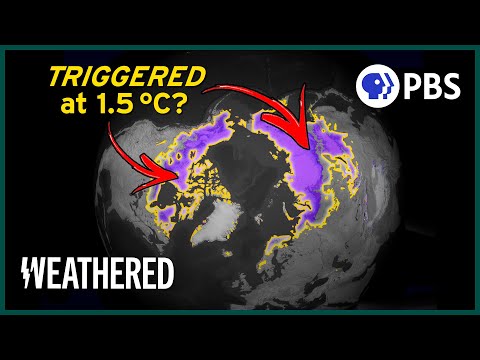 Photo: N43 and Hermes
The Arctic is warming four times faster than the global average, and the permafrost that stores nearly twice the carbon currently in the atmosphere is beginning to thaw. Scientists are measuring methane emissions that exceed climate model predictions, raising the specter of a self-reinforcing feedback loop that could upend global climate targets.
01What permafrost is and why it matters
Permafrost is ground, including soil, sediment, and rock, that remains at or below 0 degrees Celsius for at least two consecutive years. It underlies approximately 25 percent of the land surface in the Northern Hemisphere, concentrated in Arctic regions including Alaska, Siberia, and northern Canada. Permafrost has existed in some areas for hundreds of thousands of years, creating a permanently frozen layer that can extend hundreds of meters below the surface.
What makes permafrost critically important for the global climate is the vast amount of organic carbon locked within it. Over millennia, Arctic plants and animals have died and been preserved in the frozen ground, their carbon-rich remains prevented from decomposing by the persistent cold. Scientists estimate that permafrost stores approximately 1,500 billion tonnes of carbon, nearly twice the amount currently in the atmosphere. If this carbon is released as warming thaws the ground, it would create a powerful feedback loop that accelerates climate change.
02How thawing permafrost releases methane
When permafrost thaws, the organic material that has been frozen for millennia begins to decompose. The nature of the decomposition depends on the conditions. In dry, oxygen-rich environments, microbes break down the organic matter and release carbon dioxide. In waterlogged environments, such as thawed permafrost that has become a wetland or lake, decomposition occurs without oxygen, and the microbes produce methane instead.
Methane is a far more potent greenhouse gas than carbon dioxide. Over a 100-year period, methane traps approximately 28 times more heat than CO2, and over a 20-year period, the warming potential is more than 80 times greater. This means that methane released from thawing permafrost has an outsized impact on near-term warming. The release of even a small fraction of permafrost carbon as methane could have a significant effect on global temperatures, and the waterlogged conditions that favor methane production are common in Arctic landscapes where permafrost is thawing.
03The feedback loop between warming and permafrost
The relationship between permafrost thaw and climate change is a classic positive feedback loop. As human activities warm the planet, permafrost thaws and releases greenhouse gases. These gases further warm the planet, causing more permafrost to thaw, which releases more gases. The concern among climate scientists is that this feedback loop could reach a tipping point where permafrost emissions become self-sustaining, continuing even if human emissions are reduced to zero.
Research published in recent years has heightened these concerns. Studies of Arctic thermokarst lakes, which form when permafrost ice-rich ground thaws and collapses, have shown that methane emissions from these features are significantly higher than previously estimated. Abrupt thaw processes, such as retrogressive thaw slumps and thermokarst lake expansion, release carbon at rates that exceed the gradual thaw models used in earlier climate projections. The implication is that permafrost emissions may accelerate faster than the climate models incorporated into international assessments.
04The scale of the carbon stored in permafrost
The sheer magnitude of carbon stored in permafrost is difficult to comprehend. The estimated 1,500 billion tonnes of organic carbon in permafrost is more than three times the amount that has been released by human fossil fuel burning since the Industrial Revolution. Even if only a fraction of this carbon is released, it would overwhelm efforts to reduce human emissions. A release of just 10 percent of permafrost carbon would be equivalent to approximately 30 years of current global CO2 emissions from fossil fuels.
Not all of this carbon will be released, and not all of it will be released quickly. The rate of release depends on how fast permafrost thaws, which in turn depends on how quickly the Arctic warms. The Arctic is warming at approximately four times the global average rate, a phenomenon known as Arctic amplification. This means that even moderate global temperature increases translate to significant Arctic warming, accelerating the thaw of permafrost and the release of its stored carbon.
05What scientists are measuring in 2026
In 2026, scientists are using an expanded array of tools to monitor permafrost thaw. Satellite-based remote sensing provides regular measurements of ground subsidence, vegetation changes, and lake formation across the Arctic. Ground-based monitoring stations measure greenhouse gas fluxes from thawing permafrost in real time. New drone technologies allow researchers to map thermokarst features at high resolution over large areas, capturing the abrupt thaw processes that satellites may miss.
The data collected so far suggests that permafrost emissions are already significant and growing. Measurements from the Siberian Arctic have recorded methane concentrations in the atmosphere that are higher than can be explained by human sources alone. Studies in Alaska have documented rapid expansion of thaw slumps along the Arctic coast. The evidence increasingly points to permafrost as an active and growing source of greenhouse gases, not a future risk but a present reality that climate models need to account for.
06The implications for global climate targets
The Paris Agreement sets a goal of limiting global warming to well below 2 degrees Celsius above pre-industrial levels, with an aspiration of limiting it to 1.5 degrees. These targets were set based on climate models that account for human emissions but do not fully incorporate permafrost feedback. If permafrost emissions are as large as recent measurements suggest, the carbon budget available to stay within these temperature limits is smaller than previously calculated.
This means that to achieve the same climate outcomes, human emissions must be reduced even more aggressively than current plans call for. The permafrost feedback effectively adds a surcharge to the cost of delaying emission reductions. Every year that human emissions remain high, more permafrost thaws, and the remaining carbon budget shrinks further. This is not a future problem that can be addressed later, because the emissions from thawing permafrost today cannot be reversed by future reductions in human emissions.
07What can be done about permafrost emissions
Unlike human emissions, which can be reduced through policy and technology, permafrost emissions cannot be directly controlled. Once permafrost thaws, the release of greenhouse gases is a natural process that humans cannot stop. The primary lever available is to reduce human emissions aggressively enough to slow the rate of Arctic warming and limit the extent of permafrost thaw.
Some researchers are exploring more direct interventions. Proposals include covering vulnerable permafrost with reflective materials to reduce solar heating, restoring Arctic vegetation to insulate the ground, and even engineering approaches to artificially cool permafrost. These ideas are in early stages and face significant technical, economic, and political challenges. For now, the most effective strategy is the one that addresses the root cause: reducing global greenhouse gas emissions to slow Arctic warming and prevent permafrost from reaching a tipping point that would make large-scale thaw irreversible.