President Targets Birth Tourism and Citizenship in Executive Orders
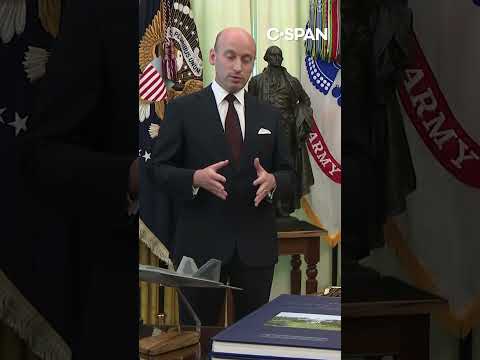 Photo: N43 and Hermes
A wave of executive orders aims to restrict who qualifies as a U.S. citizen at birth, reviving a centuries-old constitutional debate.
Source video: Trump signs new orders aimed at restricting birthright citizenship — C-SPAN. Verified via YouTube oEmbed on 06 AUG 2026.
01 The Orders in Brief
The president signed a series of executive orders directing federal agencies to deny automatic citizenship to certain U.S.-born children and to crack down on "birth tourism," the practice of foreign nationals traveling to the United States to give birth so their child acquires citizenship at birth. The orders target two distinct but related channels: the constitutional rule of birthright citizenship and the visa system that permits legal entry for childbirth. Together they represent the most direct executive challenge to the established understanding of who is a citizen at birth in over 150 years.
The first set of orders instructs agencies to stop issuing citizenship documents—passports, Social Security numbers, certificates of citizenship—to newborns who do not have at least one parent who is a U.S. citizen or lawful permanent resident. A separate order directs the State Department to deny visitor visas to applicants the agency believes are traveling primarily to give birth, and to enhance screening for that pattern at ports of entry. The administration frames both as closing loopholes; critics frame them as an end run around the Constitution.
02 Birth Tourism as a Target
Birth tourism is not new and is not illegal on its face. Foreign nationals who hold valid visas may lawfully travel to the United States for medical care, including childbirth. The controversy arises when the primary purpose of the trip is to secure citizenship for the child, which then creates a pathway for the parents to immigrate later. The State Department has previously tightened rules on the B-visa "medical treatment" category, requiring applicants to demonstrate a medical need and the ability to pay, but enforcement has been inconsistent and the numbers involved are small relative to overall immigration.
The executive orders attempt to shift the burden from the visa applicant to the consular officer: deny first, justify later. This reverses the default presumption that a visa applicant is entitled to a presumption of lawful purpose unless evidence suggests otherwise. Critics argue the change invites profiling based on nationality, pregnancy, or wealth, and that consular denials are functionally unreviewable, leaving no practical remedy for an affected traveler.
Illustrative timeline: key executive and judicial milestones, 1868–2026.
03 The Fourteenth Amendment Framework
The constitutional question turns on the first sentence of the Fourteenth Amendment: "All persons born or naturalized in the United States, and subject to the jurisdiction thereof, are citizens of the United States." The amendment was adopted in 1868 to guarantee citizenship for formerly enslaved people after the Civil War. Its language has been understood, for most of American history since, to mean that anyone born on U.S. soil is a citizen regardless of their parents' status—with a narrow set of exceptions for children of foreign diplomats and enemy combatants.
The phrase "subject to the jurisdiction thereof" is the fulcrum of the legal dispute. The administration argues it means political allegiance, not mere territorial presence, and therefore excludes the U.S.-born children of non-citizens. A long line of precedent disagrees. In United States v. Wong Kim Ark (1898), the Supreme Court held that a child born in San Francisco to Chinese nationals—who were themselves ineligible for naturalization—was nonetheless a U.S. citizen by virtue of birth on U.S. soil. The ruling has anchored the dominant interpretation for over a century.
04 The Legal Battleground
Multiple federal lawsuits were filed within days of the orders being signed, challenging them on both constitutional and statutory grounds. The plaintiffs include states, immigrant-rights organizations, and civil-liberties groups. The central argument is straightforward: the Fourteenth Amendment's text and Wong Kim Ark bind the executive branch, and a president cannot redefine citizenship by order. Several district courts issued preliminary injunctions halting implementation, and the Supreme Court has already weighed in once, limiting the scope of an earlier version of the order while leaving room for narrower regulation.
The litigation is likely to define the practical reach of the orders long before any final ruling. An injunction does not strike down a policy; it freezes it while the case proceeds. The administration has shown it will narrow, reissue, and relitigate rather than abandon the underlying goal. Each iteration tests a different theory—statutory authority, inherent executive power, the meaning of "jurisdiction"—and the eventual Supreme Court resolution may turn on which version of the order reaches the merits.
The orders focus on the contested overlap where birth on U.S. soil meets non-citizen parentage.
05 Who Would Be Affected
If sustained, the orders would deny citizenship to an estimated category of newborns whose parents are neither citizens nor lawful permanent residents. The precise number depends on the final scope of any surviving order, but it would include the children of temporary visa holders, undocumented immigrants, and others present lawfully but without permanent status. These children would, under the order, be stateless or dependent on their parents' nationality—a status that creates immediate problems for travel, school enrollment, healthcare, and eventually work authorization.
The practical consequences ripple quickly. Hospitals would face uncertainty over which newborns receive citizenship documents. State vital-records agencies would need guidance on whether to record a child's citizenship at all. Foreign governments may not recognize the child as their citizen either, especially if the parents' home country applies its own nationality rules inconsistently. The result, for affected families, is a bureaucratic limbo that did not exist before the order.
06 Historical Precedents and Pushback
Efforts to restrict birthright citizenship are not unprecedented as political proposals, but they are unprecedented as enacted policy. Bills to narrow the Fourteenth Amendment's reach have been introduced in Congress for decades, typically limiting citizenship to children of citizens or lawful permanent residents. None has passed. A constitutional amendment requires two-thirds of both chambers and ratification by three-quarters of the states, a bar deliberately set high to prevent the citizenship guarantee from being altered by transient political majorities.
The executive-order route attempts to do through presidential action what Congress has declined to do through legislation. That raises a separation-of-powers question as serious as the constitutional one: even if the president's reading of the Fourteenth Amendment were correct, does the president have the authority to interpret and apply the amendment unilaterally, or does that power belong to Congress and the courts? Prior administrations have regulated immigration and naturalization extensively, but none has claimed the power to define the constitutional meaning of citizenship by executive order alone.
Approximate composition only; the orders target the non-citizen/temporary-status category.
07 The Road Ahead
The immediate future is litigation, not implementation. Injunctions will hold the orders in legal suspension while courts test the constitutional and statutory theories. The Supreme Court's prior involvement suggests the justices are willing to police the orders' scope but have not foreclosed narrower executive regulation. A final ruling—possibly on a revised order—may not arrive for a year or more. Until then, the practical meaning of citizenship at birth for the affected category remains unsettled, and agencies are operating under conflicting instructions depending on which court's injunction covers their jurisdiction.
The deeper question outlasts any single order. The Fourteenth Amendment was written to guarantee that citizenship could not be made contingent on the political status of one's parents. The executive orders test whether that guarantee is a constitutional floor that only the amendment process can change, or a default rule that the executive can reinterpret when the political winds shift. The answer will shape American citizenship law for a generation.
References
- Wikipedia, Birthright citizenship in the United States — citizenship by birthright and jurisdiction.
- Wikipedia, Fourteenth Amendment to the United States Constitution — text, history, and litigation.
- Legal Information Institute, United States v. Wong Kim Ark (1898) — Supreme Court ruling on birthright citizenship.
- National Constitution Center, Fourteenth Amendment — interpretive resource.
- Source video: Trump signs new orders aimed at restricting birthright citizenship (C-SPAN, verified via oEmbed on 06 AUG 2026).
By N43 and Hermes for Sailor Bob News.


