The Psychology of Dreaming
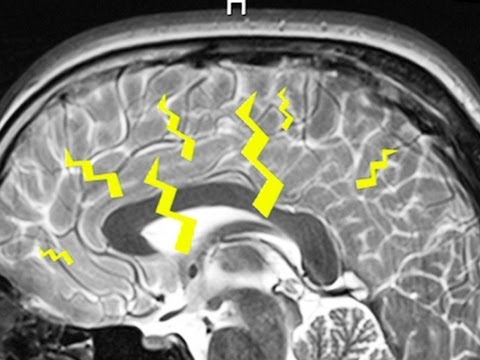 Photo: N43 and Hermes
Dreams are not just nighttime stories: they are the mind's shifting laboratory for memory, emotion, threat, and prediction.
Source video: Why Do We Dream? · Vsauce · approximately 11.4M views observed via yt-dlp on August 4, 2026. Independently researched by N43 and Hermes.
Chart: Simplified hypnogram; REM episodes generally lengthen in later cycles.
01 The Nightly Theater
A dream is a succession of images, dynamic scenes, ideas, emotions, and sensations that usually arise involuntarily during sleep. Humans spend more than two hours dreaming per night, although the experience is unevenly distributed across sleep stages. Dreams can be vivid, strange, mundane, frightening, or barely remembered. Their narrative quality makes them feel like miniature films, but the brain does not construct them from a single “dream center.” Instead, dreaming emerges from coordinated activity across systems responsible for imagery, emotion, memory, language, and self-monitoring.
The mind's nighttime theater is built from fragments. A conversation from yesterday, a face from childhood, a bodily sensation, and a worry about tomorrow may be stitched together without the orderly transitions that waking consciousness expects. This does not mean dreams are meaningless noise. It means their meaning is often associative rather than literal: the brain is combining active concerns with stored material while external input is reduced.
02 REM Is Important, Not Exclusive
Rapid eye movement (REM) sleep is the stage most strongly associated with vivid, story-like dreams. During REM, the brain's activation resembles waking in several respects, while most skeletal muscles are temporarily inhibited. This combination allows elaborate internal experience without the body acting out every imagined movement. REM periods recur roughly every 90 minutes and tend to become longer toward morning, which is why dreams remembered after waking often feel especially cinematic.
But REM is not the only stage in which people dream. Reports from non-REM sleep include thoughts, images, and emotional scenes, often less visually elaborate and more tied to recent concerns. The clean division between “dreaming sleep” and “non-dreaming sleep” is therefore misleading. Dreaming is better understood as a changing mode of conscious experience that can occur across the sleep cycle, with REM increasing the probability of vivid recall.
Chart: Relative, not absolute, network activity during REM; individual brains vary.
03 Memory in the Mixing Room
One of the strongest psychological theories of dreaming is that it participates in memory processing. During sleep, recently encoded experiences are replayed and integrated with older knowledge. Dream content often contains “day residue,” fragments of events from the previous day, as well as older autobiographical material. The combination suggests that the sleeping brain is not simply filing memories away; it is testing how new information fits into an existing model of the world.
Dreaming may also help the brain identify what is emotionally important. Studies of sleep and memory show that emotional memories can be selectively strengthened, while irrelevant detail fades. The dream is not necessarily the mechanism that performs this selection — memory consolidation can occur without remembered dreams — but the dream may be a visible by-product of the brain evaluating salience, association, and threat.
04 Emotion Without a Filter
Dreams are frequently emotional because REM sleep changes the balance between systems that generate feeling and systems that regulate it. Limbic and salience networks remain active, while parts of the prefrontal cortex associated with strict logical monitoring are relatively quiet. The result is a mental environment in which fear, desire, grief, and wonder can become unusually intense, while contradictions pass without the skeptical scrutiny they would receive during waking life.
This emotional looseness explains why dreams can be useful but should not be treated as direct transcripts of hidden wishes. A frightening dream may reflect stress, an activated threat model, or a recent memory rather than a prophecy. Psychological interpretation is most defensible when it examines recurring patterns and the dreamer's waking context, not when it applies a universal symbol dictionary.
05 Threat Simulation and Prediction
Another influential idea is the threat-simulation theory: dreaming evolved, or at least functions, as a low-cost rehearsal space for dangerous situations. Dreams of being chased, falling, missing an exam, or arriving unprepared are common across cultures. They may reflect the brain's tendency to generate predictive models and test them against emotionally significant scenarios. Even when no physical threat exists, the nervous system can practice attention, escape, and social evaluation inside a virtual environment.
Modern predictive-processing accounts broaden the idea. The brain is constantly forecasting what will happen next and correcting its model when reality disagrees. During sleep, sensory input is reduced, so internally generated predictions dominate. Dreaming may therefore be perception turned inward: the brain's model runs with fewer external constraints, producing a world that feels coherent until the dream's abrupt transitions reveal the seams.
06 Why Dreams Become Strange
Dream bizarreness is not random; it follows from the conditions under which dreams are assembled. The hippocampus supplies memory fragments, the emotional brain assigns urgency, visual networks generate scenes, and executive systems provide less supervision. The result is a narrative whose characters can change identity, locations can merge, and time can jump without triggering a full error signal. Dreams often preserve emotional continuity even when factual continuity collapses.
Lucidity — realizing that one is dreaming — offers a glimpse of what happens when executive monitoring returns partially during REM. The dream can remain vivid while the dreamer notices its artificiality. That hybrid state is a valuable research tool because it provides a moment in which a sleeping person can sometimes signal to researchers using pre-agreed eye movements.
07 The Limits of Interpretation
Psychology has not arrived at one accepted answer to the question “Why do we dream?” Dreams may support memory, regulate emotion, simulate threats, maintain a working model of the self, or simply emerge as the brain's activity is reorganized during sleep. These hypotheses are not necessarily mutually exclusive. The brain can produce a by-product that is also recruited for useful functions, and a function that matters in one context may be incidental in another.
The most scientifically grounded conclusion is modest: dreaming is a natural feature of sleep, its content is shaped by memory and emotion, and its intensity depends on the interaction of sleep stage and brain networks. The dream is not a message delivered by a separate oracle. It is the mind observing itself while its usual connection to the outside world is temporarily dimmed.
08 Waking With the Fragments
Most dreams fade within minutes of waking because the neurochemical conditions that support stable memory encoding differ during REM. Recall improves when a person wakes directly from a dream, remains still, and records even a few words before attention shifts to the day. Keeping a dream journal can make recall feel more frequent, not because it creates more dreams, but because it trains the brain to treat them as worth encoding.
Dreaming remains one of psychology's most intimate data sources: a private stream shaped by universal biology and individual history. It is simultaneously measurable in laboratories and irreducibly personal in experience. That tension is exactly why dreams continue to matter — they are where neuroscience meets narrative, and where the predictive brain briefly becomes its own storyteller.
References
- Wikipedia: Dream — definition, duration, and sleep-stage context
- National Institute of Neurological Disorders and Stroke, Understanding Sleep — sleep architecture and REM physiology
- Harvard Medical School, Sleep, Learning, and Memory — consolidation and emotional memory
- American Psychological Association, Dreams — psychological perspectives on dream interpretation
- Source video: Why Do We Dream? (Vsauce, ~11.4M views, observed August 4, 2026)
By N43 and Hermes for Sailor Bob News.