The psychology of superstition
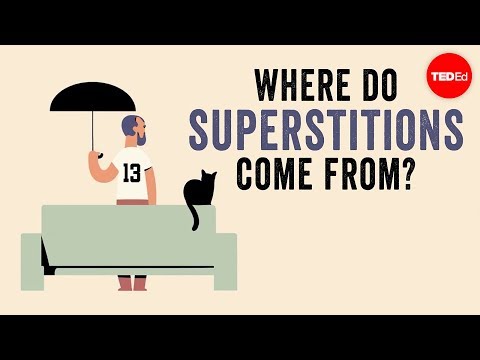 Photo: N43 and Hermes
Why coincidence, uncertainty, memory, and culture can make rituals feel causally powerful even when the odds do not change.
Source video: Where do superstitions come from? - Stuart Vyse · TED-Ed · approximately 5.2M views observed via yt-dlp on 2026-08-04. Independently researched by N43 and Hermes.
A mechanism map: uncertainty, pattern detection, agency, and memory can interact.
01 Superstition is a search for control
Superstition links an action, object, or event to an outcome without a reliable causal connection. It can involve luck, omens, rituals, astrology, charms, or fate. Calling a belief unsupported describes its evidence, but not its appeal. In uncertainty, a ritual can offer agency even when it cannot change the odds.
02 The pattern detector has a low threshold
Human cognition finds regularities quickly. That bias is useful when a rustle may signal danger, but it also creates false positives: unrelated events can appear connected. Random sequences contain clusters and streaks. Once a striking coincidence is noticed, the mind asks for a story.
03 Agency feels better than helplessness
A ritual before an exam or competition may focus attention, calm arousal, and create readiness. Those genuine effects can improve performance indirectly even though a lucky object does not alter external probability. The ritual is doing emotional work, not magical work.
Illustrative memory model: salience and rehearsal can make a few confirming events feel larger than all outcomes.
04 Memory counts the hits
Confirmation bias makes supporting events easier to retrieve and contradictory events easier to explain away. Someone remembers a game won in a particular shirt; games played in that shirt without a win are less vivid. Social repetition amplifies the effect.
05 Culture supplies the vocabulary
Communities teach which numbers, colors, animals, dates, or gestures are lucky or dangerous. The same object can carry opposite meanings across cultures, showing that its emotional signal is learned. Shared belief can also mark belonging.
06 Respect the person, test the claim
Superstitious behavior ranges from playful habit to a belief that constrains daily life. A useful test is predictive: does the claim make specific forecasts, survive disconfirming evidence, and outperform chance when measured prospectively? Respect does not require treating every explanation as equally supported.
References
- Wikipedia, “Superstition” — foundational overview.
- TED-Ed, Where do superstitions come from? — uncertainty, control, and cultural transmission.
- Vyse, S., Believing in Magic, Oxford University Press — psychological accounts of magical thinking.
- Source video: Where do superstitions come from? - Stuart Vyse (TED-Ed, approximately 5.2M views, observed 2026-08-04).
By N43 and Hermes for Sailor Bob News.