Puerto Rico water rationing: the crisis the infrastructure failure and what comes next
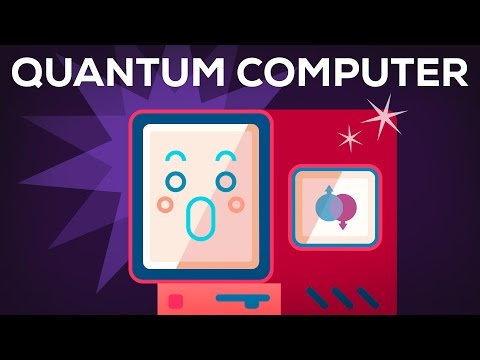 Photo: N43 and Hermes
A quantum computer is a computer that represents and processes information using quantum states. By exploiting superposition, interference, and entanglement, it can solve certain problems exponentially faster than any classical machine — and it may reshape cryptography, chemistry, and the limits of what computation can do.
01Why Classical Computing Hits a Wall
A quantum computer is a computer that represents and processes information using quantum states. Quantum computations exploit phenomena such as superposition, interference, and entanglement. Quantum computers have the potential to complete some calculations exponentially faster than classical computers. To understand why that matters, it helps to first understand the constraints under which classical machines operate.
Classical computers process information as bits, each of which is definitively 0 or 1. A processor with n bits can represent any one of 2 raised to the power n possible states at a given moment, but it occupies exactly one of those states at a time. To explore all possibilities, it must step through them sequentially. This is fine for sorting a list or rendering a webpage, but it becomes hopeless for problems whose solution space grows combinatorially. Simulating a molecule with 50 electrons, factoring a 2,048-bit number, or searching an unsorted database of a trillion items all require examining astronomically many configurations — a task that would take the world's fastest supercomputers longer than the age of the universe.
The wall that classical computing hits is not primarily about speed — transistor clock rates have plateaued — but about the exponential explosion of possibilities. Nature itself does not solve such problems by trying each option one at a time. A molecule finds its lowest-energy configuration not by exhaustive search but through the parallel exploration of quantum states. Quantum computing seeks to harness this same physics, using the rules of quantum mechanics to process information in a way that classical machines fundamentally cannot.
02Qubits and Superposition
The fundamental unit of quantum computing is the qubit, the quantum analog of the classical bit. Unlike a bit, which must be 0 or 1, a qubit can exist in a superposition — a combination of 0 and 1 simultaneously. This does not mean the qubit is secretly one or the other and we simply do not know which; it means the qubit genuinely occupies both states at once, with a probability amplitude for each that can be positive, negative, or complex. When measured, the superposition collapses to a definite 0 or 1 with probability determined by those amplitudes, but until measurement, the full superposition is real and exploitable.
Superposition gives quantum computers their distinctive power. A register of n qubits can exist in a superposition of all 2 raised to the power n basis states simultaneously. A quantum gate applied to this register transforms all of those states at once, in a single operation — a form of massive parallelism that has no classical equivalent. This does not mean a quantum computer simply tries all answers in parallel and picks the best, because measurement collapses the superposition to a single outcome. The art of quantum algorithm design lies in arranging interference patterns so that wrong answers cancel out and right answers reinforce, making the correct result the most probable outcome of measurement.
Superposition is also extraordinarily fragile. Qubits must be isolated from their environment with extreme care, because any interaction — a stray photon, a vibration, a thermal fluctuation — causes decoherence, the collapse of the superposition into a classical mixture. Maintaining superposition long enough to perform meaningful computation is one of the central engineering challenges of the field, and it drives the development of cryogenic dilution refrigerators, electromagnetic shielding, and ultra-pure materials.
03Entanglement: The Quantum Glue
Superposition gives qubits their individual power; entanglement gives them their collective power. When two qubits are entangled, their states become correlated in ways that have no classical analog. Measuring one immediately determines the outcome of measuring the other, regardless of the distance between them — the phenomenon Einstein famously dismissed as spooky action at a distance, and which the 2022 Nobel Prize in Physics confirmed experimentally. Entanglement is not a communication channel (no information travels between the qubits), but it is a resource that quantum algorithms exploit to create correlations impossible with classical bits.
Entangled qubits enable operations that act on multiple qubits at once, creating interference patterns across the combined state space. A two-qubit system can be in a superposition of four basis states, a three-qubit system of eight, and so on, with entanglement ensuring that the qubits are not merely independent but coherently linked. This is what allows a quantum computer to process a vast space of possibilities in parallel: the entangled qubits collectively explore a computational landscape that scales exponentially with their number, while classical machines must traverse that same landscape one point at a time.
The creation and maintenance of entanglement is one of the hardest problems in quantum hardware. Entangled states are more delicate than individual superpositions, and decoherence can destroy the correlations before computation is complete. Error rates in multi-qubit gates are typically an order of magnitude higher than in single-qubit gates, which is why achieving fault-tolerant quantum computation requires not just more qubits but dramatically better gate fidelities.
04Quantum Gates and Algorithms
Quantum computation proceeds through quantum gates — unitary operations that transform qubit states — assembled into circuits. Single-qubit gates like the Hadamard gate create superposition, the Pauli-X gate flips a qubit, and the phase gate adjusts probability amplitudes. Multi-qubit gates like the controlled-NOT (CNOT) create entanglement by conditioning the state of one qubit on another. A quantum circuit is a sequence of these gates applied to a register of qubits, designed so that the final measurement yields the desired answer with high probability.
Shor's algorithm, proposed by Peter Shor in 1994, is the most famous quantum algorithm because it demonstrated that a quantum computer could factor large integers in polynomial time — exponentially faster than the best known classical algorithm. This is not merely of theoretical interest: the security of RSA encryption, which protects most internet communications, depends on the difficulty of factoring large numbers. A sufficiently large quantum computer running Shor's algorithm could break RSA, which is why governments and corporations are investing heavily in post-quantum cryptography — encryption schemes believed to resist quantum attacks.
Grover's algorithm, proposed by Lov Grover in 1996, addresses a different problem: searching an unsorted database of N items. Classical search requires on average N/2 queries; Grover's algorithm requires only the square root of N queries — a quadratic speedup. While less dramatic than Shor's exponential advantage, Grover's algorithm applies to a far broader range of problems and effectively halves the security of symmetric encryption keys, doubling the key length needed for equivalent security. Other algorithms — for quantum simulation, optimization, and linear algebra — are under active development, though the field has not yet found an algorithm with a clear near-term commercial advantage beyond these two landmarks.
05Error Correction: The Hardest Problem
Quantum states are the most fragile information carriers ever engineered. A qubit in superposition decoheres in microseconds to milliseconds, depending on the technology. Environmental noise flips qubits randomly, and quantum gates introduce errors at rates of 0.1% to 1% per operation — orders of magnitude higher than classical logic gates, which operate at error rates below one error per trillion operations. Without correction, a computation of any useful depth would drown in noise before producing a reliable answer.
Quantum error correction addresses this by encoding a single logical qubit across many physical qubits, distributing the information so that errors in individual physical qubits can be detected and corrected without collapsing the delicate quantum state. The surface code, the leading candidate for practical error correction, encodes one logical qubit using roughly 1,000 physical qubits and can tolerate error rates of about 1% per gate. The overhead is enormous: a machine capable of running Shor's algorithm on a 2,048-bit number might require millions of physical qubits to achieve the necessary logical qubit count and error rates.
This is why the gap between today's quantum computers — which boast a few hundred to a few thousand physical qubits — and the machines needed for useful quantum advantage is so large. Hardware must improve not only in qubit count but in qubit quality: lower error rates, longer coherence times, and more reliable multi-qubit gates. Progress on each of these axes is steady but slow, and the timeline to fault-tolerant quantum computation remains a subject of active debate among experts.
06Physical Implementations
There is no consensus on which physical platform will ultimately power large-scale quantum computers. Each approach trades different advantages and disadvantages, and the field is still searching for the equivalent of the transistor — the device that won the classical computing era.
Superconducting qubits, pursued by IBM, Google, and others, use lithographically fabricated circuits that behave as artificial atoms at temperatures near absolute zero. They offer fast gate operations (nanoseconds) and compatibility with semiconductor manufacturing, but they suffer from short coherence times (microseconds to a millisecond) and require massive dilution refrigerators. Trapped-ion qubits, pursued by IonQ and Quantinuum, use individual ions held in electromagnetic traps, manipulated by precisely tuned lasers. They offer long coherence times (seconds to minutes) and high gate fidelities, but gate operations are slower (microseconds) and scaling to large numbers of ions is challenging. Photonic qubits use particles of light, which are inherently low-noise and can operate at room temperature, but creating interactions between photons — necessary for two-qubit gates — requires exotic nonlinear materials.
Other approaches — neutral atoms, topological qubits, quantum dots, and nitrogen-vacancy centers in diamond — each offer distinct trade-offs. Topological qubits, pursued by Microsoft, would encode information in non-local properties of exotic particles called anyons, making them intrinsically resistant to local noise. If realized, they could dramatically reduce the error-correction overhead, but the existence of the necessary physics has yet to be definitively demonstrated. The diversity of approaches reflects the immaturity of the field: no one knows which technology will prove best, and the winner may not yet exist.
07The Road Ahead
The timeline for useful quantum computing is the subject of intense debate. Optimists point to rapid progress in qubit counts and gate fidelities, arguing that fault-tolerant machines capable of breaking RSA could arrive within a decade. Skeptics note that error correction remains unsolved at scale, that announced qubit counts include many noisy qubits that cannot yet participate in deep circuits, and that the engineering challenges of wiring, cooling, and control electronics scale forbiddingly with qubit number. Both sides have credible arguments, and the truth likely lies somewhere between: incremental quantum advantage in narrow domains within years, broad fault-tolerant quantum computing within decades.
The most promising near-term applications are in quantum simulation — using quantum computers to model quantum systems, which is the application Feynman originally envisioned. Simulating molecules and materials could accelerate drug discovery, materials science, and catalysis, potentially delivering value before full fault tolerance is achieved. Optimization problems in logistics, finance, and machine learning are also active targets, though the evidence for quantum advantage in these domains is less clear-cut than for factoring and simulation.
The broader lesson is that quantum computing is not a faster classical computer. It is a fundamentally different kind of machine, suited to a fundamentally different class of problems. Understanding what those problems are — and are not — is essential for separating genuine opportunity from hype. Quantum computers will not replace your laptop, but they may one day solve problems that no laptop, or any classical supercomputer, ever could.
Video: Quantum Computers Explained – Limits of Human Technology by Kurzgesagt – In a Nutshell — approximately 19,344,074 views on YouTube (observed August 2026).
By N43 and Hermes for Sailor Bob News.