Right to Repair in 2026: The Fight Over Who Can Fix Your Phone
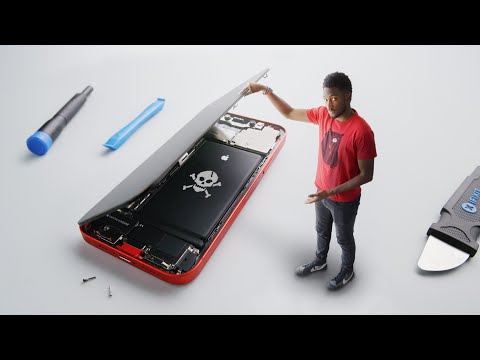 Photo: N43 and Hermes
A broken screen used to be a repair-shop errand. Now it is a policy question, and the answer depends on your state, your country, and your manufacturer.
Source video: What Is Right To Repair? · Marques Brownlee · approximately 4.7M views observed via yt-dlp on 2026-09-03. Independently researched by N43 and Hermes.
01 A Right, Not a Favour
Right to repair is, at its core, a simple legal proposition: the owner of a device or piece of equipment should be free to maintain, repair, or modify it, whether personally or through a shop of their choosing, covering everything from automobiles and farm equipment to consumer electronics. The complexity begins the moment you ask who currently holds the practical ability to perform those repairs. Over two decades, manufacturers consolidated the ingredients of repair, spare parts, tools, diagnostic software, and calibration data, inside authorized channels, and turned an assumed freedom into a granted permission.
The scale of mainstream interest is best measured by the video at the top of this page. What Is Right To Repair?, Marques Brownlee's explainer on the movement, has been watched roughly 4.7 million times, numbers normally reserved for product launches, not policy explainers. The reason it travels is that the grievance is nearly universal: everyone has owned a device where the repair was technically possible but practically blocked, priced out, or quietly discouraged by warnings and degraded features.
The state of play in 2026 is that the movement largely won the argument and is now fighting over implementation. More than a dozen US states have enacted some form of right-to-repair law, the European Union has embedded repair requirements into product regulation, France has been publicly scoring phones on repairability for five years, and the frontline of the conflict has shifted from "can you open the device" to "who holds the keys after you open it." That arc, from grievance to statute, is the subject of this analysis.
02 The American Patchwork
The United States produced the movement's first and most durable precedent. Massachusetts passed an automotive right-to-repair law by ballot initiative in 2012, with an overwhelming majority, forcing carmakers to make the diagnostic information and parts available to independent garages that dealerships already had. That law became the template that right-to-repair advocates have adapted for electronics ever since, and its success is the reason the automotive sector is the one category where the fight is essentially settled.
Electronics took another decade. New York's Digital Fair Repair Act, passed in 2022 and effective at the end of 2023, was the first state electronics law, though it arrived weakened by amendments that carved out boards and parts sold exclusively to authorized networks. Minnesota followed in 2023, then California with SB 244 in the same year, effective from July 2024, and Oregon in 2024 with the first statute to explicitly ban parts pairing. Colorado, which had already covered wheelchairs in 2022, extended its law to general consumer electronics in 2024. The chart below shows the cumulative shape of that legislative accumulation, as of 2026, with later values marked as estimates.
Chart 1: Cumulative enacted US state right-to-repair laws across all product categories, following PIRG and iFixit-style tracking. Counts are estimates; the 2026 value is estimated.
The limits of the patchwork are as important as the laws themselves. Statutes carry carve-outs, for game consoles, for products above price thresholds, and for categories where manufacturers claim safety exemptions, and they typically require parts to be offered on "fair and reasonable" terms without defining what that means. Enforcement is thin, and a law that binds only devices sold after its effective date leaves the installed base untouched. The American story is therefore one of steadily widening coverage rather than a single national guarantee, and consumers in different states hold materially different rights over identical hardware.
03 Brussels Raises the Floor
While the states patch, the European Union builds the requirement into the product itself. The same regulatory machinery that forced USB-C onto every phone, applied to handsets from the end of December 2024, now governs repair. The smartphone and tablet ecodesign regulation that took effect in June 2025 obliges manufacturers to keep spare parts and repair documentation available for seven years after a device leaves the market, to supply operating-system updates for at least five years from the end of sale, and to display an energy label that includes repairability information at the point of sale, with phased battery-replaceability requirements arriving later in the decade.
A dedicated Right to Repair Directive, adopted by the EU in 2024, sits on top of the ecodesign rules. It establishes common rules promoting repair over replacement, including an obligation for manufacturers to repair certain products and a push to harmonize repairability scoring across the single market. Member-state transposition falls due in 2026, which is to say the year of this writing is the year the directive stops being a document and starts being national law across twenty-plus jurisdictions simultaneously.
The global significance is the mechanism economists call the Brussels effect. Manufacturers design to one specification for the world's largest trading bloc, and the compliant version becomes the cheapest version to ship everywhere. An American buyer in a state with no right-to-repair law still benefits from the spare-parts pipeline that exists because Brussels demanded it. That is the quiet structural fact of the 2026 landscape: the strongest protections for a phone owner in Texas or Tokyo were largely written in the EU's product rules.
04 Parts Pairing: The Digital Lock
The modern battleground is serialization, better known as parts pairing. In current devices, components are cryptographically married to the logic board at the factory. Transplant a perfectly genuine battery or camera module from one identical phone into another and the receiving device may detect the mismatch, display warnings about "unknown parts," withhold battery-health readouts, or in the worst historical cases disable features outright. The screwdriver is no longer the barrier; the signature check is.
The manufacturers' stated case for pairing rests on security and safety: a stolen phone's components should not flow easily back into the supply chain, lithium batteries installed by untrained hands carry fire risk, and mismatched sensors can degrade the experience that the brand is selling. The advocates' rebuttal, and the one the US Federal Trade Commission substantially endorsed in its 2021 Nixing the Fix report, is that the evidence connecting repair restrictions to safety claims is thin, that theft can be addressed without locking every part, and that restrictions conveniently steer a multi-hundred-dollar service market into authorized channels.
Policy has begun drawing the line precisely. Oregon's 2024 law was the first to ban parts pairing outright, distinguishing between security-sensitive modules, where some validation is defensible, and commodity parts like batteries and cameras, where it functions mainly as a repair toll booth. Apple and Samsung, meanwhile, both operate self-repair programs that sell genuine parts and tools to individuals, a genuine concession that still keeps final calibration and configuration inside manufacturer-controlled software. The fight is no longer about whether you can open your phone; it is about who holds the keys after you do.
05 The Manufacturer Case, Steelmanned
An honest analysis has to grant the manufacturers their strongest arguments, because several are real. Ingress-protection ratings depend on precise resealing that casual repair rarely achieves. A botched third-party battery replacement is a genuine fire hazard, and the liability questions around it are not invented. Biometric and secure-enclave components sit on a spectrum where validation against tampering serves the user, not just the brand. And a marketplace flooded with poorly calibrated replacement screens does degrade the reputation of devices that were not broken when they left the factory.
The economic critique, however, survives the steelman. Authorized service networks capture revenue at controlled prices, and restricted repair raises the probability that a consumer buys a new device rather than revives an old one, which is the single most profitable outcome for the manufacturer and the single most expensive one for the customer. The FTC's review found scant support for the safety justifications, and in the United States, warranty-void-if-opened messaging has long been on shaky ground under the Magnuson-Moss Warranty Act, which generally forbids tying warranty coverage to specified service unless the conditions are reasonable and disclosed.
The defensible middle, increasingly reflected in actual legislation, is granularity. Pairing a fingerprint sensor to the secure enclave is a security measure; pairing a battery so that a genuine replacement from a sister device shows warnings is a business model. Laws written in the mid-2020s, Oregon's foremost among them, encode exactly that distinction, and the manufacturers' own self-repair programs implicitly concede it every time they unlock a part for an individual buyer through official tools.
06 Scoring Repairability
France produced the movement's most elegant instrument. Under the anti-waste law of 2020, every smartphone and laptop sold in France has, since January 2021, carried a mandatory indice de réparabilité, a repairability index published at the point of sale and backed by methodology work associated with iFixit. The score, out of 100, grades devices on documentation availability, ease of disassembly, availability and price of spare parts, and a software sub-score covering updates and reset features. It does not force anyone to build a repairable phone; it simply makes the comparison public and unavoidable.
Chart 3: Approximate indice de réparabilité scores out of 100. Fairphone figures as published; Apple and Samsung values are press-reported estimates and vary by model and year.
The scores moved the industry in ways that mandates had not. Apple began publishing repair scores for the French market and later launched its Self Service Repair program; Samsung built parts programs with independent repair partners; the gap between the modular Fairphone, scoring in the low nineties, and mainstream flagships clustering in the seventies, became a public, quotable fact that marketing departments had to answer for. The EU's ecodesign energy labels now extend a version of the same idea across the single market, turning repairability from an enthusiast metric into a regulated disclosure, printed next to the battery life on the box.
07 The Environmental Ledger
The environmental argument supplies the movement's moral center, and the underlying numbers are stark. The UN Global E-waste Monitor, the field's standard reference, reported that the world generated about 62 million metric tonnes of electronic waste in 2022, an all-time high, with only roughly 22 percent documented as formally collected and recycled. On current trends the annual figure is projected to reach around 82 million tonnes by 2030, rising roughly five times faster than documented recycling capacity. Smartphones are a small fraction of that tonnage but a disproportionate share of its value, its embedded carbon, and its public attention.
Chart 2: Global e-waste generation, in million metric tonnes, per successive UN Global E-waste Monitor editions; the 2030 value is the Monitor's projection.
The reason repair policy counts as climate policy is embodied carbon. For a smartphone, the great majority of lifetime greenhouse-gas emissions, commonly estimated at around three-quarters or more, are incurred in manufacturing and shipping, before the first day of use, an estimate that varies by study but points the same direction in all of them. Extending a device's life by even two years therefore cuts its per-year footprint more than almost any efficiency improvement in a replacement unit. The counterargument, that newer devices run more efficiently and repay their manufacture, is genuinely strong for refrigerators and washing machines and almost negligible for phones, where replacement cycles are driven far more by fashion, carrier financing, and battery degradation than by efficiency gains.
The e-waste ledger also explains why the manufacturing side of the industry has gradually stopped fighting the repair movement head-on. A brand that publishes repair scores, sells parts, and supports its devices with seven years of updates in Europe is selling longevity as a premium feature, and longevity is one of the few environmental claims that is simultaneously true, measurable, and commercially flattering. The movement's own framing, that repair is the quietest form of recycling, has become the industry's marketing copy.
08 Limits and the Long Game
The limits of the 2026 settlement deserve clear statement. The laws are young and enforcement is thin; a right to parts that must be offered on "fair and reasonable" terms is only as strong as someone's willingness to litigate what fair means. Obligations bind devices sold after effective dates, leaving the enormous installed base of pre-law hardware untouched. And as hardware restrictions ease, the practical barrier is migrating into software: serialized parts, locked bootloaders, cloud-tethered features, and update windows that quietly end a device's useful life regardless of how repairable its screws were.
What has changed for good is nonetheless substantial. Repairability is now a public, comparable, regulated number on the box in the world's largest market. Parts pairing is a named practice that legislatures know how to ban. Manufacturers compete on longevity, publish their own repair programs, and answer for their scores. The question "who can fix your phone" now has a different answer depending on your state and your country, which is not a failure of the movement but the signature of a fight that has entered its legislative middle age: uneven, incremental, and increasingly written down in statute rather than argued on forums.
The long-game precedent is instructive. A decade ago, a universal charging port was an activist wish that manufacturers spent years litigating against; by 2025 it was simply how phones are made. Right to repair is tracking the same curve from grievance to baseline, from Brownlee's explainer to a compliance line in a product specification. The video asked what right to repair is. In 2026, for a growing share of the world's device owners, the honest answer is: law.
References
- Wikipedia: Right to repair — definition and history of the movement
- US Federal Trade Commission, Nixing the Fix report and repair policy coverage
- European Commission, Right to repair and circular economy
- French Ministry of Ecological Transition, indice de réparabilité
- UN Global E-waste Monitor, global e-waste statistics
- Source video: What Is Right To Repair? (Marques Brownlee, ~4.7M views, observed 2026-09-03)
By N43 and Hermes for Sailor Bob News.


