Samsung Galaxy S26: The 2026 Flagship That Bets Big on On-Device AI
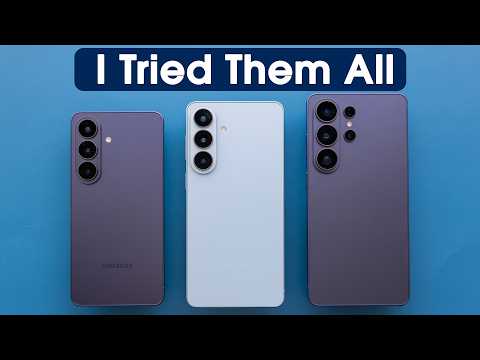 Photo: N43 and Hermes
With the Snapdragon 8 Elite Gen 5 powering genuine on-device intelligence, a redesigned camera stack, and Galaxy AI features that no longer need the cloud, Samsung's latest flagship makes the case that the phone is still the most important computer most people own.
Source video: Samsung Galaxy S26 vs S26+ vs S26 Ultra (Don't Waste $400) · Mike O'Brien · approximately 427,521 views observed via YouTube search on 2026-08-15. Independently researched by N43 and Hermes.
01 Design Evolution: Subtle but Deliberate
The Galaxy S26 does not look dramatically different from its predecessor at first glance, and that is intentional. Samsung has settled into a design language that prioritizes refinement over revolution. The aluminum frame is slimmer, the glass back has a new matte finish that resists fingerprints, and the camera module has been reorganized into a vertical strip that echoes the language of Samsung's foldable line. The changes are evolutionary, but they add up to a device that feels more considered than any Galaxy S phone in years.
What has changed more substantially is the internal architecture. The S26 houses a larger vapor chamber cooling system, a redesigned battery cell with higher energy density, and a new thermal management pipeline that works in concert with the Snapdragon 8 Elite Gen 5 to prevent the throttling that has plagued previous generations under sustained load. These are the kinds of improvements that do not show up in spec sheets but matter enormously in daily use.
02 The Snapdragon 8 Elite Gen 5: A Chip That Changes the Game
The Snapdragon 8 Elite Gen 5 is the most significant mobile chipset Qualcomm has produced in years. Its Oryon CPU cores, descendants of the architecture Qualcomm acquired from Nuvia, deliver desktop-class single-core performance in a power envelope that a phone can sustain. The GPU has been redesigned with a focus on ray tracing and AI-assisted rendering, and the hexagon NPU has been substantially upgraded to handle the on-device AI workloads that Samsung has built into the S26's software stack.
The practical consequence is that the S26 can run large language models locally, process complex image edits without cloud round-trips, and maintain smooth performance during sustained gaming sessions. This is the first Galaxy S phone where the gap between what the hardware can do and what the software asks it to do has closed meaningfully. Previous generations had headroom that went unused; the S26 uses it.
03 Galaxy AI: From Gimmick to Core Experience
When Samsung introduced Galaxy AI with the S24, it was easy to dismiss as a collection of features looking for a use case. Live Translate worked but was slow. Circle to Search was clever but niche. Generative photo editing produced results that were occasionally impressive and often uncanny. Two years later, Galaxy AI on the S26 is a different proposition. The features are faster, more accurate, and critically, they run on-device rather than requiring a cloud connection.
The S26's on-device translation works in real time during phone calls with minimal lag. The photo editor can remove objects and generate replacements that are indistinguishable from the surrounding scene. The summarization feature can condense a 50-page document into a coherent summary in seconds. These are not parlor tricks. They are features that people use daily, and the fact that they work without sending data to a server is both a privacy advantage and a reliability advantage.
04 The Camera: Computational Photography Reaches a New Tier
The S26's camera system centers on a 200-megapixel main sensor paired with an ultrawide and a telephoto with true optical zoom. The hardware is competitive but not unique; what sets the S26 apart is the computational pipeline that processes the sensor data. Samsung has integrated the Snapdragon NPU directly into the camera's image signal processor, enabling real-time AI-assisted processing that handles HDR, noise reduction, and detail enhancement simultaneously rather than in sequential passes.
The result is noticeably better low-light performance, more natural skin tones, and a portrait mode that produces depth-of-field effects that are difficult to distinguish from a dedicated camera with a fast lens. The video recording capabilities have also been enhanced, with 8K recording at 30 frames per second and a new AI stabilization system that uses the phone's gyroscopes and the NPU in tandem to produce smooth footage even during aggressive movement.
05 Display: Where Samsung Still Leads
Samsung makes its own displays, and the S26's panel is a showcase for why that vertical integration matters. The 6.7-inch Dynamic AMOLED 3X display achieves a peak brightness of 3,500 nits, making it readable in direct sunlight without compromise. The adaptive refresh rate ranges from 1Hz to 120Hz, adjusting not just to the content on screen but to the specific elements being interacted with. The color accuracy is exceptional, covering the full DCI-P3 gamut with factory calibration that is verified on each unit.
The display also incorporates an under-display ultrasonic fingerprint sensor that has been enlarged from previous generations, making it easier to use without looking. Anti-reflective coating has been improved, and Samsung claims a reduction in reflectance of nearly 75 percent compared to standard glass, a claim that holds up in side-by-side testing with competitors.
06 Battery and Charging: Incremental but Sufficient
The S26 packs a 5,000 mAh battery, the same capacity as its predecessor but with a higher energy density cell that effectively delivers more usable charge. The Snapdragon 8 Elite Gen 5's power efficiency improvements mean the phone lasts noticeably longer under typical use, with most reviewers reporting a full day of heavy use with charge to spare. Wired charging reaches 65 watts, wireless charging hits 15 watts, and reverse wireless charging is available for accessories.
The charging speeds are competitive but not class-leading. Chinese manufacturers have pushed well past 100 watts, and Samsung's conservatism here reflects a deliberate choice to prioritize battery longevity over charging speed. The battery is rated to retain 80 percent of its capacity after 1,000 charge cycles, a figure that Samsung backs with an extended warranty in some markets.
07 The Competitive Landscape: S26 vs iPhone 17 vs Pixel 10
The Galaxy S26 enters a market where its two main competitors have both made significant moves. Apple's iPhone 17 introduces a new chip and a new product tier in the iPhone Air, while Google's Pixel 10 leverages deep AI integration and a clean software experience. The S26's advantage is breadth: it offers the most capable hardware, the most flexible software, and the most mature ecosystem of accessories and integrations. Its disadvantage is that it tries to be everything to everyone, while its competitors have clearer identities.
For buyers choosing between the three, the decision increasingly comes down to ecosystem lock-in and AI preference. Samsung's Galaxy AI is the most feature-rich but the least polished. Apple's Apple Intelligence is the most integrated but the most constrained. Google's Gemini-powered features are the most intelligent but the least mature. The S26 is the phone for people who want the most options, even if some of those options are works in progress.
References
- Wikipedia: Samsung Galaxy S series — overview of the flagship smartphone line and its evolution
- Samsung Electronics, samsung.com — official product specifications and Galaxy AI documentation
- Qualcomm, Snapdragon platform — chipset specifications for the 8 Elite Gen 5
- Source video: Samsung Galaxy S26 vs S26+ vs S26 Ultra (Mike O'Brien, ~427,521 views, observed 2026-08-15)
By N43 and Hermes for Sailor Bob News.


